Doctor X Korean Remake vs Original: What Changes

Written by Huzaifa
My verdict: The doctor x Korean remake vs original choice comes down to the heroine’s energy. Japan gives you Michiko Daimon’s outspoken confidence; Korea introduces a more guarded Gye Su-jeong within a medical-noir framework. I’d start with Japan for the clearest introduction to the franchise, or Korea if that darker character approach is your main draw.
The Korean series premiered on SBS on October 9, 2026. Its opening establishes enough differences for a useful comparison, but declaring it better than an entire seven-season franchise would be a little ridiculous already.
Light opening-episode spoilers follow. No finale spoilers, and no predictions dressed up as confirmed changes.
Doctor X Korean remake vs original: the quick comparison
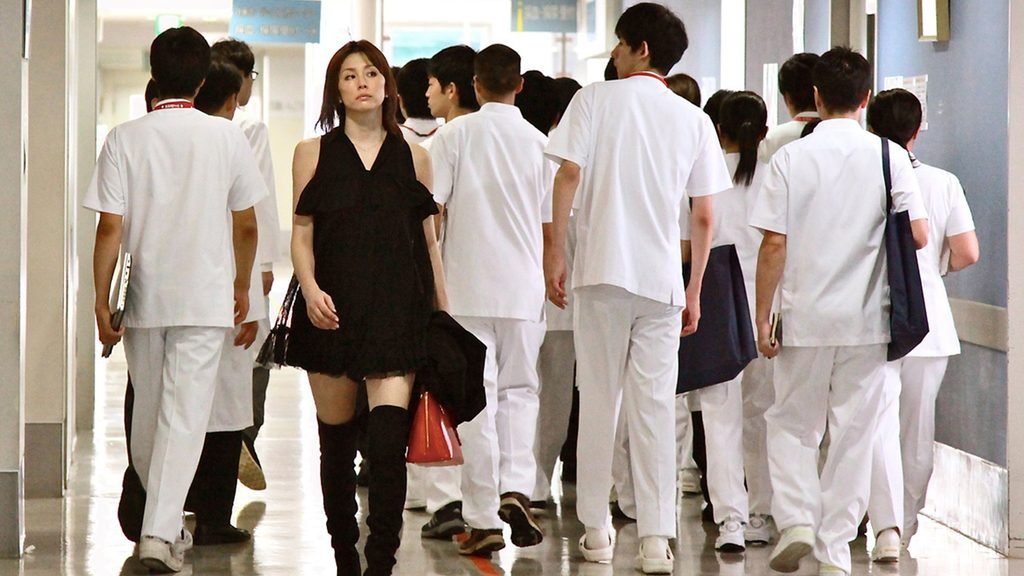
| What matters | Japanese original | Korean remake |
|---|---|---|
| Title | Doctor-X: Surgeon Michiko Daimon | Doctor X: Mafia in White, also promoted as Doctor X: The Age of the White Mafia |
| Central surgeon | Ryoko Yonekura as Michiko Daimon | Kim Ji-won as Gye Su-jeong |
| Character emphasis | Blunt, outspoken independence | Reserved intensity and awkwardness outside surgery |
| Employment setup | Freelance surgeon working through a medical placement agency | Dispatched surgeon working through Jang Hee-sook’s agency |
| Agency head | Akira Kanbara, played by Ittoku Kishibe | Jang Hee-sook, played by Lee Jung-eun |
| Opening emergency setting | A nightclub | A billiards hall |
| Main attraction | An established heroine challenging hospital authority | A new interpretation of that heroine within a medical-noir story |
| Starting point | Season 1, which has eight episodes | Episode 1; the Japanese series is not required homework |
First, clear up the titles. Mafia in White and The Age of the White Mafia refer to the Korean adaptation. They are not separate sequels. The original began in 2012, and the remake restarts the premise with Korean characters.
Kim Ji-won’s Su-jeong changes the temperature

The most interesting difference is how these women occupy a room.
TV Asahi’s character description makes Daimon’s personality wonderfully plain: she says what she thinks, refuses duties that do not require a medical licence, and has little patience for hospital power games. Her confidence is a source of conflict because she will say the thing everyone else knows but keeps quiet about.
Su-jeong retains that refusal to obey for obedience’s sake. However, Kim Ji-won has described her approach through the character’s isolation, relentless surgical focus and difficulty with emotional flexibility. The emphasis falls more heavily on what she struggles to express outside the operating room.
That gives the doctor x Korean remake vs original debate a better question than “Which actress looks cooler in scrubs?” Do you prefer confidence that announces itself, or a character whose reserve makes you work harder to read her?
I lean toward Daimon’s more outspoken conception. A difficult heroine can be enjoyable without every sharp edge needing an emotional explanation. Still, Su-jeong’s awkwardness gives the remake room for its own humour, provided the writing lets her be funny as well as formidable.
The opening changes location, but keeps the central conflict

Here is a concrete change: the Japanese premiere introduces Daimon treating an emergency at a club. Korea places Su-jeong and Hee-sook in a billiards hall when someone needs urgent help.
Different surroundings, recognisable introduction. Both establish the surgeon’s ability away from the institution that will later question her place in it.
The stronger continuity comes afterward. TV Asahi’s original episode-one synopsis describes Daimon challenging a hospital director’s planned operation. His position protects him from criticism even though her objections are medically justified. The Korean premiere similarly puts Su-jeong against a director whose surgical decision deserves scrutiny.
This matters more than matching individual props. The conflict works because hospital rank and medical judgement pull in different directions. The outsider can object because she has less investment in pleasing the people above her.
My reading is that Korea initially changes the atmosphere more than the basic mechanism. If you already know the Japanese opening, expect familiar foundations. If you are new, the remake explains that setup without requiring you to recognise the parallels.
Lee Jung-eun’s agency boss is a substantial change
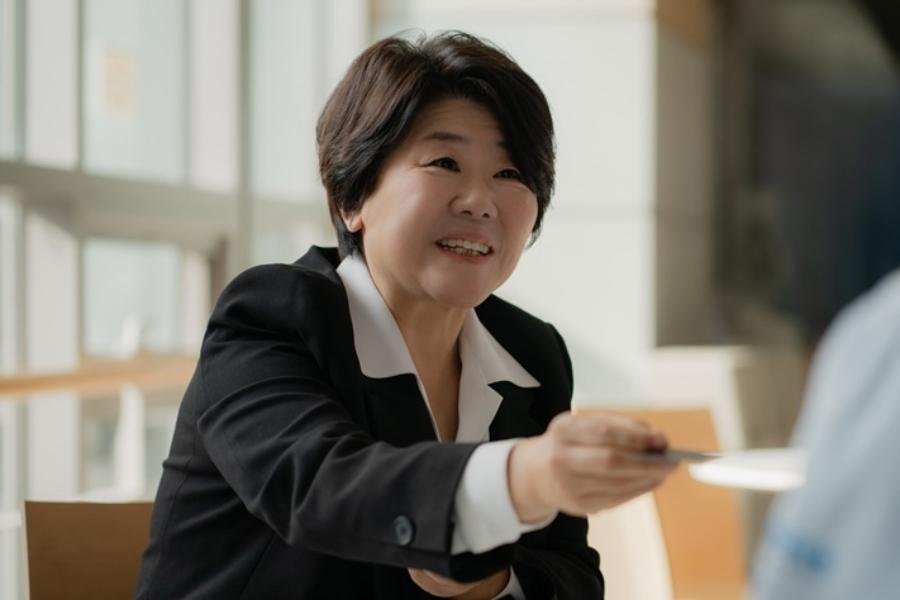
This is the supporting-role change I find most promising.
In Japan, Ittoku Kishibe plays Akira Kanbara, the head of Daimon’s medical placement agency. Korea gives that corresponding position to Lee Jung-eun’s Jang Hee-sook. This is an actual counterpart relationship confirmed by TV Asahi, rather than a fan-made character match.
Hee-sook’s outward concern with money sits alongside a much more personal connection to Su-jeong. The Korean production has highlighted their bond through shared wounds and solidarity between women of different generations. Kim Ji-won has also described Hee-sook as someone who can be a boss, an aunt-like figure and a friend.
That combination offers something more useful than simply giving the heroine a warmer person to stand beside.
Hee-sook can negotiate with the world Su-jeong finds difficult while still having her own financial interests and methods. I want the remake to preserve that friction. A relationship becomes more interesting when affection and business overlap without making every disagreement disappear.
“Medical noir” changes the emphasis, not the existence of corruption
Calling the original a straightforward hospital comedy and the remake a newly political version would misrepresent Japan’s series.
The original already deals with hierarchy, institutional self-interest and doctors protecting their positions. Korea did not invent that conflict. TV Asahi’s own remake announcement describes the adaptation as medical noir, so the distinction is in presentation and emphasis.
The Korean setting makes the network of influence explicit through Mokryeonhoe, also rendered as the Magnolia Society, a group of powerful doctors. Its surrounding cast includes hospital management figures and ambitious physicians whose priorities extend beyond patient care.
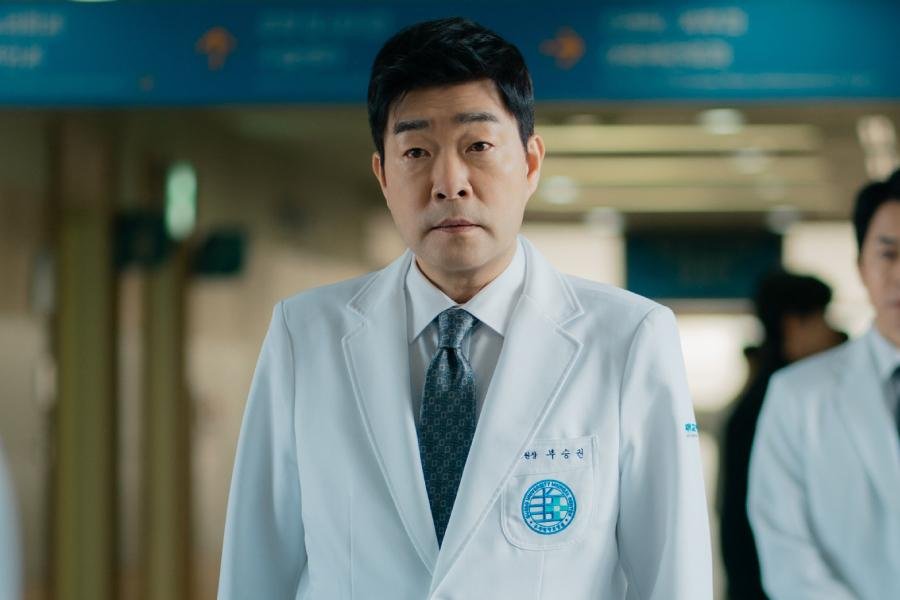
The premiere also creates an uncomfortable situation around Bu Seung-kwon, played by Son Hyun-joo: recognising Su-jeong’s usefulness does not automatically make him a trustworthy ally. Someone can support a capable doctor because her skills help his position.
That is the tension I want more of. A hostile boss is easy to recognise. A powerful person who helps you for reasons you cannot trust gives the heroine a harder problem.
Fans are debating personality more than fidelity
The opening-week Reddit discussions are divided in a fairly specific way.
In r/KDRAMA’s episodes 1–2 thread, some original-series viewers welcomed Kim Ji-won’s more restrained interpretation, while others missed Daimon’s expressiveness and confidence. A separate r/kdramas discussion similarly contrasted Su-jeong’s darker, more nonchalant presentation with the Japanese heroine’s sassier appeal.
There is a lovely smaller detail in the main discussion, too: appreciation for a heroine who leaves work at six. That reaction gets at an enduring part of Doctor X. Viewers are responding to someone who can care about patients without treating every demand from an employer as sacred.
These are sampled reactions, not a fandom-wide vote. Even within the same thread, people disagree about whether Su-jeong feels compellingly restrained or insufficiently lively.
For me, that is the useful doctor x Korean remake vs original argument. Recognisable plot beats can survive a remake quite easily. Preserving the pleasure of spending time with the central character is a tougher job.
Doctor X viewing guide: where should you start?
Start with Japan’s first season if you want the original character. Eight episodes make it a manageable entry point. You do not need to commit to all seven seasons before deciding whether Daimon’s approach works for you.
Start with Korea if Kim Ji-won and the medical-noir premise brought you here. Begin at episode one. This is an adaptation, not the next chapter of Daimon’s life, so Japanese continuity will not prevent you from following Su-jeong.
Try both premieres if you mainly want a Doctor X comparison. Pay attention to the emergency introduction, the surgeon’s first confrontation at work and the agency relationship. Those give you a more revealing comparison than counting how often the scripts repeat the same situation.
For streaming, the Korean series is listed on Netflix as Doctor X: Mafia in White. Availability and subtitle options depend on your location. For the Japanese franchise, TV Asahi’s official Doctor X site is the reference point; local streaming catalogues may carry different parts of the series.
Is there romance, and should you expect a different ending?
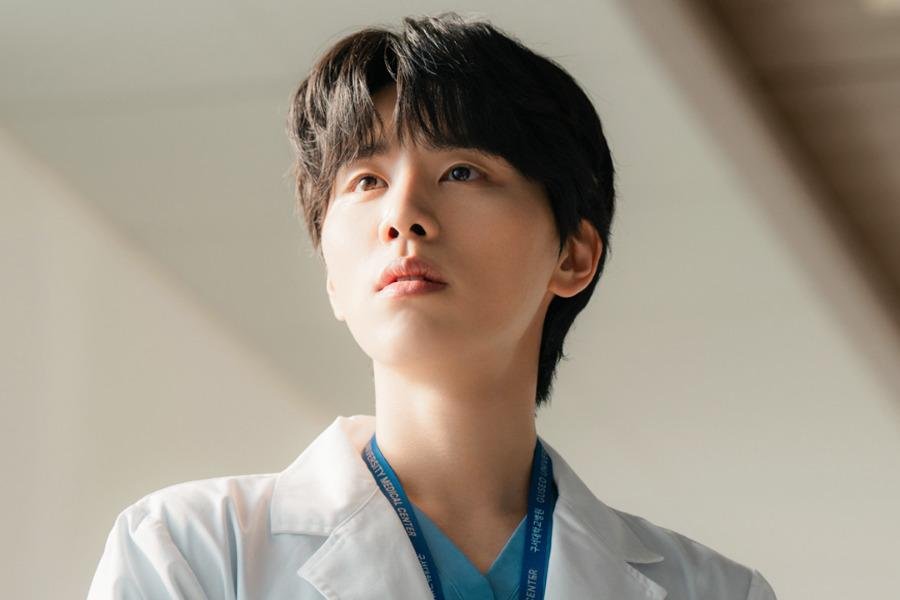
The Korean promotion describes Su-jeong and Park Tae-kyung, Kim Woo-seok’s inexperienced intern, through a mentor-and-mentee relationship. His fascination with her skills is not, by itself, confirmation of a central romance.
I would choose this for the surgeon and the hospital conflict first. If your current mood is romance, our Between Steps review offers a separate option to consider.
As for the ending, the Korean run has only just begun. Similar openings do not prove identical character outcomes, and the existence of a Japanese film does not tell us where this adaptation will stop. Any confident finale comparison would be premature.
My pick: Japan first, Korea on its own terms
My doctor x Korean remake vs original recommendation is Japan first if you have no strong preference. Daimon gives you the foundation against which the new choices become easier to understand.
Korea makes sense as your first watch if you are specifically interested in Su-jeong’s reserve, Hee-sook’s relationship with her and the more explicit medical-noir framing. There is no prize for doing franchise homework before trying the version that interests you.
What I would resist is declaring every darker choice an improvement. A remake earns its differences when they create better scenes, sharper relationships or more interesting decisions. A heavier mood alone cannot do all that work.
For Doctor X recommendations, my simplest rule is to sample the heroine before committing to the hospital. You will be spending a lot of time with her refusal to compromise.
Would you rather follow Daimon’s outspoken confidence or Su-jeong’s guarded intensity—and which change has made the biggest difference for you?
amazing
Thanks