Our Sticky Love Ending Explained: Amnesia, Sang-gil and the Wedding
By Huzaifa | Updated october 1st, 2026
Why does Sang-gil stop fighting just when Tae-ha’s life seems most at risk? And why does Tae-ha never learn the truth behind that decision? This Our Sticky Love ending explained guide follows the memories, evidence and family secret that connect the final episodes of Netflix’s 2026 romance.
Spoilers ahead for all 12 episodes.
Quick Answer
Our Sticky Love ends happily for Eun-sae and Tae-ha: she recovers her memories, exposes Sang-gil’s crimes and marries Tae-ha. Sang-gil discovers that Tae-ha is his biological son and dies by suicide during their final confrontation. Tae-ha survives without learning that truth. The wedding and domestic epilogue confirm the couple’s future together.
The amnesia ends before the finale—and that changes everything
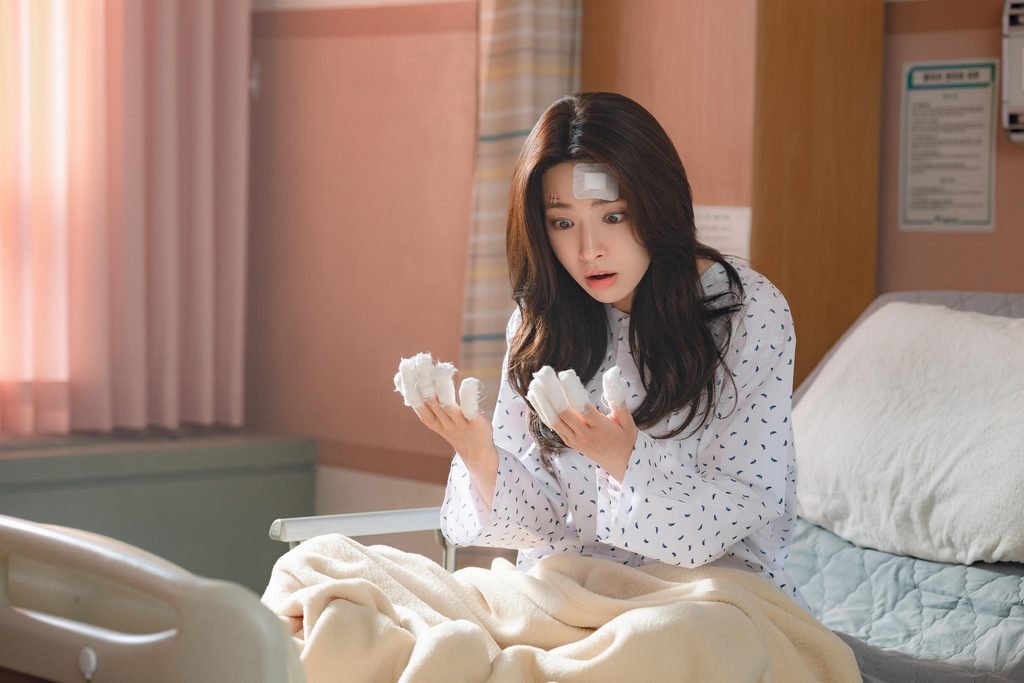
The detail I had to double-check was the timing: Eun-sae regains her memories at the end of episode 8, leaving several episodes for her to act on what she remembers.
Tae-ha arranges for her to escape to Japan because Sang-gil has discovered she is alive. Kaito helps get her onto a boat while Tae-ha confronts the threat on shore. A fire and explosion trigger the return of her traumatic memories.
She remembers the investigation, Sang-gil’s attack and the danger she was trying to expose. She then returns to her work instead of continuing to hide.
Netflix’s episode guide makes that sequence clear: episode 9 begins with her memories restored and her attention turning toward Sang-gil.
That timing matters emotionally. Eun-sae has time to reassess Tae-ha with knowledge of her own past. The wedding comes after that reassessment; recovering her memory does not automatically settle every question about their relationship.
Eun-sae and Ji-won are the same person

Go Ji-won is her legal name; Go Eun-sae is the name her mother gave her. These names belong to one woman, not two identities created by the amnesia.
Tae-ha uses Eun-sae, a name connected to her personal history. Knowing it helps him sound convincing, but knowing someone’s private details does not make his claim to be her boyfriend true.
His feelings have a longer history. Eun-sae previously helped him when his boxing career was threatened by unfair treatment, and they encountered each other again in Japan. She matters to him before the hospital.
That explains his determination to protect her. It also explains why their early scenes can feel sincere and dishonest at the same time: his affection is real, while his account of their relationship is misleading.
Netflix’s original introduction frames the romance around precisely that uneasy arrangement. The ending has to answer whether Eun-sae would still choose him once she can judge the situation for herself.
How the shoes and backup evidence bring Sang-gil down
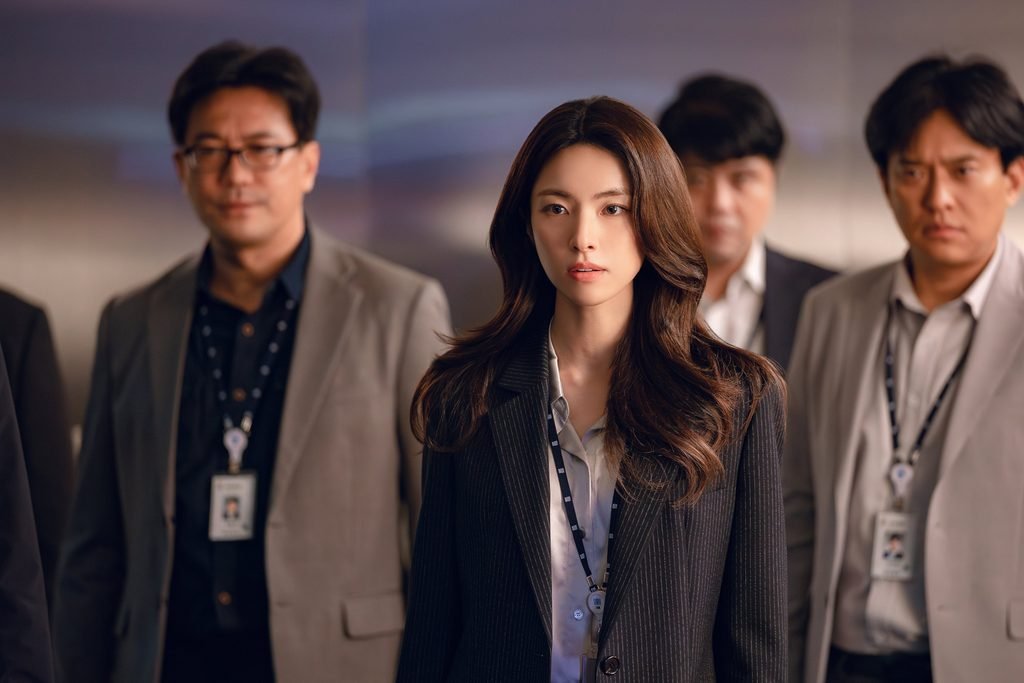
Sang-gil’s control depends partly on suppressing evidence. Eun-sae’s watch contains a recording connected to her corruption investigation, but confiscating the watch does not destroy every route to the truth.
Her sneakers also carry recording equipment, with footage backed up to cloud storage. Once her memory returns, she can reconnect the missing pieces and recover evidence that keeps the case alive.
That is why the shoe reveal matters. Something that might look like an ordinary costume detail belongs to a plan she made while she was still working as a prosecutor.
The recovered material helps her move against Sang-gil. His eventual conviction and life sentence are followed by an escape during prison transport, which creates the danger in Gujin.
The sequence separates two victories. Eun-sae succeeds in exposing him through her investigation. The final confrontation happens because he escapes punishment and brings the threat back to the people around her. Her earlier work still counts.
Our Sticky Love finale recap: the confrontation in order
The village fights back
Episode 12 continues the conflict in Gujin. Kaito, Coach Hong and the villagers resist Sang-gil’s men while Tae-ha heads to protect his grandmother. Eun-sae arrives with the police.
The community participates in its own rescue. The people who once surrounded the couple with gossip and awkward advice now stand beside them when the danger becomes real.
Sang-gil recognises the family connection
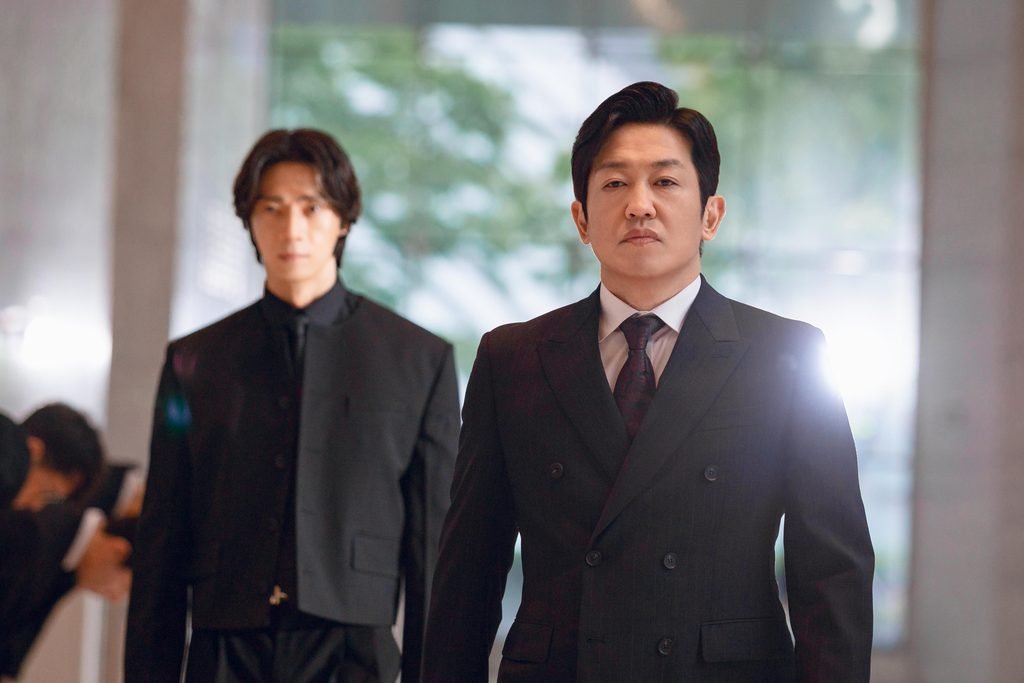
The recognition begins with photographs at the grandmother’s house. Sang-gil sees Tae-ha’s mother, Hye-su, and connects the adult Tae-ha to the baby she once brought to him.
The flashbacks explain their relationship and his abandonment. The photograph gives him information he did not possess throughout his years with Tae-ha.
The weapon changes hands
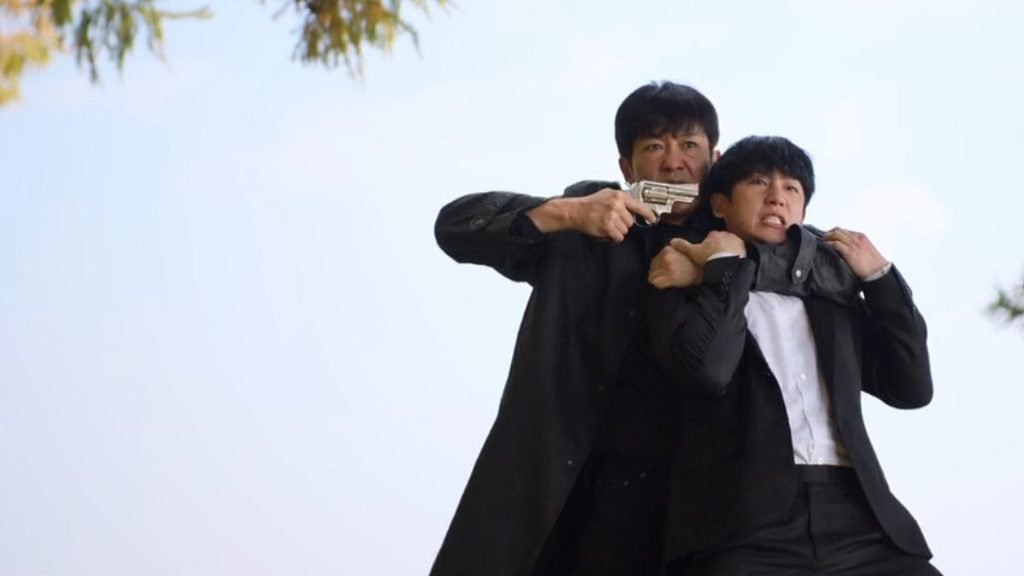
Tae-ha confronts Sang-gil and gets control of the gun. Sang-gil subsequently regains it. Eun-sae and the police close in, making another escape increasingly difficult.
Tae-ha still sees a violent former boss. Sang-gil now sees his son.
Tae-ha survives; Sang-gil dies
Sang-gil pushes Tae-ha away and dies by suicide. He does not reveal their biological relationship before his death.
That unequal knowledge is the reason the scene feels unresolved even though the immediate danger is over. The audience understands a change in Sang-gil that Tae-ha cannot fully explain.
Our Sticky Love ending explained: what Sang-gil’s last choice means
Sang-gil’s history gives context to his behaviour. He grew up with an abusive father, lost his future in boxing after cheating and entered organised crime. He also rejected the family he could have built with Hye-su.
Discovering Tae-ha’s identity forces him to confront what he has done to his own child.
My reading is that the final scene combines recognition, shame and a refusal to face the consequences of his crimes. It can suggest a last impulse to spare Tae-ha without turning Sang-gil into a redeemed father.
Another reading places more weight on his wish to keep Tae-ha from killing him and carrying that burden. These motives can overlap, but the drama does not provide a full confession explaining every part of his decision.
His death ends the immediate standoff. It does not repair his victims’ lives or make suicide a necessary solution. He could have surrendered. That unrealised possibility is part of what makes the scene tragic.
Does Tae-ha ever discover that Sang-gil is his father?
No. The drama ends without showing Tae-ha learn the truth.
This is the distinction I keep coming back to: the audience receives an answer about Tae-ha’s family, but Tae-ha himself does not. His marriage is not shown as a recovery from knowingly losing his father.
The reveal also should not be used to explain all of Sang-gil’s earlier behaviour as secret paternal affection. His recognition comes late. Earlier moments can gain irony for viewers without proving that he knew all along.
There is room to question the silence. One interpretation sees it as sparing Tae-ha another wound. Another sees it as withholding information that Tae-ha should have been allowed to process himself.
Both are interpretations. What is clear is that the story gives him a future through the people who have cared for him: his grandmother, his coach, Eun-sae and the village. Biological connection alone has never supplied that care.
Why Eun-sae chooses Tae-ha after remembering the truth
The romance’s hardest question is whether feelings formed during amnesia can survive a complete account of the past.
Eun-sae’s answer is yes. Her restored memories allow her to recognise both Tae-ha’s deception and his efforts to keep her alive. She returns to him with her identity and professional purpose intact.
An earlier conversation about marriage helps explain this. In episode 7, Tae-ha asks her to decide after her memories return. The finale fulfils that condition: she now has the information that was missing when he first claimed they were together.
I read the marriage as a new commitment made after the original lie has been exposed. Viewers can still object to his methods; the ending does not require everyone to consider them harmless.
For the relationship’s earlier turning points, our guide to whether Eun-sae and Tae-ha end up together follows how their uncertain arrangement becomes a relationship she chooses.
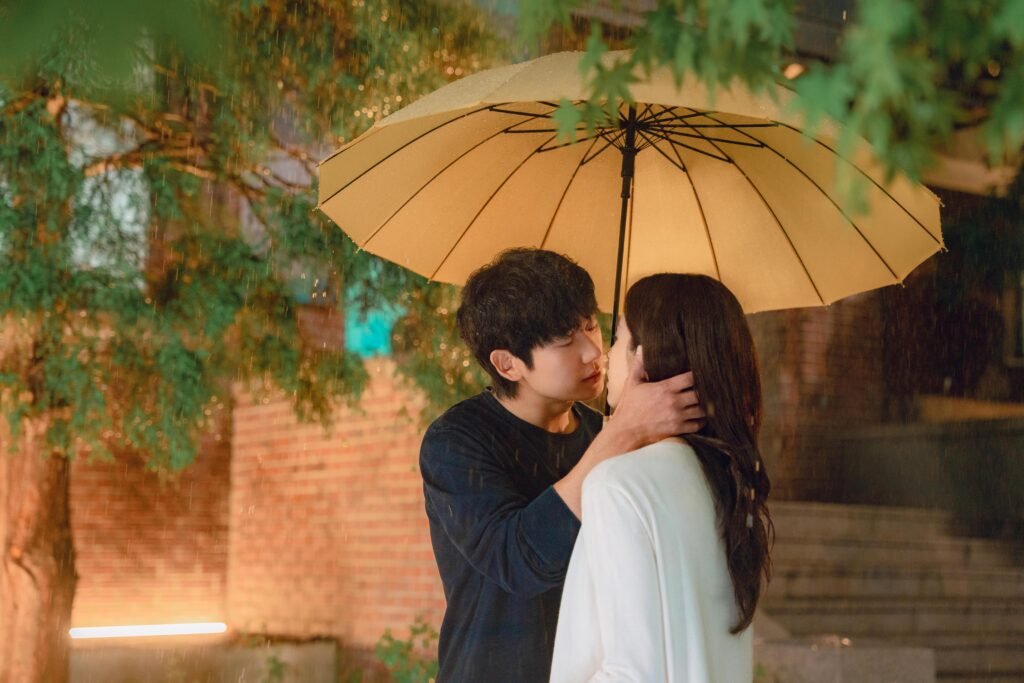
The wedding, the rain and the life after the danger
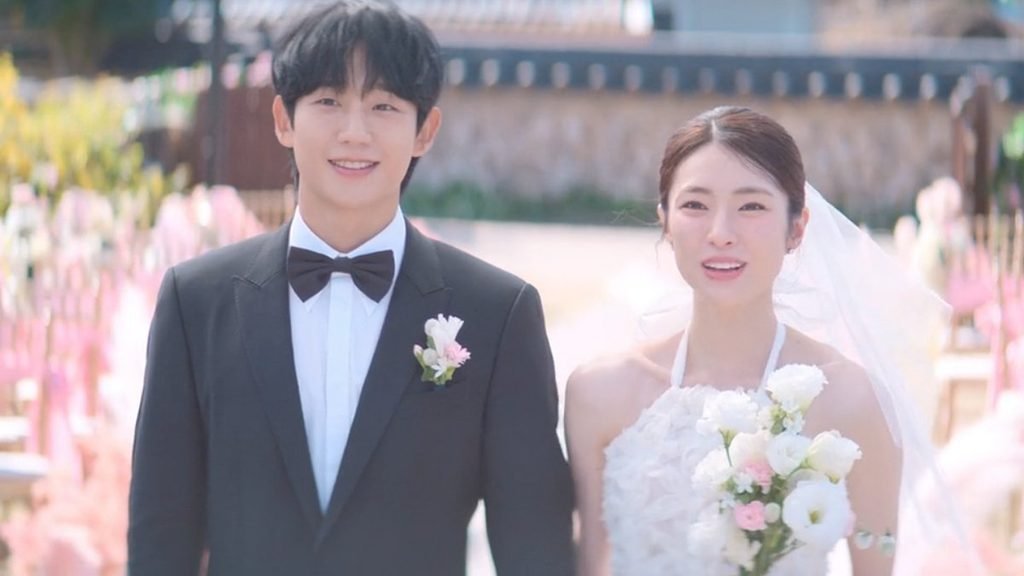
Tae-ha proposes, and the couple marry in Gujin with the villagers around them. The ceremony is followed by a playful domestic epilogue, including the wedding-night drinking mishap and their life together afterward.
Rain is the most telling visual callback. Tae-ha has associated it with painful experiences. At the wedding, he can stand in it happily.
My interpretation is that a familiar reminder of suffering acquires a new association. The bad memories still exist, but they no longer decide what every rainy day must mean.
The later photographs fit Eun-sae’s story in a similar way. After losing access to her past, she has a future full of moments she wants to preserve. They are not evidence of another memory loss.
The taffy imagery supports this emphasis on attachment: director Kim Jang-han’s explanation of the title connects it to a sweet, persistent bond. The village gives that idea a visible home.
What happens to Gi-jun and Su-ji—and what stays unresolved?

An Gi-jun and Min Su-ji reconcile. Their relationship has suffered because his feelings do not reliably become words or actions she can trust. His renewed commitment gives their story a hopeful resolution.
Their problem echoes the main romance: caring about someone privately is not enough if that person cannot understand where they stand.
The ending is less detailed about the legal aftermath surrounding Tae-ha’s gang years and the wider criminal organisation. The peaceful epilogue should not be expanded into an invented account of immunity agreements, prosecutions or every accomplice’s punishment.
The same caution applies to the grandmother’s health. A warm closing scene is not confirmation that a previously established condition has disappeared.
Those are gaps in the aftermath, rather than evidence that the wedding is imaginary or that the couple secretly separate. Their romantic outcome is clear. Some practical consequences receive much less attention.
Our Sticky Love Ending Explained FAQ
Does Our Sticky Love have a happy ending?
Yes. Eun-sae and Tae-ha survive, remain together and marry. Sang-gil’s death gives the finale a tragic passage, but the couple’s wedding and domestic scenes establish a happy romantic ending.
When does Eun-sae get her memory back?
At the end of episode 8. The explosion during the attempted escape triggers her memories. By episode 9, she is using what she remembers to pursue Sang-gil.
Are Go Eun-sae and Go Ji-won different people?
No. Ji-won is her legal name, while Eun-sae is the name her mother gave her. Both names refer to Ha Young’s character.
Does Tae-ha know Sang-gil is his biological father?
No. Sang-gil recognises their connection, but the drama does not show him telling Tae-ha or Tae-ha discovering it independently.
All 12 episodes of Our Sticky Love are available on Netflix.
Did Sang-gil’s silence spare Tae-ha more pain, or deny him a truth he deserved? Share your interpretation in the comments—and tell me which earlier scene changed the most once you knew the family secret.
nice
good bro