Dead End Job Ending Explained: The Final Job and What It Means

Written by Huzaifa
Did Hyeok-jun escape Spider Staffing Agency, or just qualify for a promotion? That is the nasty question Dead-End Job leaves behind. If you want the dead end job ending explained without mistaking a cliffhanger for an answer, start here: surviving the amusement park does not settle what happens next.
Quick Answer: Hyeok-jun and Ji-yoon survive and close the gateway, but their father remains behind. Yeon-joo pulls Mr. S into the other world. Later, his recorded message offers Hyeok-jun the agency’s managerial role; his answer is withheld. Ji-yoon’s separate Kyungil Group recruitment message leaves both siblings’ futures unresolved.
Full spoilers for all eight episodes, including the credits scene. The 2026 series is available on Netflix.
Dead-End Job finale explained: the carnival’s cruel performance

Episode 8, “Last Carnival,” begins with Ji-yoon accompanying Mr. S through the passageway while Hyeok-jun faces a nightmare built around his father.
He is pulled into the television-show memory of Challenge! A Father’s Miracle, where Byeon Min-su must perform for his family’s benefit. Hyeok-jun begs him to stop. The sequence becomes increasingly distorted, bringing back figures associated with the earlier jobs before Hyeok-jun escapes the haunted house.
This is not the reunion that resolves his father’s disappearance. Keep that distinction in mind: the nightmare comes first; the meaningful encounter with Min-su follows later.
My reading is that the performance makes the agency’s bargain painfully visible. A father has to put himself on display to earn something for his family. His need becomes somebody else’s entertainment.
I find that more disturbing than another creature jumping out of the dark. The audience can enjoy the spectacle because the cost belongs to the person onstage.
Why Hyeok-jun opens the door despite the warning
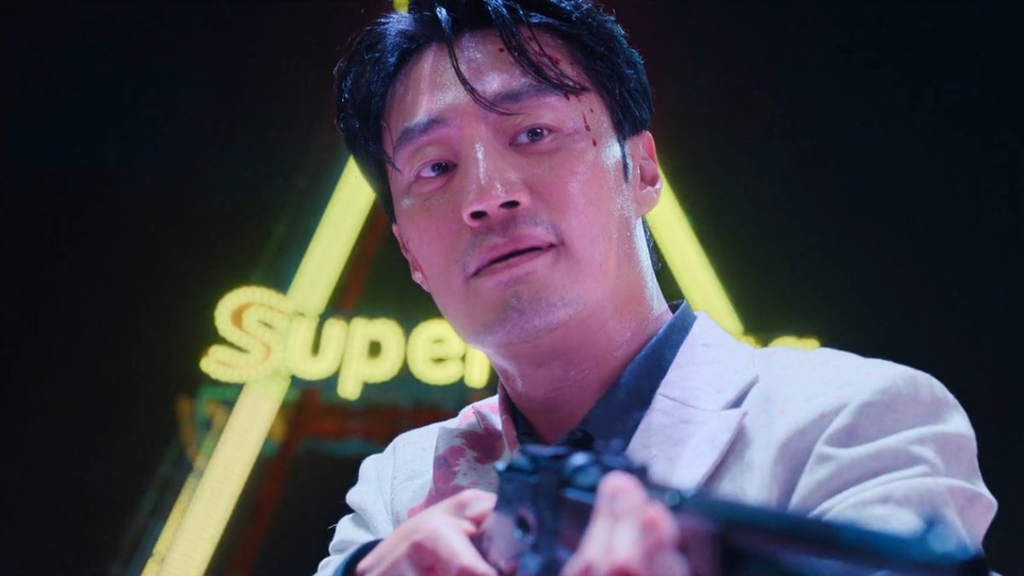
Outside, Yeon-joo urges Hyeok-jun to open the gateway. Mr. S arrives and tries to stop them, warning that opening it will let the other world’s beings through. The confrontation turns violent, and Hyeok-jun is shot before he opens it.
Mr. S defends the agency through a calculation: some people have been sacrificed, but more have supposedly been saved. Hyeok-jun challenges the way that argument strips the workers of their humanity.
The detail I would focus on during a rewatch is who gets to decide what another person’s life is worth. Mr. S speaks as though desperation gives him permission to make that decision.
That is why the choice matters beyond trusting Yeon-joo. Hyeok-jun rejects the authority of a man who treats vulnerable workers as expendable.
Still, rejecting Mr. S does not make opening the door harmless. Hyeok-jun acts without a complete understanding of the consequences. The finale lets his anger be justified while leaving his decision dangerous.
Yeon-joo’s revenge explains her help—and her deception

Yeon-joo’s history reaches back to the abuse of workers at Kyungil Textile decades earlier. Her apparent role as an investigator hides her connection to the other world and her own agenda.
She wants the boundary opened. Once Hyeok-jun does so, supernatural forces emerge; Yeon-joo overpowers Mr. S, breaks his hands and throws him into the opening. She apologises to Hyeok-jun for deceiving him before disappearing into the other world herself.
So, is she evil? I would be careful with that shortcut. Her anger has a human history, and her assistance has sometimes protected Hyeok-jun. But helping him does not cancel out using him.
The uncomfortable part is that she wants him to exercise a choice while withholding information that could change it. That echoes the agency’s recruitment tactics, even though their goals differ.
Her apology acknowledges the betrayal. It does not establish that everything she unleashed has been repaired, or that she and Hyeok-jun share the same idea of a better world.
Finding Min-su does not mean bringing him home
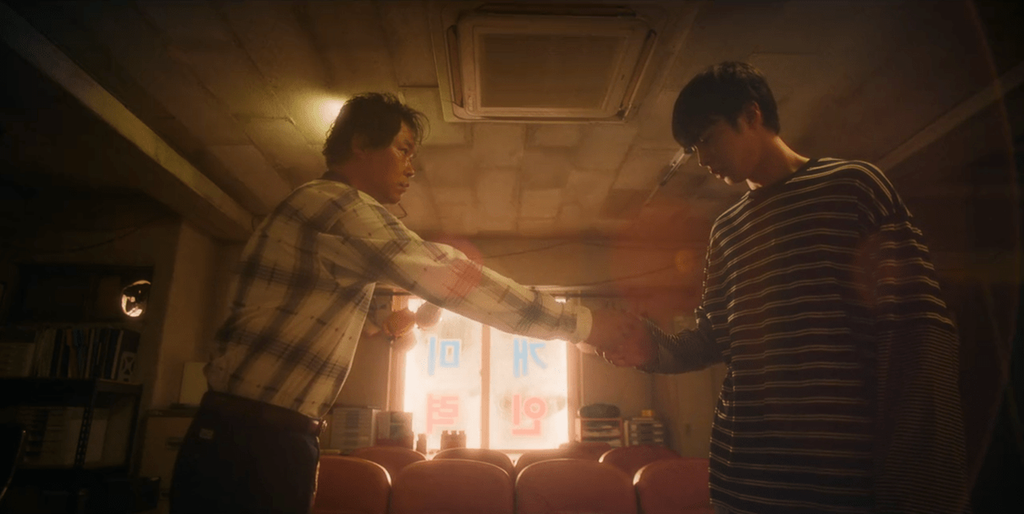
After the gateway opens, Hyeok-jun finally encounters his father. Min-su is still preoccupied with providing for the family. He gives Hyeok-jun money to take back and urges him to leave, but he does not return with him.
The disturbing shadow associated with Min-su suggests that his condition has changed. The exact supernatural mechanism remains unexplained. The firm outcome is that Hyeok-jun finds him but cannot rescue him in this finale.
That restraint matters. A theory that Min-su could be recovered later is possible speculation, not an ending the drama gives us.
For me, the money is the scene’s most painful object. A paycheck should mark the point when work ends and someone goes home. Here, the money can make that journey while the person who earned it cannot.
It also changes the emotional meaning of his absence. Hyeok-jun reaches a father still thinking about his family, rather than receiving the simple abandonment story that his disappearance might once have suggested.
Ji-yoon closes the door, but the aftermath stays uneasy

Ji-yoon pulls Hyeok-jun back, and the siblings shut the gateway together. They escape and reunite with their mother, beginning again in a smaller home. The immediate catastrophe has been interrupted.
This is the distinction any dead end job ending explained discussion needs to preserve: closing the door stops the immediate flow through it; it does not prove every consequence has vanished.
Later reports of strange fires keep that uncertainty alive. They suggest a continuing disturbance, but do not give us a complete map of which entity caused which incident.
I also think Ji-yoon’s intervention answers the carnival’s image of isolated sacrifice. Min-su was left performing for his family’s benefit. His children survive this crisis by acting together.
That is an interpretation of the parallel, not a newly revealed supernatural rule. The emotional point is straightforward: Hyeok-jun needs help. He cannot finish this story by being the family member who absorbs every danger alone.
The bridge scene offers hope without pretending life is fixed
Back in ordinary life, Hyeok-jun encounters a woman contemplating suicide on a bridge. He intervenes, recognising a desperation close to his own at the beginning of the series.
He does not suddenly possess a perfect speech capable of solving her circumstances. She nevertheless steps away and continues living.
This is the second detail I would pay attention to on a rewatch: he helps without offering a transaction. There is no dangerous assignment attached, no promise that her life becomes valuable only if she makes herself useful.
My reading is that this scene gives him a way to act differently before the managerial offer tests him on a much larger scale.
A dead-end job happy ending would need more security than the finale provides. Yet calling it entirely hopeless misses this change. Hyeok-jun can recognise another person’s pain and respond to it without converting that pain into an opportunity for himself.
The final job offer changes what Hyeok-jun is being asked to risk
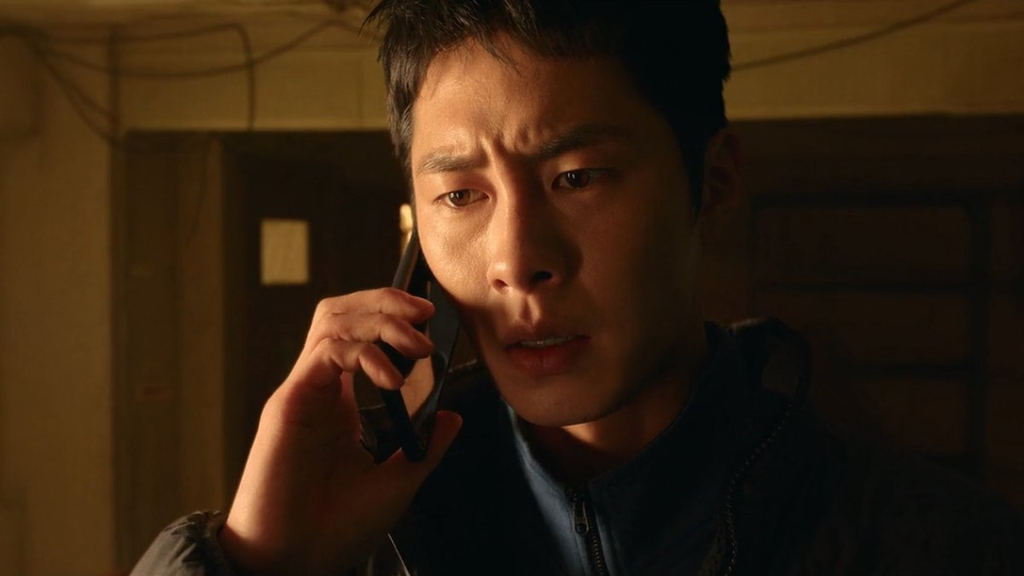
The dead-end job final scene brings Hyeok-jun back into contact with Spider Staffing. He receives an offer to take over as manager, accompanied by Mr. S’s recorded message about the broken balance and a different truth he might discover in the role.
We do not hear Hyeok-jun accept or reject it. Being selected is not the same as consenting.
The recording also fails to confirm that Mr. S is alive. His physical fate after Yeon-joo sends him through the doorway remains uncertain; a prepared message can outlast its sender.
Here is the strongest thematic reading, in my view: the first offer tested what Hyeok-jun would endure. This offer tests what he would permit other people to endure.
Two interpretations remain open. He might accept to investigate or change the agency. He might refuse because assuming responsibility on Mr. S’s terms would repeat the trap. Neither is confirmed, and there is no demonstrated reform plan waiting behind the credits.
Ji-yoon’s recruitment message makes the cliffhanger bigger
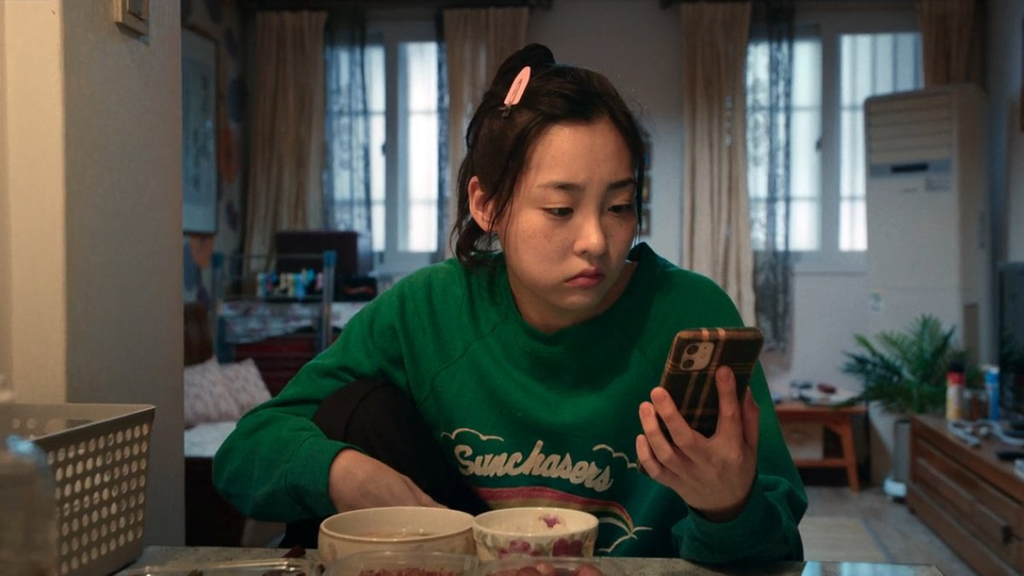
The credits scene gives Ji-yoon a congratulatory employment message from Kyungil Group. The name connects back to the factory and amusement-park history, so this is not an innocent-looking company introduced at random.
Her surprise makes the message unsettling. However, the scene does not establish the duties of the position, the recruitment mechanism, or that she has knowingly agreed to become part of a supernatural operation.
The two offers create a pointed comparison: Hyeok-jun is approached through the openly sinister agency, while Ji-yoon receives a recognisable corporate success message. I read that as the threat learning to look desirable in more than one way.
For the dead-end job character outcomes, the distinction is simple:
| Character | Where the finale leaves them |
|---|---|
| Hyeok-jun | Survives; managerial offer unanswered. |
| Ji-yoon | Survives; receives Kyungil recruitment news. |
| Min-su | Remains in the other world. |
| Yeon-joo | Disappears after turning on Mr. S. |
| Mr. S | Sent through the doorway; later heard in a recording. |
Dead End Job ending explained: your remaining questions
Does Hyeok-jun become the new Spider Staffing boss?
The finale offers him that position but withholds his decision. Saying he definitely becomes the boss goes beyond what is shown. His future is the cliffhanger.
Is Dead-End Job’s ending happy or sad?
It is bittersweet and open-ended. The siblings survive and return to their mother, but Min-su stays behind, and both new employment messages threaten the family’s fragile fresh start.
Was Mr. S telling the truth about protecting the world?
His warning cannot be dismissed outright, because opening the gateway does release dangerous forces. But that does not independently prove his sacrifices were the only solution or justify how he treated workers.
Does the ending confirm Season 2?
No. Netflix lists Dead-End Job as a limited series, and no second season has been officially announced in the information available for this explanation. Unresolved plot threads create possibilities; they do not confirm a continuation.
Would Hyeok-jun do more good by taking the job or refusing it? And is Ji-yoon being recruited, watched, or baited? Share your theories in the comments—especially the detail that makes you trust, or doubt, Mr. S’s final offer.