The Remarried Empress Drama Webtoon & Novel Guide
Written by Huzaifa
A novel, a webtoon, a shelf of English books, and a drama with the same title: it is surprisingly easy to pick up the wrong version of Navier’s story. The Remarried Empress drama webtoon connection makes more sense once you separate the original writing from its illustrated adaptation—and stop treating every numbered release as the same chapter.
Quick Answer: The Remarried Empress began as Alphatart’s Korean web novel, then became a webtoon adapted by HereLee and illustrated by SUMPUL. The live-action drama is promoted as a NAVER WEBTOON adaptation. Both reading versions share Navier’s central story, but their formats, pacing, and chapter numbering differ. English Ize Press books contain the comic.
Spoilers below cover the opening divorce setup and early character motivations. This is a source guide, not a recap of the drama’s unaired ending.
Which version came first?

The Remarried Empress original story is a web novel, titled 재혼 황후 in Korean. Naver’s original chapter listing dates its first installment to November 2, 2018. The Korean webtoon followed in October 2019.
That order matters. Alphatart created the story; HereLee adapted it for comics; SUMPUL supplied the webtoon artwork. Calling all three people “the novelist” blurs different creative jobs.
| Version | What it contains | Where it fits |
|---|---|---|
| Korean web novel | Serialized prose by Alphatart | The original story |
| Webtoon/manhwa | Illustrated adaptation by HereLee and SUMPUL | The comic version |
| English Ize Press volumes | Collected comic pages | A book edition of the webtoon |
| Live-action drama | Performances, sets, dialogue, and screen storytelling | A separate screen adaptation |
“Manhwa” refers to Korean comics. “Webtoon” describes the digital comic format, so readers may use both terms for the illustrated version.
The Remarried Empress drama webtoon source is therefore part of a longer publishing history. The comic is an adaptation itself; it did not create Navier’s story from scratch.
The divorce opening, beat by beat
The novel begins at the rupture, then returns to the circumstances that produced it. Its opening exchange has four important movements:
- Navier accepts the divorce. Sovieshu appears relieved and apologetic, while her supporters object.
- The high priest checks her decision. Navier understands that a prolonged dispute could damage Sovieshu’s reputation, but would also keep her entangled.
- She requests approval to remarry. The room’s response changes because she has introduced a future nobody expected her to announce.
- Her chosen partner steps forward. The revelation shows that her request is a prepared decision, not an impulsive threat.
The detail I had to check twice is the authority she addresses: Navier requests remarriage approval from the high priest. Describing the scene simply as her asking Sovieshu for another husband loses that distinction.
She also reflects that revenge was not her purpose, even though his reaction gives her satisfaction.
That small qualification changes the scene. Her choice can hurt Sovieshu without being built entirely around hurting him.
Why losing the marriage also threatens Navier’s identity

Navier has been trained to be empress. The marriage and the position overlap, but they do not mean exactly the same thing to her.
The second novel chapter makes her emotional confusion unusually clear. After Sovieshu reacts defensively to questions about the woman he brought back, Navier struggles to explain why she feels so wounded. She had prepared herself for the possibility of a mistress; his sudden coldness still hurts.
Countess Eliza treats that hurt as understandable. A political marriage can contain years of companionship, habit, and attachment without being a sweeping love story.
My reading is that this makes Navier more interesting than a heroine who simply stops caring overnight. Knowing the rules of her society does not make her immune to them.
It also gives the later divorce request weight: losing Sovieshu’s affection is one injury; being pushed out of the role around which she built her life is another. Heinrey offers the possibility of a future beyond that rejection.
Novel vs webtoon: what changes in the reading experience?

The clearest distinction is how the story communicates a character’s thinking.
The prose opening gives direct access to Navier’s reasoning. We can separate what she says publicly from what she notices, doubts, and decides internally. That is especially useful for a heroine whose outward composure can be mistaken for emotional distance.
The webtoon adds a fixed visual interpretation through character designs, expressions, clothing, composition, and the rhythm of scrolling. Its credits correctly identify an adapter and an artist because turning prose into comics involves storytelling decisions.
Neither format automatically gives a character a different motive. A quieter presentation may change how strongly a reader feels that motive, though.
For The Remarried Empress adaptation differences, I would separate three questions: Did an event change? Did its explanation change? Or did the presentation make it feel different?
Those are different criticisms. A reaction panel cannot be compared word for word with a paragraph, and a missing sentence alone does not prove that the underlying story has been reversed.
Why matching chapter numbers will confuse you
A novel installment, a WEBTOON episode, a printed volume, and a television episode are different units.
Naver Series lists 337 installments for the completed Korean novel. That number belongs to that edition. It is not the number of English comic episodes, printed books, or drama episodes.
A comic adapts prose into panels, while a collected book groups comic material into a physical volume. Screen storytelling has its own running time and scene structure. Equal numbers do not promise equal stopping points.
If you want to switch formats halfway through, match the last event you actually read, including what the characters know at that moment. Then check the relevant edition’s contents. Do not assume that “chapter 80” means the same scene everywhere.
For a first read, I would start at the beginning. Jumping directly to the divorce may deliver the confrontation you came for, but it also removes the emotional buildup that makes Navier’s response satisfying.
What is confirmed about the drama’s source?
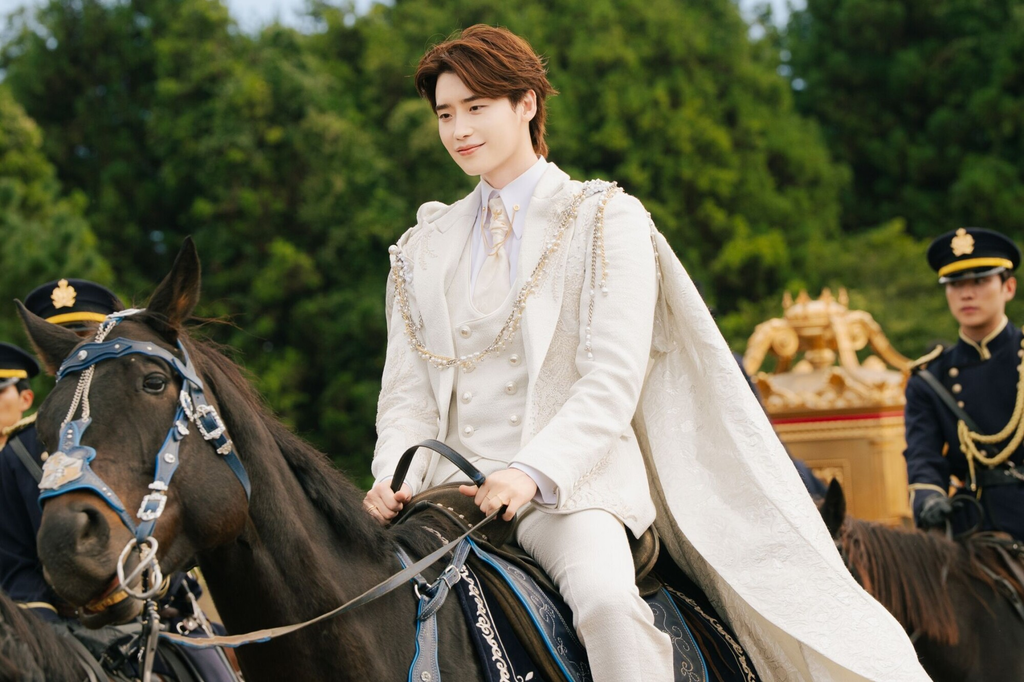
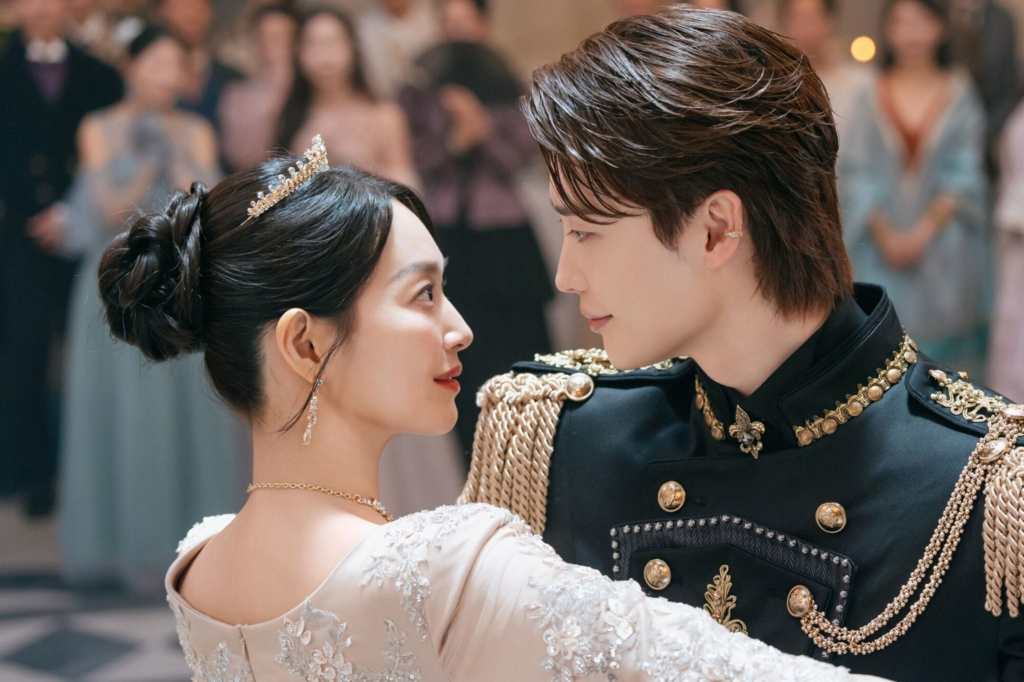
Disney’s promotion identifies the live-action production as an adaptation of the NAVER WEBTOON. The four central roles are Navier, played by Shin Min-a; Sovieshu, played by Ju Ji-hoon; Heinrey, played by Lee Jong-suk; and Rashta, played by Lee Se-young.
The announced US premiere is November 4, 2026, on Disney+ and Hulu. Availability depends on your region.
That means a complete The Remarried Empress drama webtoon comparison cannot yet claim which later plots the series removes or how it handles the ending. Announcements and trailers establish the project; they do not establish every adaptation choice.
For the 2026 live-action version, the question I care about most is whether Navier’s controlled exterior still leaves room for us to understand her hurt. That is an expectation, not a verdict on unseen episodes.
Our The Remarried Empress preview covers the cast and viewing expectations. Disney’s official November streaming schedule confirms the US launch.
The Remarried Empress legal reading guide
Choose by language and format before choosing by chapter count.
| What you want | Verified official starting point | What to know |
|---|---|---|
| Original Korean prose | Naver Series | The completed novel; check current rental and purchase options |
| English digital comic | WEBTOON | The illustrated adaptation; additional episodes may require the app |
| English printed comic | Ize Press through Yen Press | Collected manhwa, beginning with Volume 1 |
I checked the book credits again because this is an easy purchase to get wrong. A printed volume is not necessarily a prose novel. Ize Press credits SUMPUL’s artwork and HereLee’s adaptation alongside Alphatart.
Also, “completed” describes publication status. It does not promise that every installment is free, available in a browser, or included in one book.
Before paying, check the edition’s language, format, publisher, and access terms. Those details answer a more useful question than the cover title alone: am I getting the version I intended to read?
Can you still read the English novel on YONDER?
No. YONDER ended service on July 31, 2025. Old recommendations directing readers there are no longer usable reading instructions.
WEBTOON Entertainment’s launch announcement confirms that The Remarried Empress was part of YONDER’s catalog. Its former availability is real; that does not make the closed app a current option.
There are also English prose and Kindle listings described online as official. I could not independently confirm an active edition through a current rights-holder or publisher listing, so I would not label a particular seller verified here. That is a verification limit, not a claim that every English prose listing is unauthorized.
For readers who want a confirmed English option immediately, the official comic is the clearest starting point.
If you specifically want The Remarried Empress web novel, do not buy the Ize Press comic expecting prose. And do not treat a storefront’s use of “official translation” as a substitute for checking who publishes that edition.
Completed main story, new side stories: both can be true
The English WEBTOON marks the main series as completed and directs readers toward a separately listed spin-off.
That distinction matters when spoilers seem to contradict one another. The announced side-story material includes both further character stories and “IF” scenarios that revisit events under different circumstances.
An alternate scenario does not automatically replace the main story’s outcome.
If a post claims that Rashta has an entirely different relationship with Navier, or that a familiar decision plays out another way, check whether it is discussing the main narrative or an alternate route. Removing that label can turn a perfectly valid side story into a misleading “ending explained” claim.
For a new reader, I would finish the main story before exploring those variations. The point of a changed choice is easier to appreciate when you understand the choice it changes.
FAQ
Is The Remarried Empress drama based on a novel or webtoon?
The drama is promoted as a NAVER WEBTOON adaptation. That comic adapts Alphatart’s earlier Korean prose novel, so both belong in the explanation of its source.
Are the English Ize Press books the original novel?
No. They are collected editions of the illustrated adaptation, with artwork by SUMPUL and adaptation by HereLee. Check the format before buying.
Is The Remarried Empress webtoon finished?
The official English WEBTOON marks the main series completed. A separate spin-off listing exists, so new side stories do not mean the original series is unfinished.
Should I read the novel or webtoon before watching?
Neither is required. Choose the comic for an official English visual introduction, or the Korean novel for the original prose. Read ahead only if you are comfortable learning developments the drama may save for later.
Which part of Navier’s story do you think the drama most needs to preserve: her private reasoning, her public composure, or the slow rebuilding of trust? Share your theory in the comments.
what you think about this ?