The Blue Road Review — Is Netflix’s Crime Thriller Worth Watching?
Written by Huzaifa
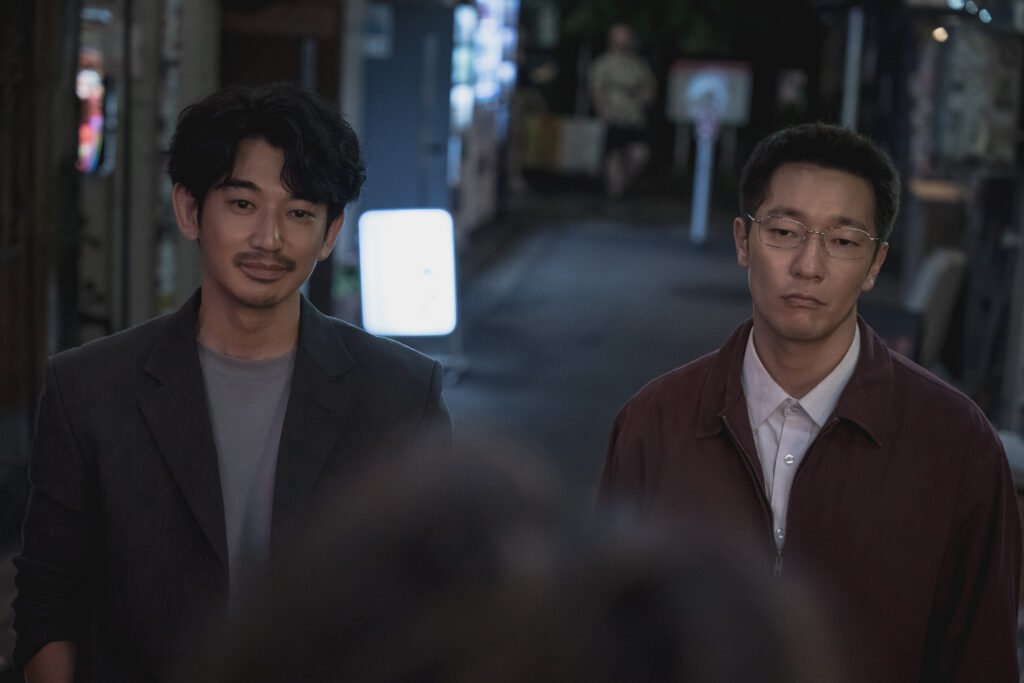
The man I’d least like to have to apologize to is Hiroshi Inose. He’s exactly the type to show up at your workplace wearing the opposing team’s football shirt just to enjoy the look on your face. He does it in Seoul, during the 2002 World Cup, and his timing is magnificent. My one-line The Blue Road review? Give whoever picked that shirt a raise. Netflix can sell me a serial-killer thriller with a frightening trailer. It takes a detective this petty to make me want eight episodes with him.
Spoiler-free verdict. Yes. The Blue Road earns 7.5/10 for Son Suk-ku and Eita Nagayama, who make two suspicious detectives fun to follow even through a genuinely upsetting case. The opening episodes give you clues you can work out alongside them. The second half rushes some answers, but the partnership earns its emotional payoff.
A murder in Tokyo with a clue that reads differently in Seoul
South Korea and Japan are co-hosting the World Cup. In Shinjuku, a young woman is found dead with her limbs bent out of shape. Someone has left a message in Korean at the scene. Seoul detective Kim Seok recognizes the arrangement from a killing back home, where the writing was in Japanese. Unfortunately for Kim, Tokyo detective Hiroshi Inose first clocks him as a suspicious man taking pictures. Their introduction involves a chase and a shop escalator. Professional courtesy will have to wait.
What hooked me about the writing on the wall was the spacing. A translation can tell Inose what the words mean. Kim sees how somebody put them there. That gives him a theory about who wrote them, and it gives us an early reason to take him seriously. It also leaves room for him to be wrong. A person who wants the police to look across a border has every reason to advertise which language they know.
Director Han Jun-hee builds that question into a Korean and Japanese crime thriller adapted from a comic. All eight episodes arrived on November 20, 2026. They run from 35 to 57 minutes, just over six hours altogether. If you want to go in fresh, skip Netflix’s later episode descriptions. Even the one for Episode 3 gives a name away. Watch The Blue Road on Netflix.
What works best is watching Kim and Inose change their minds
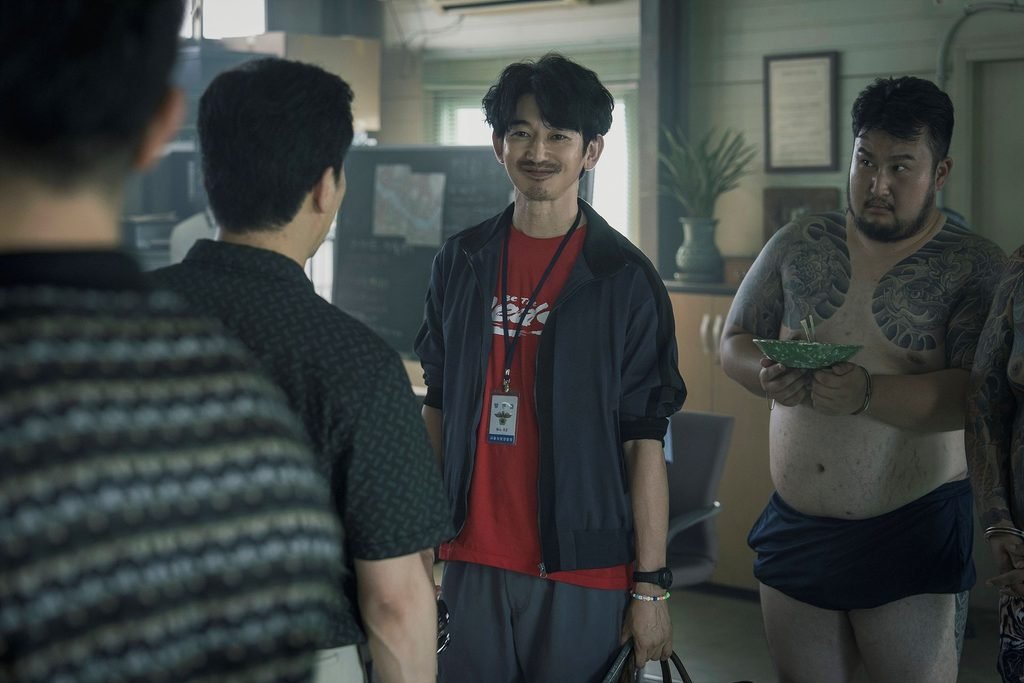
Son Suk-ku gives Kim the lovely, infuriating composure of a man who knows the exact answer to the question you should have asked. He lets people draw their own conclusions about what he’s doing in Japan. There’s real pleasure in seeing how far good manners and a straight face will get him. There’s also a fair question underneath the joke. If I were Inose and this fellow turned up on my case, why on earth would I trust the next thing out of his mouth?
Eita Nagayama has the showier entrance. His Inose looks like he slept in yesterday’s clothes and might do so again tonight. The scene that sold me on him comes when the first victim’s parents apologize for the trouble their daughter has caused. Inose gets angry at the suggestion that running away made her responsible for what somebody did to her. For once, that temper of his is aimed exactly where I want it. It tells Kim something a personnel file never could. This guy will pick a fight on behalf of someone who can no longer speak for herself.
Once they start switching between Korean and Japanese, listen for the little gap between one man finishing a thought and the other deciding how much of it to acknowledge. You can hear them testing each other. It makes the original audio worth choosing even if you usually watch dubbed. And it makes that football shirt funnier. By the time Inose wears it, he knows Kim well enough to get on his nerves on purpose. I buy an awful lot of affection between two people who have learned how to annoy each other that precisely.
How much of the violence do you actually see?
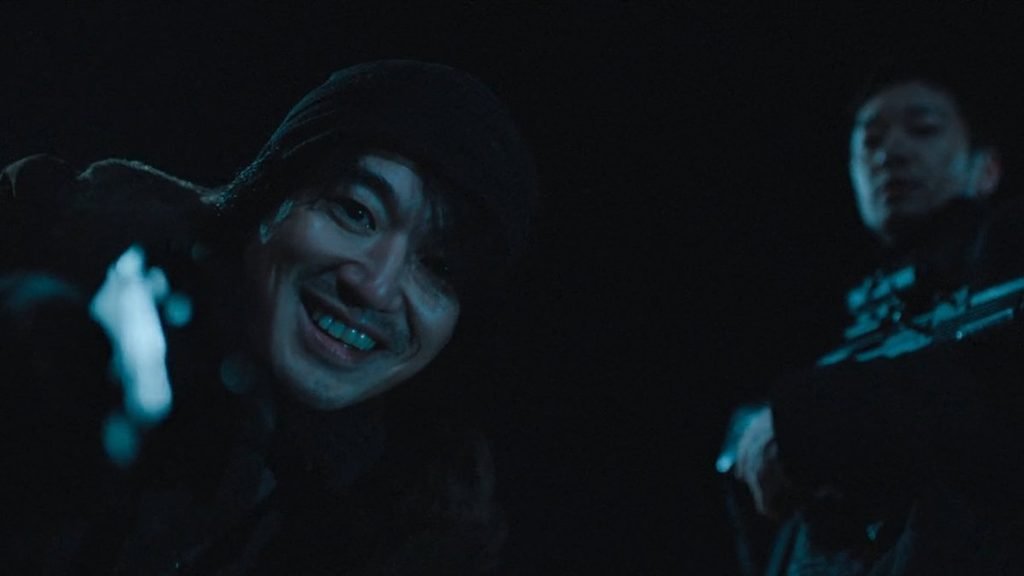
Quite a bit, and the sound can be worse. A man puts on headphones to listen to bones snapping. The headphones are the part I find especially nasty. Somebody had to decide this was a sound worth keeping, then sit down to enjoy it in private. If torture is a deal-breaker for you, take the opening seriously. The jokes between the detectives are very funny, and they have no bearing whatsoever on how rough the next crime scene might be. DaebakDaily’s spoiler-light guide to the violence and age rating.
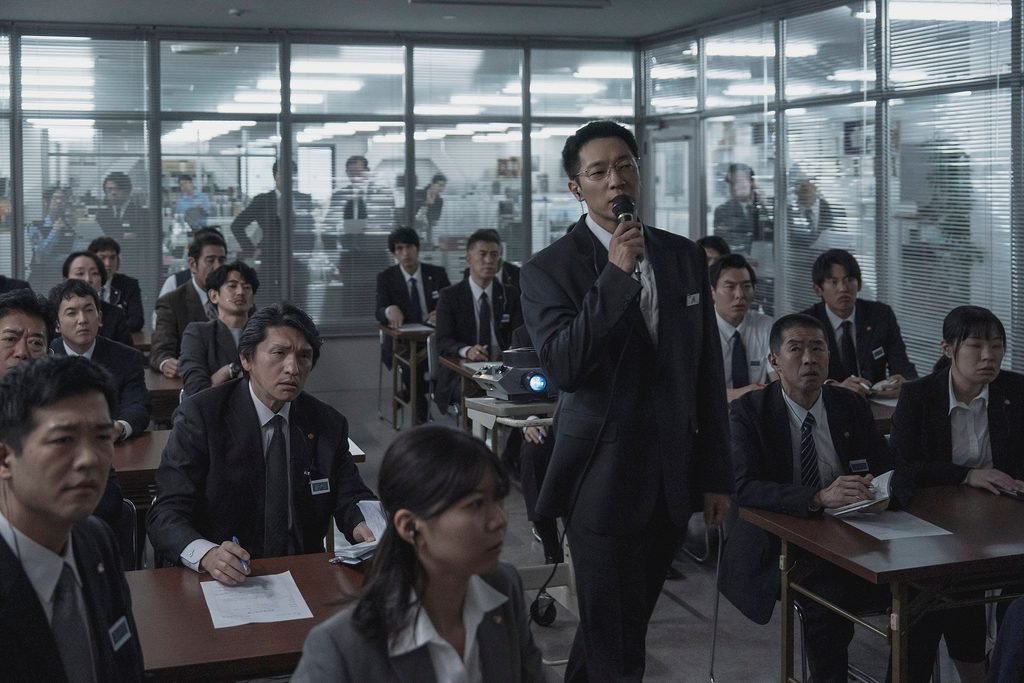
The World Cup setting gives those tonal swings a reason to exist. In another show, all those supporters in red would be there to tell you what year it is. Here, police officers have match-day duties while a murder inquiry needs staff. Thousands of people have a perfectly good reason to be looking in another direction. I like that the people celebrating get to keep their evening. From inside the investigation that ordinary bit of happiness starts to look horribly like an opportunity.
Where the second half loses ground
Halfway through the case, I could have written a much more enthusiastic The Blue Road review. Then the series began giving more and more time to whoever knew the most about Kim’s past. Early on, a witness offers something odd, another person remembers a sound, and you get a few minutes to decide whether the two accounts fit. That’s satisfying detective work. Later, somebody who knows the past can simply sit opposite Kim and tell him what happened. There’s a difference between feeling a piece click into place and having someone hand you the finished picture. I missed those few minutes of guessing.
Jung Jae-young makes a formidable Seo Hyun-tae, a powerful figure in Japan’s criminal underworld. He can tell Kim something appalling with the patience of a man explaining where he’s parked the car. It’s an unnerving choice because Kim has to do all the reacting for both of them. One such exchange could carry an episode. Once several answers depend on the same man agreeing to speak, even an actor this good starts to feel like the keeper of the answer sheet.
The supporting character I wanted more of was Li Yoon-ok. Kim Shin-rock plays a Korean businesswoman in Japan who can find people the police need. Before either detective can get anywhere with her, there’s a more interesting question than whether she’ll help. What exactly do they have to offer somebody who already knows her way around this world? I’d happily trade a stretch of late exposition for another negotiation with her. Choi Sung-eun faces a similar squeeze as government agent Yoon Soo-kyung. Her authority puts her in a position to challenge Inose, and I wanted to know more about her own judgment once the two disagreed.
Does the ending land? A spoiler-free take

Emotionally, yes. As a mystery, I’d have liked a little more breathing room. The final hour has old events to put in order and a very immediate decision for Kim to make. For me, the decision carries more weight. By then I know what would come naturally to the man we met in Tokyo. The suspense is whether knowing Inose has changed what Kim is capable of doing. That question could only belong to these two detectives, and it gives the finale something better to do than spring one last surprise.
On a second look at the closing stretch, a single Korean word tucked beside a name caught my eye. It had far more to say about how Kim understands his job than one more speech could have managed. That’s the side of Han’s direction I wish the second half trusted more often. After Episode 8, you can find that detail in The Blue Road ending explained. That piece discusses the final scene in full.
Who should watch The Blue Road?
If you like having a partner to argue theories with, this is a good two-person watch. Episode 1 lets you disagree about Kim. Episode 2 gives you the equally enjoyable business of deciding which detective is being more childish on the other man’s turf. If you mostly watch crime dramas to solve a fair-play puzzle before the police do, I’d temper that recommendation. The knowledge you’d need to guess some later answers arrives along with the answers themselves.
The Blue Road review score — 7.5/10
I’d give the first stretch an easy eight. What pulls my score down is how little time Yoon-ok gets and how much of the late investigation Kim spends listening to a history somebody else knows. What keeps it at 7.5/10 is Inose. I started out entertained by what an absolute nuisance the man could be. By the end, I cared very much what he thought of Kim. Getting me from one feeling to the other is the best work this series does.
What would you give The Blue Road out of ten, and which detective won you over first?