The Blue Road Ending Explained: The Case and Final Scene
Written by Huzaifa
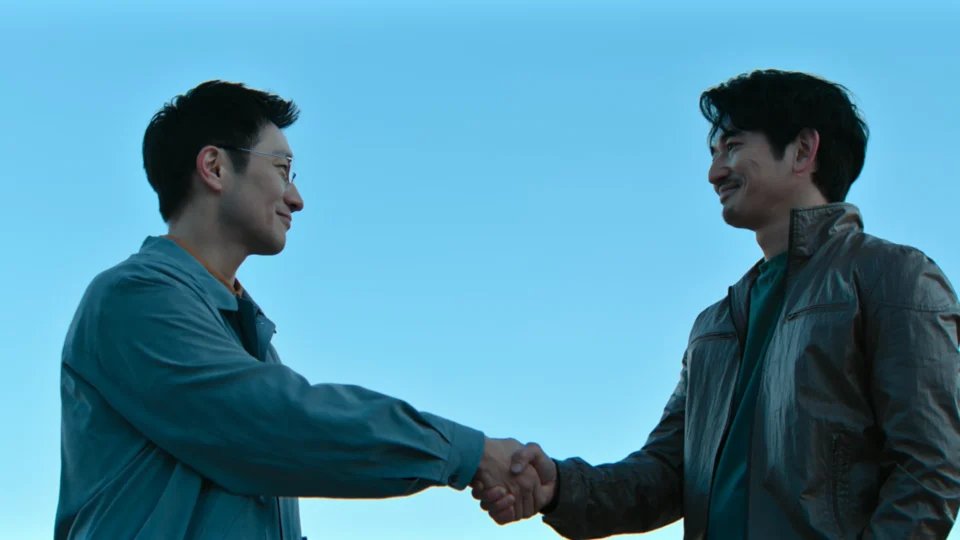
Spoilers for all eight episodes. An old man gets a pat on the shoulder from a friend who never got to grow old. If you want The Blue Road ending explained, look at the ages of the men in that shot. Hiroshi Inose (Eita Nagayama) has spent 24 years living with what happened at the cliff. Kim Seok (Son Suk-ku) still looks exactly as he did the day Inose lost him.
Quick Answer: Kim Seok dies after choosing to arrest Seo Hyun-tae. Hyun-tae shoots him, and Inose shoots Hyun-tae, who falls from the cliff. The investigation exposes a government torture unit behind the 1987 murders and Emi Shunsuke behind the 2002 killings. At Kim’s grave, his younger self appears to comfort the partner who survived.
Who was the killer in The Blue Road?
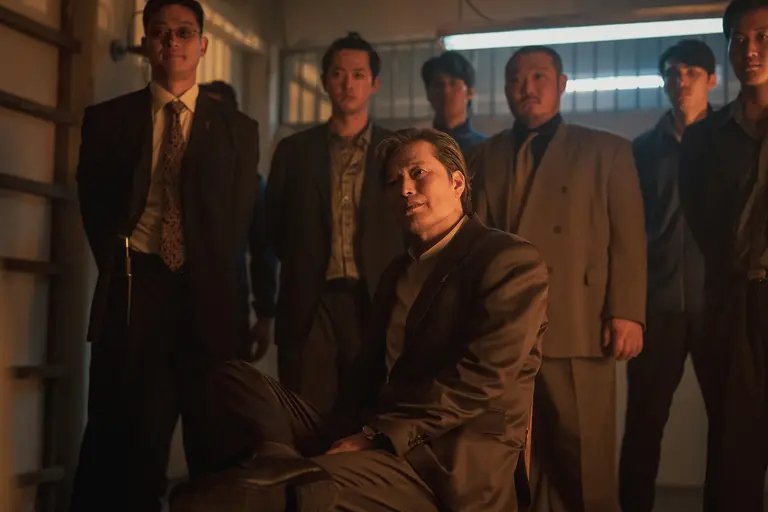
There are two sets of murders, fifteen years apart. In 1987, an interrogation unit nicknamed the Print Shop operated under South Korea’s Agency for National Security Planning. Its chief, Minamoto Shoichi, oversaw the torture of prisoners. When a prisoner died, the unit needed to explain away a body. The unit passed off the victims’ twisted limbs as a serial killer’s signature. The more attention the bizarre injuries attracted, the less likely anyone was to ask who signed the interrogators’ paychecks.
In 2002, during the Korea–Japan World Cup, Emi Shunsuke uses that same pattern in murders he treats as performances. He’s Minamoto’s son, and he wants an audience. Remember the man listening to bones snap through his headphones, a moment we flagged in The Blue Road parents guide? The same injuries once used to hide a crime have become a sound somebody wants to hear again. Before his death in Episode 4, Emi tells them the original is alive. Kim hears that as a lead on the person who killed his beloved Hong Du-yeong. He’s right to keep digging. His mistake is assuming he already knows which side of the old case Du-yeong belonged on.
Why Episode 8 holds a funeral for Inose
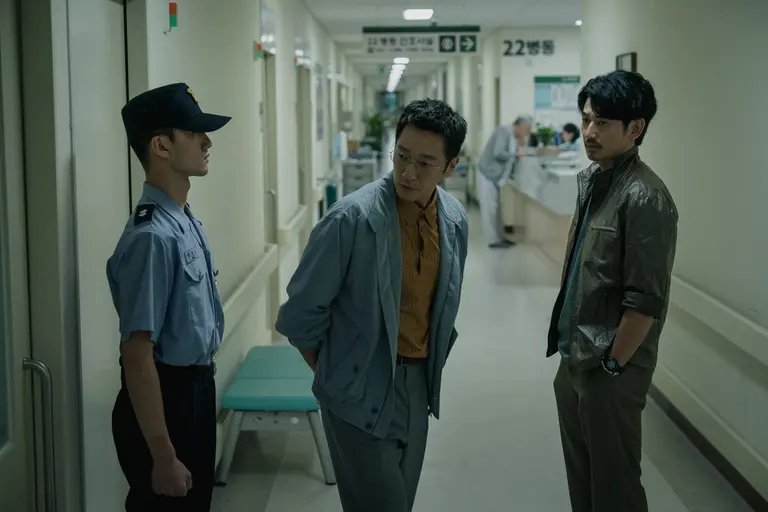
After Kim tortures Hyun-tae in Hong Kong, Episode 7 leaves Inose apparently dead. The funeral in Episode 8 looks painfully ordinary. Fellow officers mutter about Kim showing his face. Inose’s ex-wife wants to know how she’ll pay their daughter’s tuition. Kim passes along something Inose left for them. It’s her question about the money that sells the scene for me. Flowers and speeches are easy to stage. A parent wondering how next term’s bill gets paid feels terribly real.
Inose is alive. The detectives want Hyun-tae to hear two pieces of news together. Inose has died, and Kim is so shaken that he’s quit the force. They expect Hyun-tae to bring his drug, Speed K, back into circulation once he thinks both detectives are out of his way. A fresh supply gives investigators something they can trace. The funeral buys them a chance to find him again. It also gives us a very good reason to distrust the next apparent death.
What Anastasia means by the Blue Road
On the way to Dandelion Village in Central Asia, Kim meets Anastasia. Her birth mother taught her Korean because she hoped they’d go to Korea together. Her mother died before they could make that journey. When Kim asks about going, Anastasia wonders how a country she’s never lived in could be home. Later, he gives her his police contact details in case she ever changes her mind.
Anastasia says the road turned blue with the tears of Korean people forced from their homes. There’s real history behind her account. In 1937, Soviet authorities deported ethnic Koreans from the Russian Far East to what are now Kazakhstan and Uzbekistan. The drama gives that history a voice in a daughter who kept the language her mother taught her. The Review of Korean Studies documents those deportations.
At the village, Seo Hyun-tae (Jung Jae-young) compares himself to a dandelion. He says his father and grandfather died there and he managed to take root. Igor, Ito Makoto and Seo Hyun-tae are all names he answers to. For a man once promised identity papers in exchange for doing the Print Shop’s work, getting to say his own names aloud matters. So does what Kim asks him next. How does any of that excuse selling drugs here?
Who killed Kim Seok’s father, and why did Du-yeong raise him?
Hyun-tae tells Kim that Du-yeong murdered his biological father and buried him in the hills. Then comes the detail I find hardest to get past. Du-yeong had a photograph of Kim’s mother because he’d taken it from the dead man’s wallet. He showed it to Hyun-tae and talked about visiting the widow. The little boy who thought someone had come along to look after his family had met the man responsible for tearing it apart.
There’s a second betrayal tucked inside that story. Du-yeong and Hyun-tae had worked together at the Print Shop. By the time Hyun-tae came for him, Du-yeong had begun to feel the weight of what they’d done. He told his former colleague he’d been happy with Kim’s family and asked him to spare the mother and child. Hyun-tae killed him.
I believe Du-yeong loved that boy. That makes the photograph harder to stomach. For years he could answer a child’s questions, share his home and earn his trust, all while knowing exactly where his father was buried. Kim gets the truth from the one man telling it expressly to hurt him.
Why Kim lowers his gun at the cliff
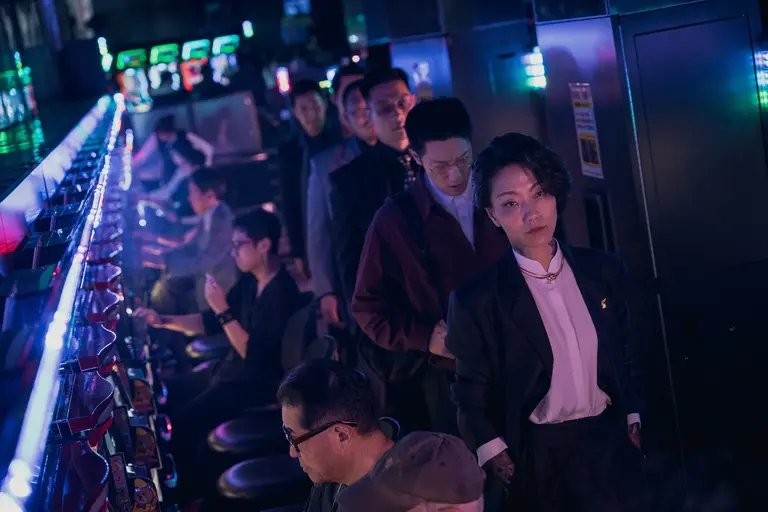
Hyun-tae lets Kim hear his frightened mother calling for Du-yeong. She’s asking for help from the man who murdered her husband, and her son has to listen with that knowledge fresh in his head. Kim begs Hyun-tae to leave her alone. Li Yoon-ok and Yoon Soo-kyung get her to safety. By the time Kim follows the wounded Hyun-tae to the cliff, his mother is safe. What he does next is his own decision.
Hyun-tae dares Kim to shoot. Inose catches up and reminds his partner that a detective brings a suspect in so the law can decide what happens to him. That would sound cheap coming from almost anyone else. Inose knows what Kim did to get a confession in Hong Kong. He still speaks to him as a fellow officer worth trusting. Kim lowers his gun.
Hyun-tae takes the opening and shoots Kim in the abdomen. Inose fires, and Hyun-tae falls to his death. As Kim bleeds out in his partner’s arms, he thanks him for helping him finish the case as a detective. There’s no trial. The one thing Kim can take pride in is a decision nobody else could make for him.
The Blue Road ending explained through the classroom and the last handshake
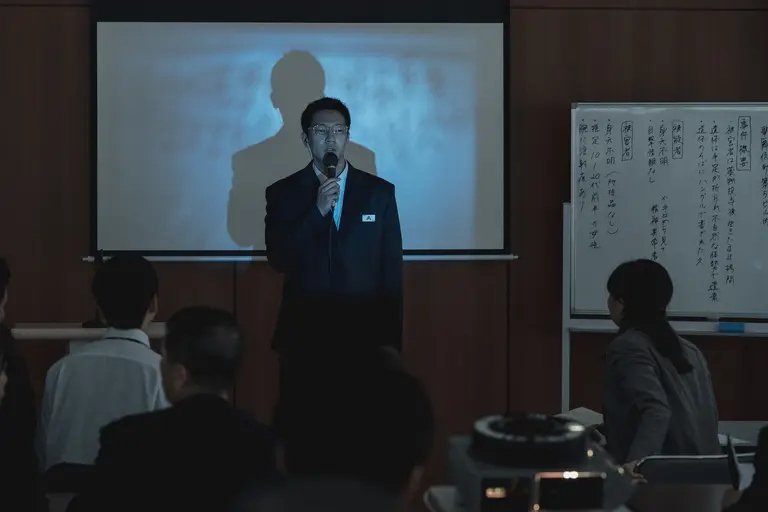
In 2026, Anastasia is a police officer teaching the 2002 case. She shows her students the crime-scene photographs. One imagines a particularly twisted individual must have dreamed this up. She asks them to consider another possibility. Could something have gone wrong, with people making choices afterward that turned it into a pattern? Give that student the first episode’s evidence and I’d probably have given his answer, too. Now we know what that answer leaves out.
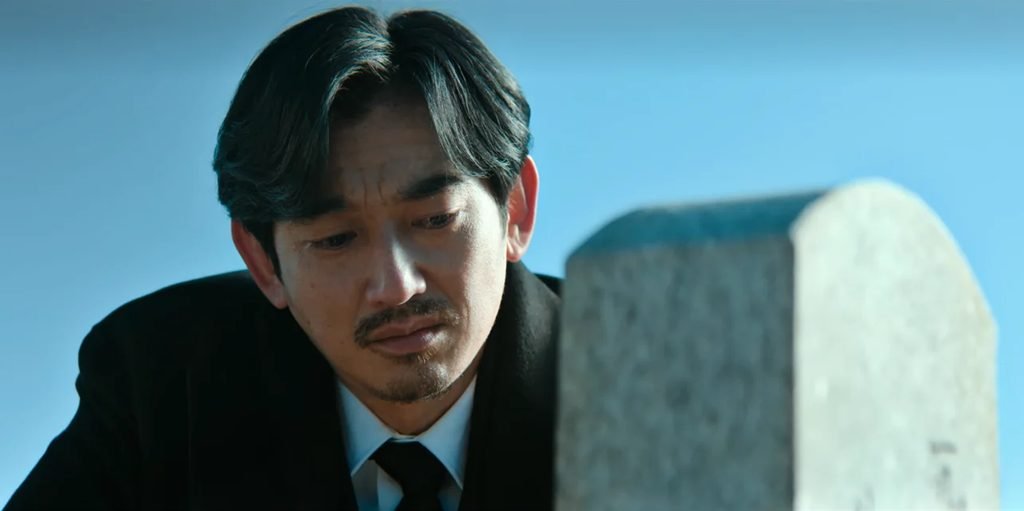
Afterward, Anastasia and an older Inose visit Kim’s grave. The first thing I looked for on the marker was Kim’s name. What caught me on a second look was the small word to its left, 순직. It means he died in the line of duty. Inose heard what it meant to Kim to finish this case as a detective. Now even a stranger walking past can learn that he died one.
Inose apologizes. A still-young Kim touches his shoulder, and the scene gives way to the partners shaking hands and laughing. I read that touch as the reassurance Inose has wanted for 24 years. Kim thanked him while he was dying, but hearing that once and believing it for the rest of your life are two different things. What a relief to see these two laugh together again.
Questions about The Blue Road finale
Does The Blue Road have a happy ending?
It’s a sad ending for the detectives. They solve the case, but Kim dies, and Inose still misses him decades later. Anastasia offers some hope. The woman who once doubted she had a home in Korea now teaches other people there how to investigate a crime.
Was Kim’s death faked like Inose’s?
No. Inose helps arrange his own false death and returns to police work during the investigation. Kim dies in his arms, and the epilogue shows his grave. His appearance beside the older Inose is the finale’s farewell. You can revisit both scenes in Episode 8 of The Blue Road on Netflix.
Did Hyun-tae tell Kim’s mother the truth about Du-yeong?
He threatens to tell her. During the call she’s still asking for Du-yeong, and the rescue puts her beyond Hyun-tae’s reach. The finale establishes what Kim learns and what his mother survives. What anyone tells her afterward is left open.
Is the murder case based on a true story?
The detectives’ case comes from fiction. The series adapts a Korean–Japanese print comic, while the World Cup and the displacement behind Anastasia’s story have historical roots. DaebakDaily’s guide to the original Blue Road comic identifies the comic and its creators.
When Kim puts his hand on Inose’s shoulder, whose forgiveness do you think Inose is still waiting for after all those years? I’d love to hear your reading of that last scene in the comments.