Is Our Sticky Love Based on a Webtoon? The Real Answer – DaebakDaily
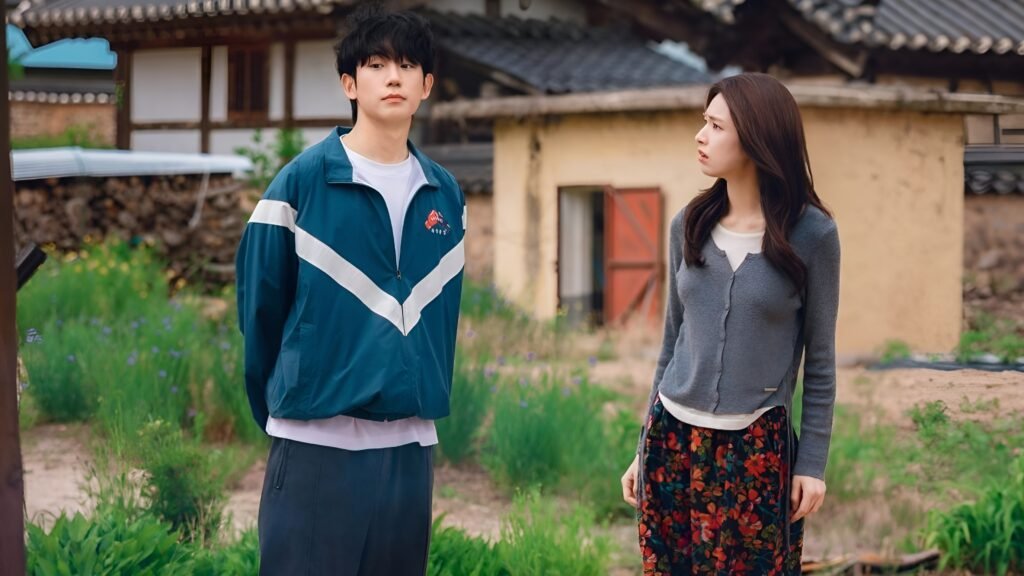
Quick answer: no. Our Sticky Love is not based on a webtoon, a web novel, or a manhwa. It’s an original screenplay by Mo Ji-hye, directed by Kim Jang-han, produced by Studio S, and picked up by Netflix as an Original. So if you’re asking is Our Sticky Love based on a webtoon because you want to binge-read ahead and find out who Baek Sang-gil really is — sorry. There’s nothing to read. You’re stuck watching like the rest of us.
Now the interesting part. Because the assumption that there had to be a webtoon wasn’t dumb. It was actually a really well-trained instinct that just happened to be wrong this time.
Who actually wrote the thing
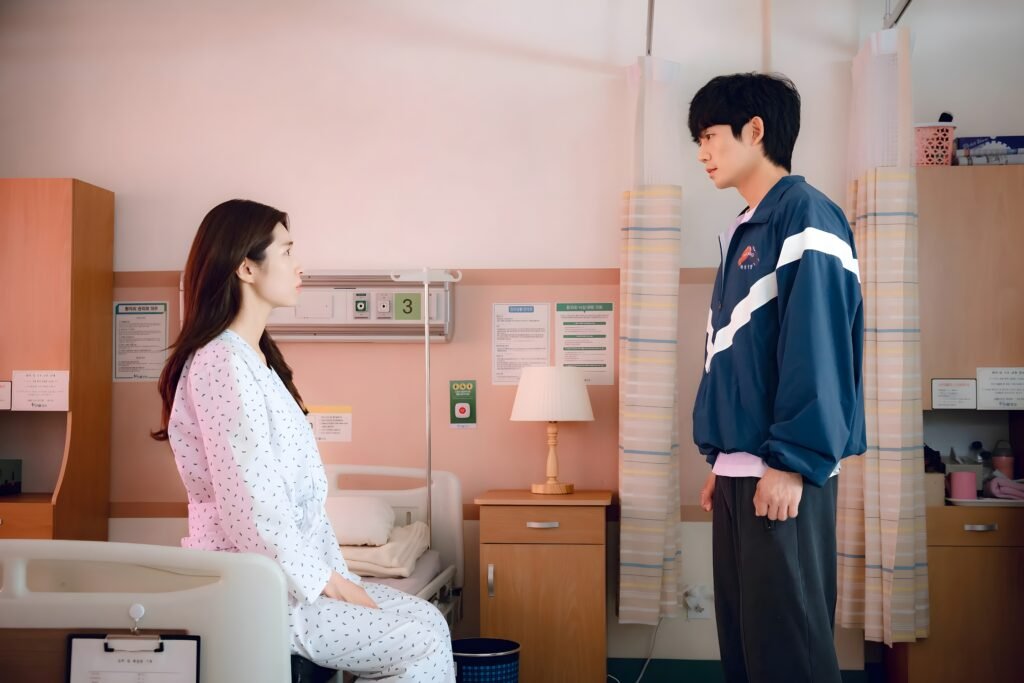
Mo Ji-hye. That’s it. That’s the source material.
She’s reuniting with director Kim Jang-han four years after You Raise Me Up, the 2021 Wavve series about a guy whose first love turns out to be his urologist. (Yes, really. Yes, it’s good.) Kim also directed Do You Like Brahms? and My Demon, so you already know the man can shoot a longing stare.
Netflix’s own newsroom post announcing the show — back when it was still titled Lovestuck — literally called it “the upcoming original romcom series.” No “based on the hit webtoon.” No creator credit for a comic artist. No Naver or KakaoPage attribution anywhere in the press materials, the poster, or the end credits.
Here’s the receipt that convinced me: check Mo Ji-hye’s filmography. You Raise Me Up wasn’t an adaptation either. It was Wavve’s first-ever original series, built from her script. She’s two for two on original work. This isn’t a writer who takes webtoons and turns them into scripts — she writes the weird premise herself.
So why does everyone keep asking if Our Sticky Love is based on a webtoon?
This is where it gets genuinely funny, and where every other article covering this question stops short.
Look at what both leads are known for.
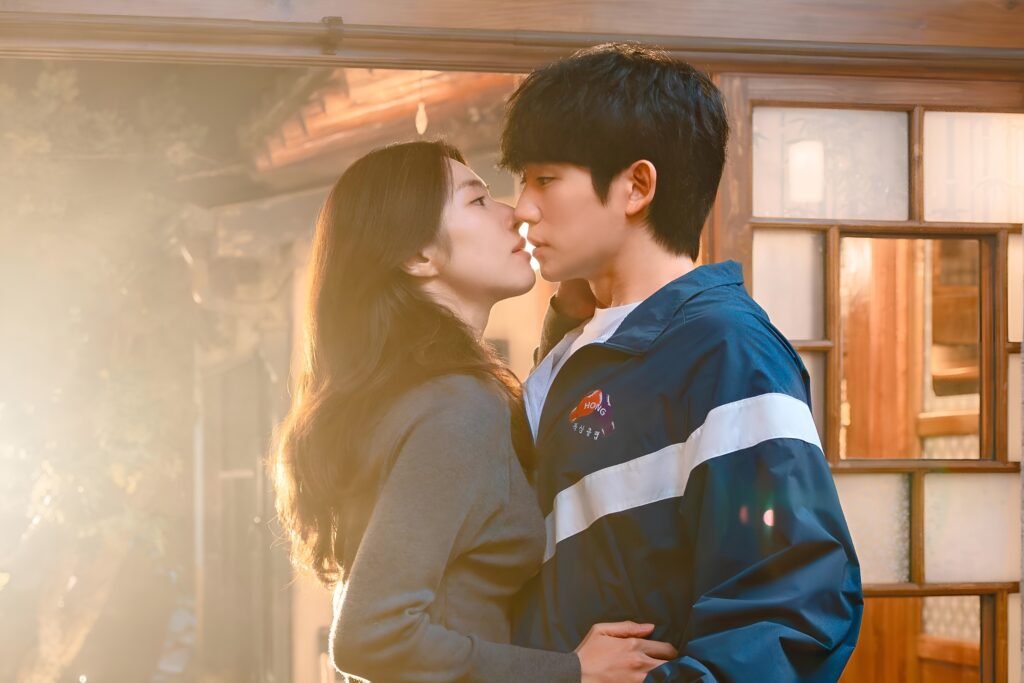
Jung Hae-in’s biggest Netflix credit before this is D.P. — adapted from Kim Bo-tong’s Lezhin webtoon D.P Dog’s Day. This is his first Netflix Original in roughly three years, so D.P. is the exact memory sitting in most international viewers’ heads when his name pops up on the thumbnail.
Ha Young’s two breakout Netflix roles? Doona!, adapted from Min Song-ah’s Naver webtoon The Girl Downstairs. And The Trauma Code: Heroes on Call, adapted from the web novel Trauma Center: Golden Hour, which was itself serialized as a Naver Webtoon.
So the two people on your poster have, between them, built almost their entire streaming reputation on adaptations. Your brain sees Jung Hae-in plus Ha Young plus Netflix plus a high-concept rom-com premise and autocompletes “webtoon.” That’s not you being uninformed. That’s pattern recognition doing exactly what it’s supposed to do, on a show that happens to be the exception.
Add the premise itself. Amnesiac prosecutor, gangster who claims to be her boyfriend, forced cohabitation, first-love reveal, rural village full of meddling grandmothers. If you handed me that logline blind, I’d have bet money it started as a KakaoPage serial. It’s that shaped.
The title made it worse
The other reason the our sticky love original story question exploded: nobody could figure out what the title even meant, so people went hunting for a source to explain it.
The Korean title is 이런 엿같은 사랑. And “엿” (yeot) is doing double duty. It’s traditional Korean hard taffy — the stuff the fictional Gujin Yeot Village makes, the stuff piled up in the grandmother’s cottage. It’s also half of a very common Korean expression that is absolutely not “sticky.” The Korea Herald translated the vibe as roughly the F-word. Dramabeans’ commenters had a field day pointing out that Google Translate does not, in fact, return “sticky.”
Even the cast clocked it. Heo Sung-tae said at the August 5 press conference in Seoul that his first reaction was basically “Is this a joke?” — he assumed from the title he was signing onto a noir, and only came around after reading the script. Director Kim explained the choice as deliberate double meaning: from Eun-sae’s side, waking up with no memory in a stranger’s house is a genuinely messed-up situation, but yeot is also sweet, stubborn stuff you can’t pull apart. Which is the whole show.
It also went through three names before landing. Netflix announced it as Lovestuck. Databases logged it as This Sucky Love and This Damned Love. MyDramaList’s URL for the show still says “this-sucky-love” to this day. When a title changes that many times, people assume there’s an original text somewhere holding the “real” name. There isn’t.
What the our sticky love original story actually is
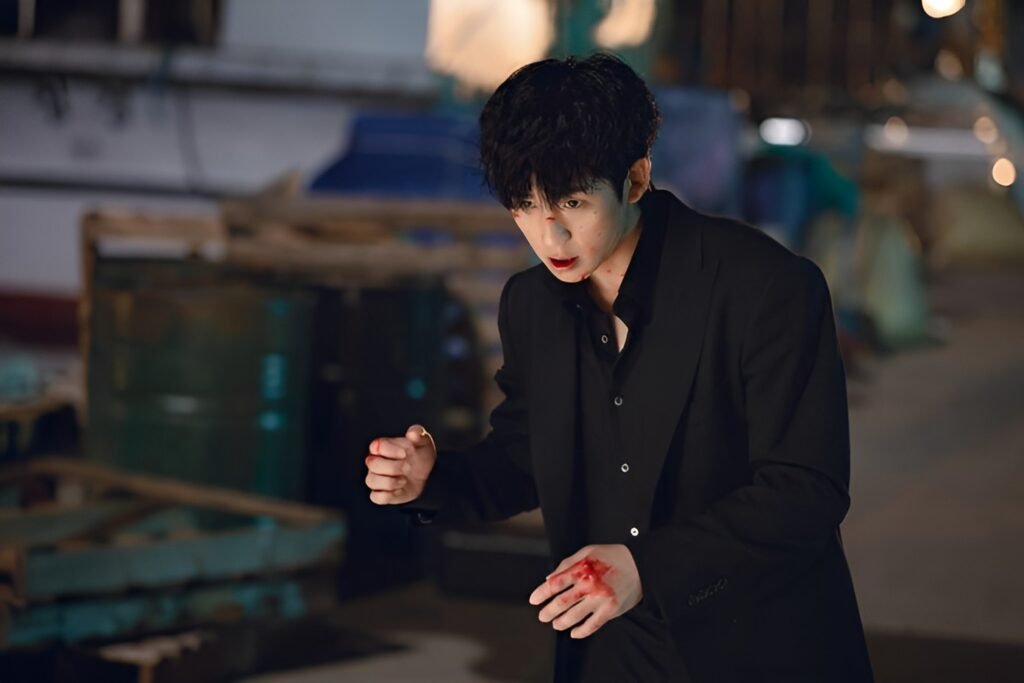
No comic. No novel. Just a script, a location scout, and eight months of filming.
Principal photography kicked off April 10, 2025 and ran to mid-November, mostly around Dangjin on Korea’s west coast — Myeoncheon Goljeongji Pond, the Sunseong cherry blossom trail, the Ami Art Museum. Some Seoul work got shot on Sungkyunkwan University’s humanities campus on weekends when students were thin on the ground, with a water truck brought in for rain scenes.
One small detail I love, because it’s exactly the kind of thing a webtoon adaptation wouldn’t bother with: our girl has two names. Before the accident she’s Prosecutor Go Ji-won of the anti-corruption department. After the memory loss, in the village, she’s Go Eun-sae. Same person. The show doesn’t hand you that cleanly up front — you piece it together. That’s a screenwriter building a puzzle for a 12-episode structure, not a comic panel being transcribed.
All 12 episodes dropped globally on August 7, 2026, and it hit hard — reportedly debuting at No. 5 on Netflix’s global TV chart on release day and cracking the top 10 in around 50 countries, per FlixPatrol tracking. As the highest-charting non-English title that day, it did not need webtoon fans to carry it.
Why “no webtoon” is actually good news
Here’s my take, and I’ll die on this hill.
The best thing about Our Sticky Love not having source material is that nobody could spoil you.
Think about how every big adaptation goes. Trauma Code drops and within six hours there’s a Reddit thread going “the webtoon handles this arc better.” Doona! comes out and half the discourse is people mad about what got cut from The Girl Downstairs. You cannot watch a webtoon adaptation innocently anymore. Someone always knows the ending.
This one, nobody knew. That episode 11 twist — the one turning the MyDramaList reviews into a war zone right now — landed on every single viewer at the same time, cold. Korean coverage flagged this as a genuine selling point before release: no pre-published ending meant nobody could predict where it was going.
And the reaction proves it worked. Scroll AsianWiki or MDL and it’s chaos in the best way. One camp calls it the best rom-com of 2026 and swears every small detail pays off. Another camp calls it a “nothing burger” and says the leads’ chemistry is forced. Dramabeans regulars are comparing Gujin Yeot Village to When the Camellia Blooms and Hometown Cha-Cha-Cha, arguing about whether the nosy village grandmothers are doing half the emotional labor the romance should be doing. There are people two episodes in still convinced Tae-ha is lying about more than the boyfriend thing.
That’s what a genuinely unspoiled watch looks like. You don’t get that with a webtoon.
For the record: I’m in the “it’s better than people are giving it credit for” camp, mostly because the first half being a village comedy and the second half flipping into a crime drama is a structural swing an adaptation would’ve been too scared to attempt.
So — did you go looking for the webtoon too, or did you figure out it was original before you hit episode 3?