Final Table Ending Explained: Who Wins and What the Last Dish Means
Written by Huzaifa
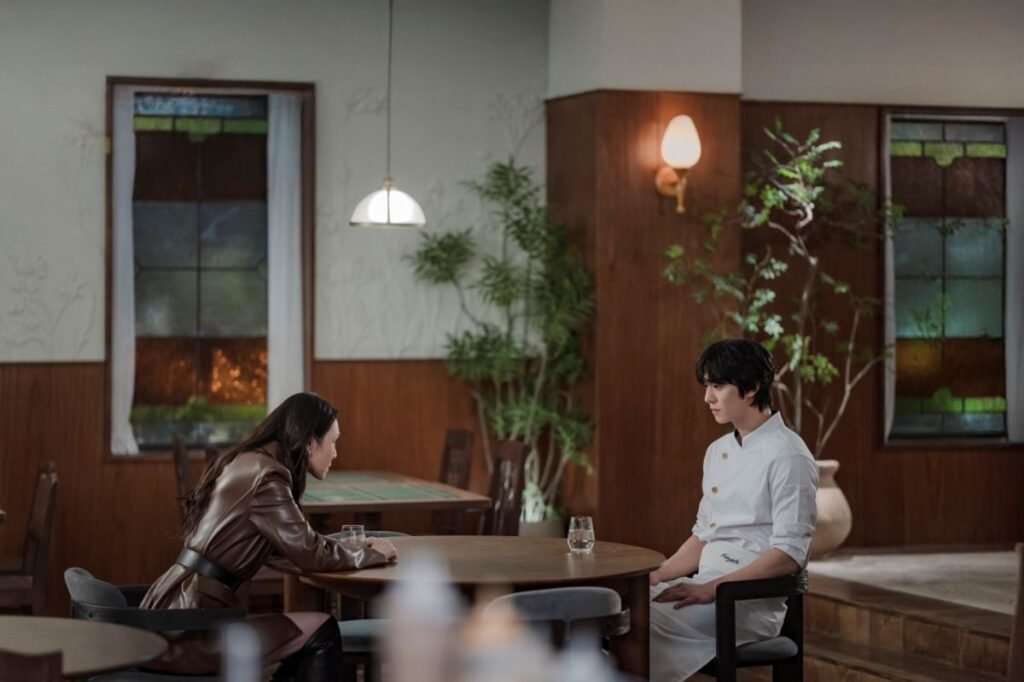
If you went back looking for the moment somebody announces the winner, you can put the remote down. For the Final Table ending explained in a single scene, watch where Moon Hae-seon goes for dinner. The woman who was supposed to judge Kang Han ends up eating in Cha Woo-jin’s restaurant. By the time she realizes who’s in the kitchen, the question she needs to answer has very little to do with how the food tastes.
Quick Answer: Episode 12 never names an overall winner of The Table: K-Chef 2026. Woo-jin withdraws, and Kang Han serves his mother a dish called “Winter, and Spring” (겨울, 그리고 봄). It marks their reconciliation after years apart. The steak in the closing scene is a different dish, cooked by Choi Song-yi at Famiglia.
Which round did Famiglia actually win?

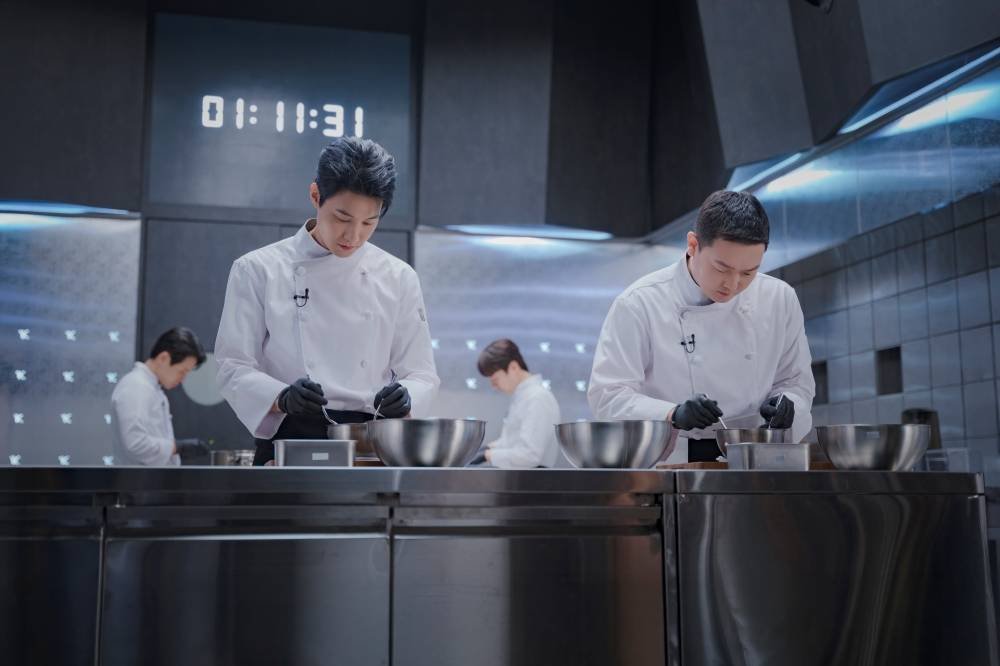
There is a winner announcement worth remembering. In Episode 10, Famiglia and Exception take first place together in round three. Kang Han and Song-yi compete alongside Woo-jin and Michael Jang. So if you remember seeing both restaurant names on a winners’ screen, your memory is fine. That result belongs to the round where the chefs pair food with traditional Korean liquor.
The semifinal comes afterward. Both teams go out, despite having been strong contenders. Han’s dish for that round is sanhap, made with wild greens, mushrooms and rabbit wrapped in thin pork fat. That’s another plate people have good reason to remember, especially after the voting comes under suspicion. It’s also a whole round earlier than the meal he cooks for his mother.
The distinction matters because it’s tempting to promote the show’s most satisfying competitive win into its grand prize. Episode 12 leaves that prize unaccounted for. For the restaurant teams and the people attached to each, DaebakDaily’s Final Table cast and episode guide is a handy reference.
Why Baek Hyeon-ju offers Han another chance

Once questions surface about the judges’ votes, Baek Hyeon-ju announces a live final that will bring all four teams back. For Han, that should be wonderful news. He entered the competition determined to confront his estranged mother over the death of his father, Kang San. Then Hyeon-ju lets him in on the detail most likely to make him say yes. His mother will be the sole judge.
What makes the offer so ugly is something Hyeon-ju has already done in public. At the press conference she repeats a little English expression, “Seize the day.” Han remembers hearing it as a boy, when a woman handed him ten dollars. He also remembers what that woman had ordered people to do. Hyeon-ju gave the order to set the fire tied to his father’s death.
Knowing that changes what revenge would accomplish. If Han humiliates Hae-seon on live television, the woman responsible for the fire gets exactly the spectacle she wants. She’s even picked the judge.
Why Woo-jin invites Hae-seon to his restaurant
Hae-seon comes under suspicion over the competition. After police questioning, people throw eggs at her. Han sees it happen. For a son who once wanted to bring his mother down in public, there’s something awful about getting a glimpse of what that would actually look like. JTBC’s police-station scene captures the awkward position he finds himself in. Knowing who ordered the fire hasn’t given him an easy way to approach her.
On the day of the final, Woo-jin makes the first decisive move. He withdraws because he’s had enough of being used and invites Hae-seon to his own restaurant. She tastes what he serves, starts remembering the past and discovers Han preparing food in the kitchen.
I like that Woo-jin gets to issue the invitation. Earlier, he tried to tell Han how much Hae-seon had missed him. Han could barely stand to hear it from a man who’d spent those years by her side. Now Woo-jin does something a rival is uniquely placed to do. He gives up his own shot at beating Han and gets the two people who remember Kang San into the same room.
What Han tells Hae-seon about his father
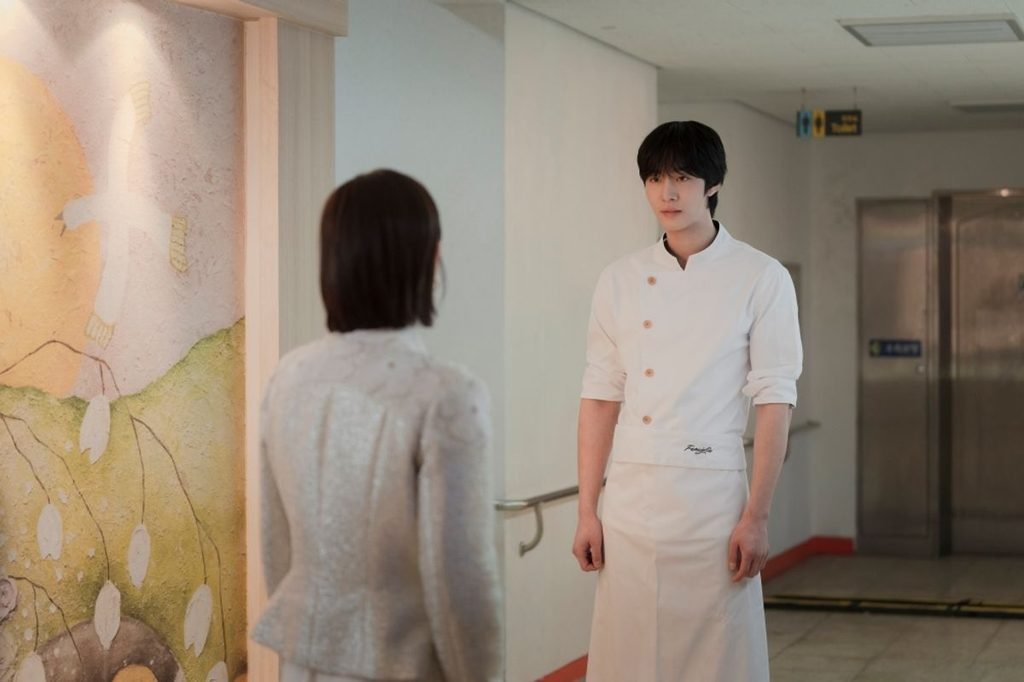
For years, mother and son have each had a piece of the story the other desperately needed. Han remembers the Korean food his father made for him in America. In those meals he could feel how much his father missed Hae-seon. He can finally tell her something Kang San can no longer say for himself. His father wanted to come back to her.
Her answer is harder to sit with. From her perspective, Kang San was the one who left. She wanted their son beside her because she thought that if Han stayed, his father might return. That admission explains a decision that shaped Han’s childhood. It also asks an awful lot of a child. Imagine finding out that where you got to live depended on one parent’s hope of bringing the other one home.
That’s where my sympathy for Hae-seon runs up against its limit. I believe she missed her son. I also understand why hearing that from Woo-jin made Han angry. At dinner she finally gives Han her own account of what she did and what she hoped it would achieve. He gets to decide how he feels about her with that knowledge.
What “Winter, and Spring” means and where the seasons first appear

Han serves “Winter, and Spring” to Hae-seon after they talk. The order matters. His mother gets to hear that Kang San longed for her before she tastes her son’s cooking. For the first time, she has the context Han had as a boy eating Korean food in America. He can share something of his father with her while offering her a meal of his own.
The best clue to that title comes two episodes earlier. During the third round, the team serves two glasses of jehyangju. One batch began fermenting in November and aged through winter. The other began in April and matured through summer. They taste different, and the team picks different foods to go with them. The chefs have already shown us, in terms a diner can taste, what it means for something to carry the season it lived through.
My reading is that winter belongs to the years Han and Hae-seon spent grieving separately. Spring begins with a modest thing as ordinary as cooking a meal for a parent who’s come over for dinner. For this family, that’s something remarkable. I’m glad the dish keeps winter in its name. It would ring false for Han to talk about his father with that much love and then act as if everyone at dinner gets a clean slate.
What happens to Woo-jin and Hyeon-ju afterward?
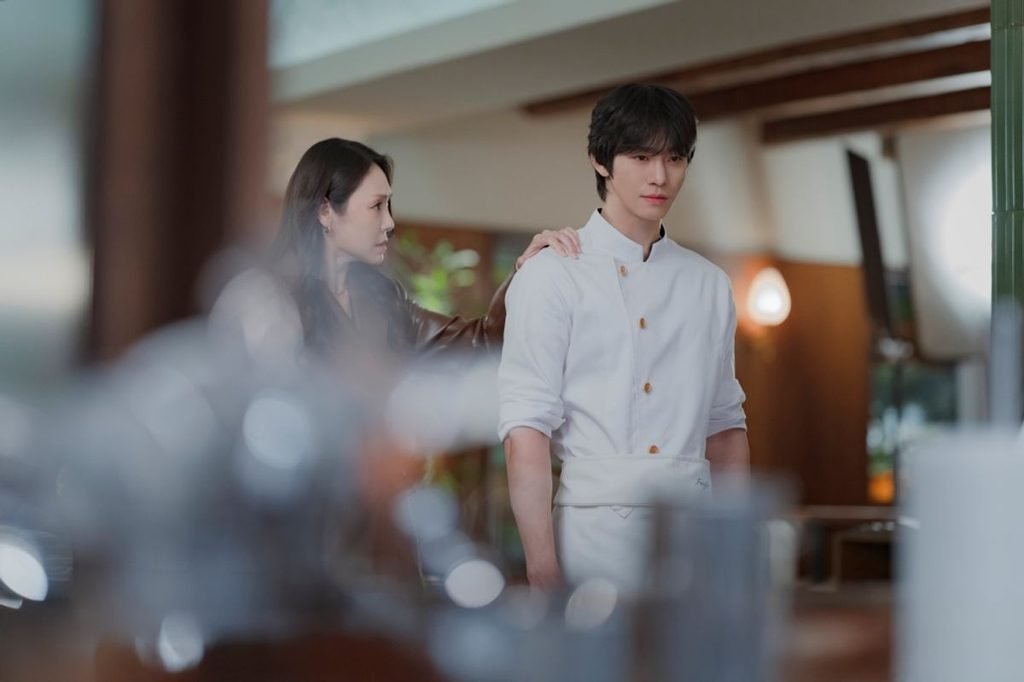
Hyeon-ju faces police questioning. Woo-jin becomes Hae-seon’s legally adopted son and takes on management responsibilities. He also visits his mother’s restaurant with Seon Jeong-won, giving him a chance to address some of the hurt in his own family. The ending makes room for both of those relationships in his life.
The adoption is a telling choice for a series built around two men being ranked against each other. Woo-jin has spent years close enough to Hae-seon to know what she was like when Han was gone. Had the finale rewarded Han’s return by quietly pushing Woo-jin aside, it would have made the restaurant invitation feel like a farewell. Instead, Woo-jin gets to keep his place in her life. Han, meanwhile, gets to be her son without having to take over the business.
That’s a satisfying answer to the rivalry for me, even if the other competing kitchens deserved a proper result. A family dinner can settle what these two chefs owe each other. It can’t tell the other entrants where they placed.
The final scene gives Song-yi the last dish
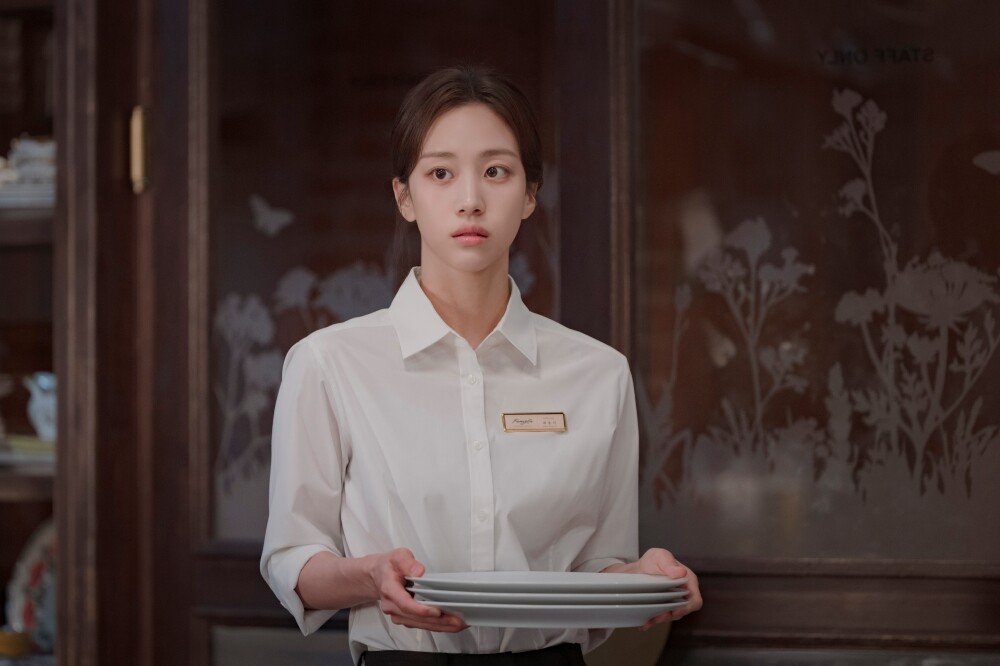
After time passes, Han returns from America and visits Famiglia posing as a difficult customer. Song-yi is now head chef. The steak he praises is hers, and he’s brought an invitation to the second edition of The Table. He wants them to do it together again.
Think back to what an exacting diner meant for this restaurant at the start. Song-yi was trying to keep her late father’s business alive, and Han had plenty to say about the food coming out of its kitchen. The distance between that woman and the chef serving him now is what makes his little act work. DaebakDaily’s Episode 1 review revisits just how precarious things were when they met.
There’s an even better callback in Episode 9. Han trusted Song-yi with Famiglia’s main dish when she still doubted whether she could cook it. He told her she was the person who should lead the restaurant. In the finale, she already has that job before he walks through the door. His praise is lovely. The fact that he has to come to her restaurant to give it is lovelier. You can revisit their first service and their reunion on Prime Video.
Final Table finale FAQ
Does Kang Han beat Cha Woo-jin in the final?
No. Woo-jin withdraws. Their shared third-round win is the result the drama puts on screen for these two rivals. Episode 12 gives them a reunion with Hae-seon and leaves the overall champion unnamed.
Does Kang Han forgive his mother?
Yes, the meal marks a reconciliation. Learning who ordered the fire changes his understanding of his father’s death. Hearing Hae-seon admit why she kept him close lets him address the part of their estrangement that was between the two of them.
Do Kang Han and Song-yi end up together?
They reunite, acknowledge their feelings and embrace. Han also offers Song-yi a way to cook alongside him again. It’s a happy ending for the pair, and Song-yi gets to greet him as the chef she wanted to become.
What does the second invitation mean?
It’s an invitation to another edition of the cooking contest inside the story. We leave Han and Song-yi with the possibility of entering as partners. Which meal felt more like the real ending to you, Han’s dish for Hae-seon or Song-yi’s steak for Han? Tell me in the comments.