7 K-Dramas With a Sad Story Than Sadness (2026 Cry List) – DaebakDaily
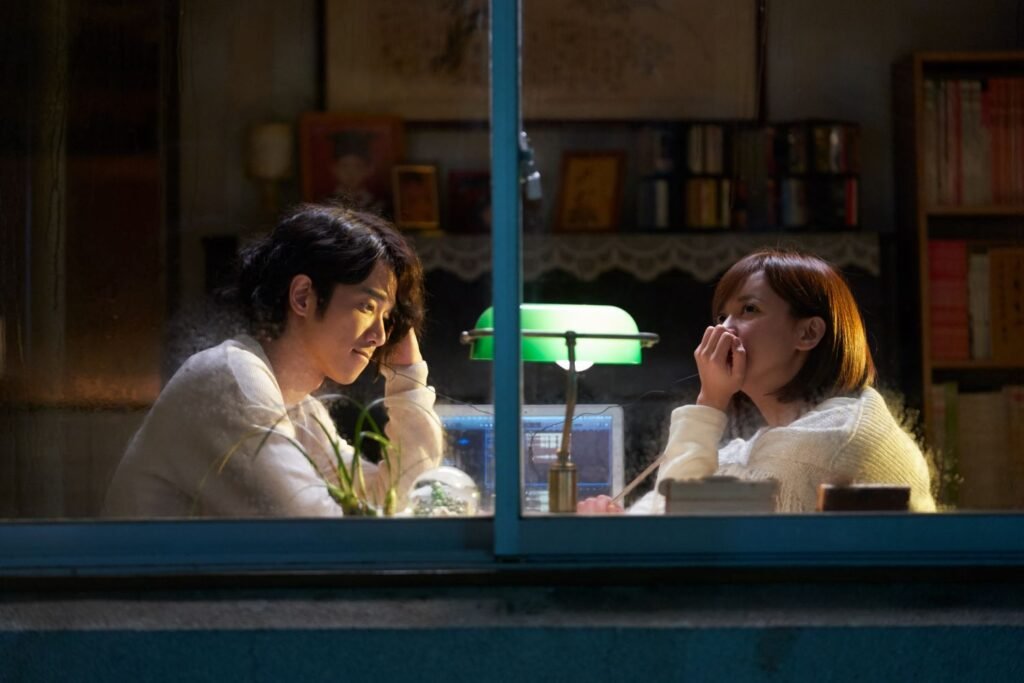
If you’ve typed some version of “sad story than sadness” into a search bar recently — first, no judgment, second, I already know what happened. You watched More Than Blue, the 2009 Korean film whose actual title translates almost word for word into that exact, slightly broken phrase, and now you’re a person who needs more of whatever that just did to your chest. Fair reaction. It’s one of the most quietly brutal sad Korean movies ever made, and its 2018 Taiwanese remake made a small fortune off that same feeling a decade later.
Here’s the thing, though: Korean drama has been running this exact playbook for twenty years, just in ten-to-twenty-episode doses instead of two hours. And the shows that do it best usually aren’t the ones every other site already has ranked. These seven are the ones actual fans rewatch on purpose — not the ones you scroll past because you’ve already seen them listed forty times this year. 2026 watchlist, tissues non-negotiable.
Wait, Why Does That Exact Phrase Show Up So Much?
Because it’s a real title, not a typo some SEO tool generated. More Than Blue‘s Korean name literally translates to “a story sadder than sadness” — the idea that some grief just doesn’t fit inside the word “sad” anymore, it keeps going past it. That’s the filter I ran every single pick on this list through. Not sad. A sad story than sadness itself can barely hold.
The Quick List
- When Life Gives You Tangerines (2025) — the one that made half of Netflix call their mom
- My Mister (2018) — quiet devastation, now carrying weight it never asked for
- Move to Heaven (2021) — a new dead stranger’s whole life, every single episode
- Just Between Lovers (2017) — the trauma drama that somehow never makes these lists
- Navillera (2021) — a 70-year-old’s ballet dream, racing his own memory
- Hi Bye, Mama! (2020) — a ghost mom with 49 days to get her life back
- Our Blues (2022) — an ensemble Jeju drama that cast the realest thing about it
Here’s the case for each one.
1. When Life Gives You Tangerines (2025)

Start here if you want the show everyone’s still talking about a year later. Director Kim Won-seok — yes, the My Mister guy, more on him in a second — spent 16 episodes following Oh Ae-sun and Yang Gwan-sik across roughly 50 years on Jeju Island. By the time IU and Park Bo-gum are playing their characters as grandparents instead of teenagers, you’ve completely forgotten this was ever marketed as a romance. It’s a story about a mother, mostly, and about how much of yourself you’re allowed to give away before there’s nothing left.
The scene everyone screenshots is Gwan-sik jumping off a boat mid-crisis to swim ashore and grab Ae-sun. IU later admitted, in a Netflix behind-the-scenes video, that the second hug in that take wasn’t scripted — they just looked at each other and went again. That’s the kind of detail that turns a sad story than sadness into something you rewatch for the acting alone, not just the plot. It picked up Best Drama, Best Screenplay, and two acting wins at the 61st Baeksang Arts Awards, and Time named it the best Korean drama of 2025 — which, for once, actually undersells it.
(Netflix’s own episode guide has the full season timeline if you want it completely spoiler-free.)
2. My Mister (2018)
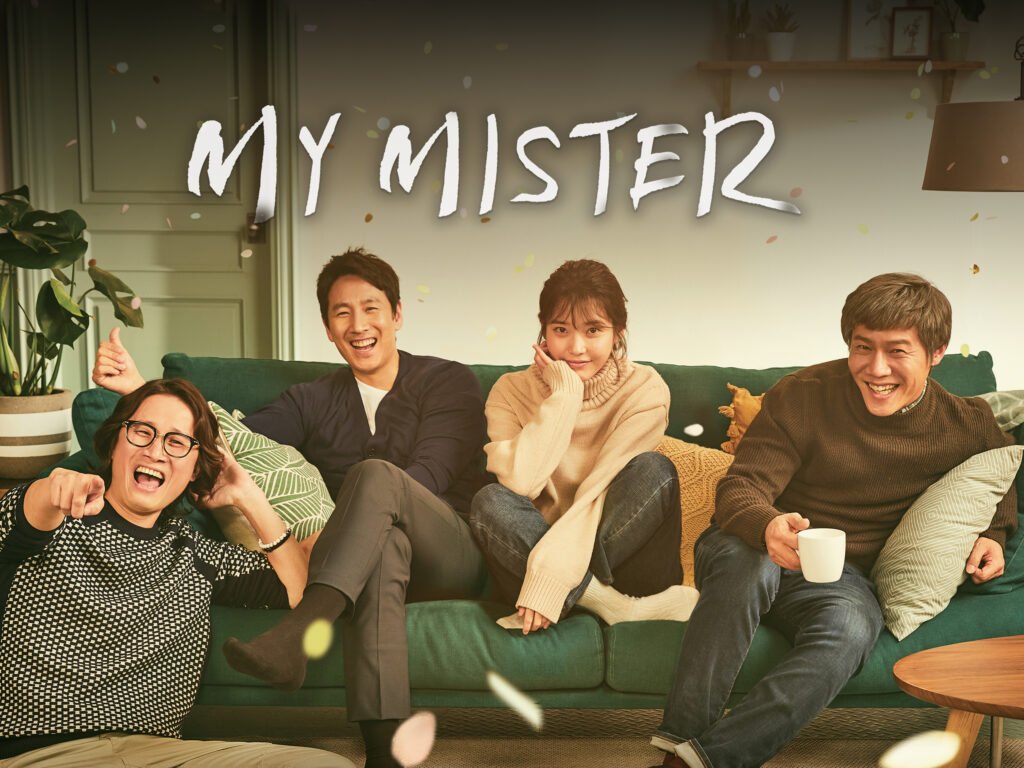
If Tangerines is Kim Won-seok’s warm heartbreak, this is his cold one. Sixteen episodes on tvN: Lee Sun-kyun as a middle-aged engineer quietly drowning in his own life, IU as a debt-crushed young woman with nobody left, and a friendship the show refuses to turn into a romance no matter how hard early viewers begged it to. It won Best Drama at the 55th Baeksang the year it aired, and it shows up on basically every “underrated tearjerker” roundup that finds it. They’re not wrong.
There’s a harder layer to this one in 2026, and I’m not going to smooth it over: Lee Sun-kyun passed away in December 2023, and rewatch reviews written since then read differently. People aren’t being dramatic when they say it hits somewhere new now — it just does. Go in knowing that.
(A full Kim Won-seok drama-universe explainer is coming to Explanations — this one and Tangerines both make the list.)
3. Move to Heaven (2021)
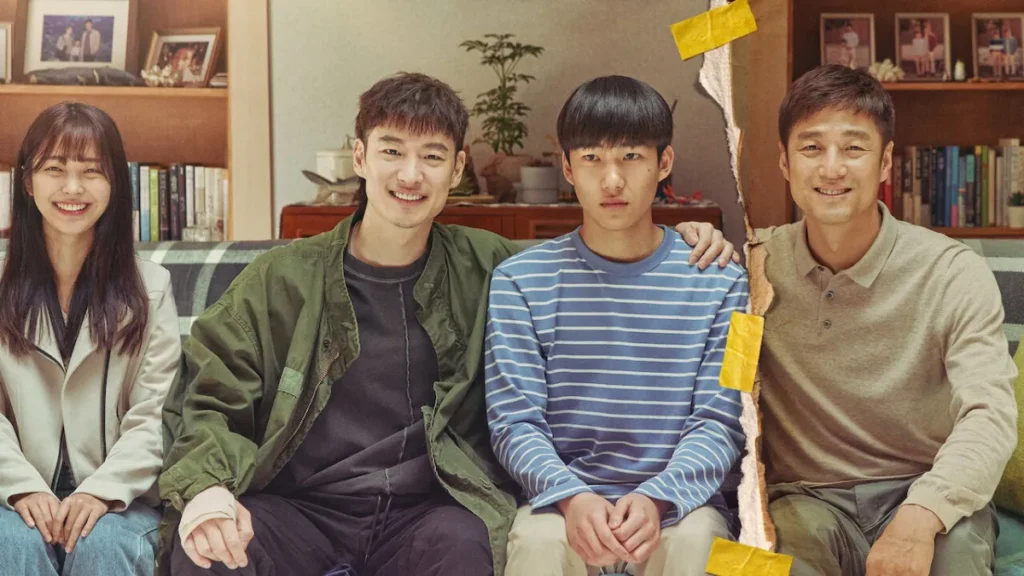
Ten episodes, Netflix, and a premise that sounds like it should be a procedural: Han Geu-ru, a young man with Asperger’s, and his ex-convict uncle Sang-gu run a trauma-cleaning business, clearing out the homes of people who died alone. Every episode is somebody else’s entire life, told backward through what they left behind. The dad collapses while crossing the street in episode one — gone before Geu-ru even fully processes what “gone” means — and the show never once treats that as background noise for the rest of the season.
The whole thing is based on a real trauma cleaner’s essay, “Things Left Behind,” and it earns its reputation as one of the most effective emotional k-dramas Netflix has put out. Keep tissues within reach. You’ll need them by episode two, not ten.
4. Just Between Lovers (2017)
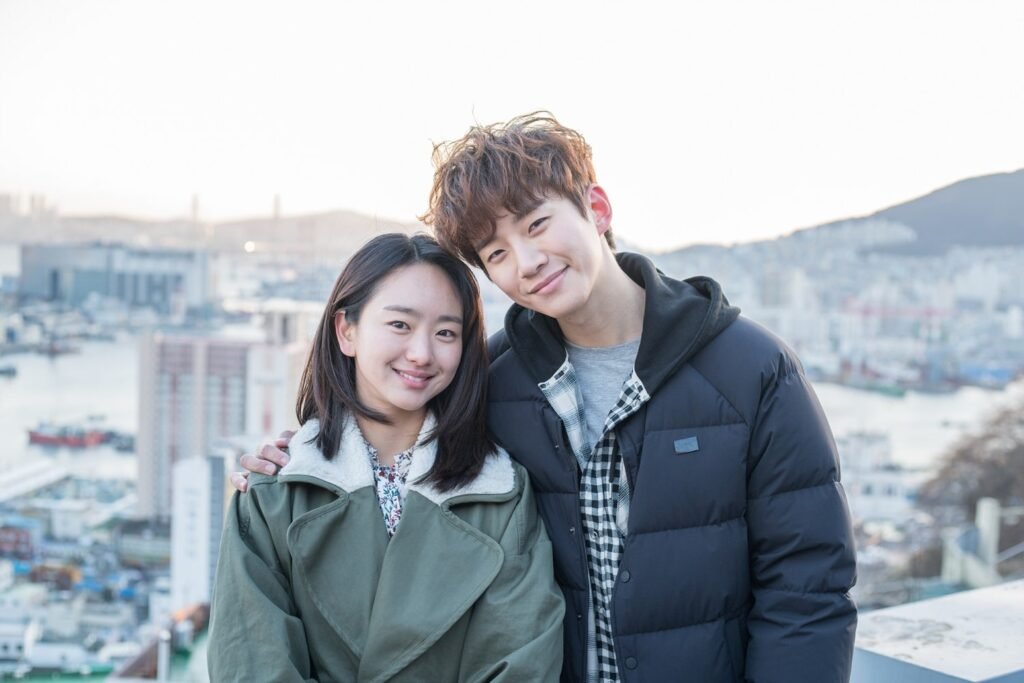
This is the one I’m genuinely annoyed doesn’t show up on more “sad kdrama” roundups, because it might be the most emotionally accurate show on this entire list. Ten years after a mall collapse kills 48 people, two survivors — Lee Kang-doo, who lost his father and his soccer career in the same afternoon, and Ha Moon-soo, who lost her younger sister and has spent a decade blaming herself for surviving — end up working the same construction site, built on the same land. It’s structurally a show about PTSD wearing a romance’s clothes, and it treats both with more honesty than shows with triple the budget.
People don’t review this one so much as testify about it. Letterboxd is full of viewers saying it fixed something they didn’t even know was still broken. That’s not a marketing line. That’s just what the show does.
5. Navillera (2021)

A 70-year-old retired postman decides, out of nowhere, to become a ballet dancer. It’s a warm, almost funny premise right up until his Alzheimer’s diagnosis lands around episode eight, and the show quietly turns into a race — not against a competition, against his own memory. Song Kang, playing the 23-year-old dancer who becomes his unlikely teacher, trained in ballet for six months to get the role right, and it shows in every scene.
Song Kang finished his mandatory military service in October 2025, and his fandom — SONGPYEON, for anyone who didn’t know the name — has spent the months since sending people back through his older catalog. This is the one worth revisiting first. The final scene, a wordless moment between two people at a crosswalk, says more in fifteen seconds than most finales manage in a full episode.
6. Hi Bye, Mama! (2020)

Cha Yu-ri has been a ghost for five years, watching her husband raise their daughter and eventually remarry, when she’s handed 49 days to earn her way back to being human. Kim Tae-hee plays it with almost no sentimentality, which somehow makes every scene land harder, not softer. Small, slightly devastating detail: two supporting actors reprise their exact roles from Oh My Ghost (2015), a completely different drama by the same director — like the whole thing is a shared ghost universe nobody asked for and everyone’s grateful got made anyway.
This is the sad Korean drama you put on when you want to cry about mortality and, somehow, also laugh.
7. Our Blues (2022)
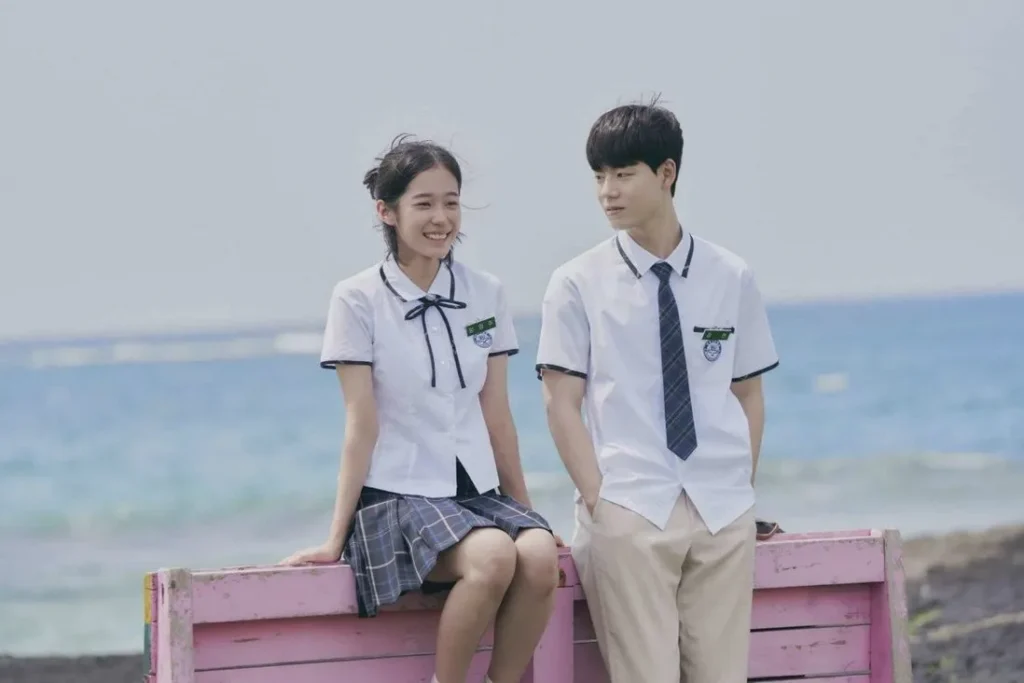
Twenty episodes, an ensemble stacked with names like Lee Byung-hun, Shin Min-a, and Kim Woo-bin, and a Jeju setting that becomes its own character entirely. Writer Noh Hee-kyung doesn’t flinch from anything — depression, poverty, teenage pregnancy, aging parents who were never easy to love. But the storyline people still bring up years later belongs to Lee Young-hui, a character with Down syndrome, played by Jung Eun-hye — an actress who has Down syndrome in real life and works as a professional caricature artist. Jung’s mother reportedly told Noh the scripts felt like they’d been written from inside their own family’s life.
That’s not a stunt-casting headline for a press release. That’s the actual difference between a show performing sadness and one that earned it.
Start Here, Depending on Your Mood
Want plot and a slow burn? When Life Gives You Tangerines. Want maximum damage in the fewest episodes? Move to Heaven (10) or Navillera (12). Want to be completely undone with zero warning? My Mister. Want the ensemble cry with the biggest heart? Our Blues. However you get there, it’s the same thing every time: a sad story than sadness alone was ever going to cover.
Which one wrecked you the hardest — or if you’re starting cold tonight, which one’s first? Tell me below.