The Blue Road Killer Identity Explained — Who Was Emi Copying?
Written by Huzaifa
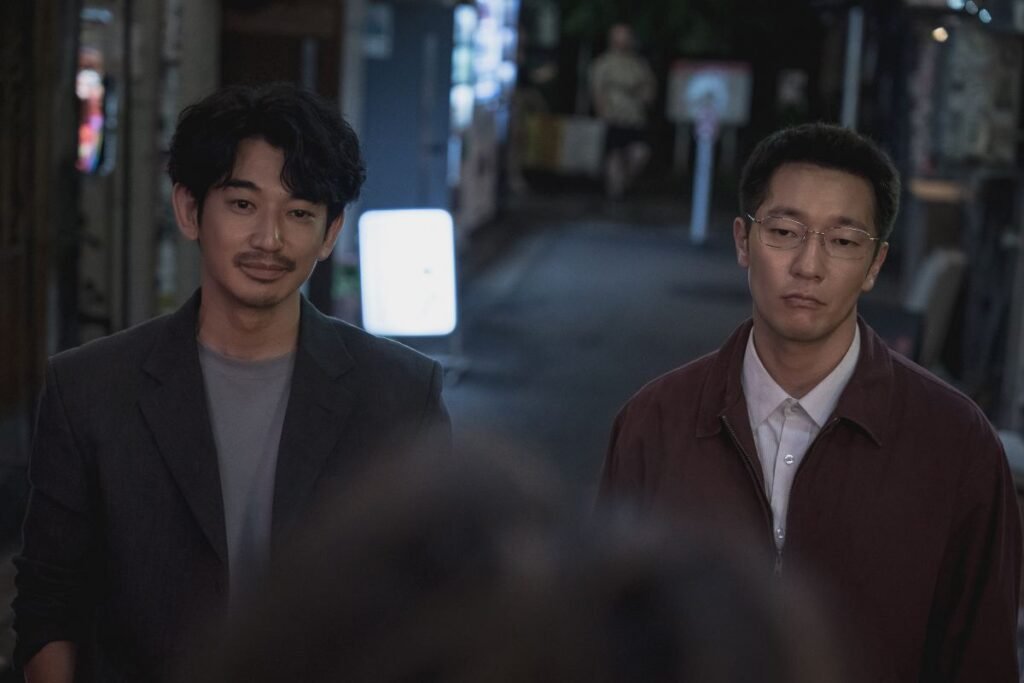
Emi Shunsuke is still alive in the ambulance when the man who used to look after him climbs in. Emi recognizes him. That little exchange is where The Blue Road killer identity reveal finally clicked for me. Up to that point, Kim Seok and Hiroshi Inose have been chasing a murderer. Here, for a few seconds, we get to hear what his murderer calls him. Spoilers for all eight episodes follow.
Quick Answer
Emi Shunsuke commits the 2002 murders. As a boy, he saw Seo Hyun-tae kill Hong Du-yeong. Years later, he copies what he saw. The 1987 killings trace back to the Print Shop, a covert interrogation unit that disguised deaths as serial murders. Du-yeong had himself murdered Kim Seok’s father. Hyun-tae later shoots Seok, and Inose kills Hyun-tae.
How Hyeon-seo identifies the artist behind the 2002 murders

The first real break belongs to Lee Hyeon-seo. She escapes captivity and remembers things about the place where she was held, including something she heard. What looks to the investigators like an implement of torture turns out to be a musical instrument. A separate witness gives them part of a name, Emi. Taken together, those clues point to a particular sound artist and pianist, Emi Shunsuke (Kentaro Sakaguchi).
Then Emi walks into the police station himself. During questioning, he invites the detectives to a performance and wants to know the time. Another body turns up while he’s in custody. It’s a lovely piece of detective writing because one perfectly ordinary question gives him away in hindsight. A man waiting to be cleared might watch the clock. Emi has an event scheduled.
That also makes Hyeon-seo more than the victim the detectives fail to save. Her memory gets them to the right man in Episode 3. Everything that goes wrong afterward belongs to the people who still have the power to act.
Why Emi makes Hyeon-seo part of his piano performance
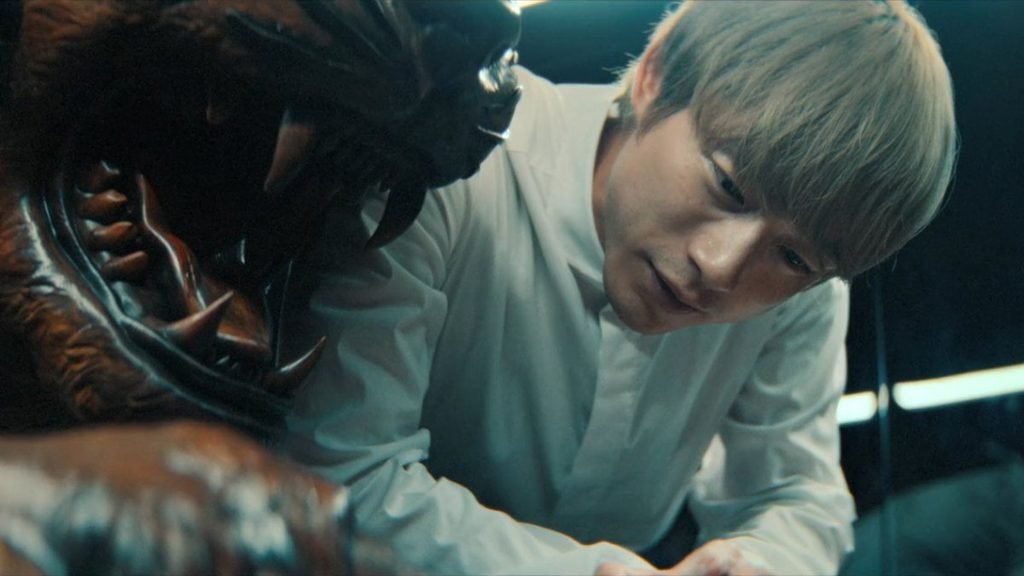
A note in Emi’s house sends Kim to his mother’s care facility. She survives. While the detectives are occupied, Emi takes Hyeon-seo from the hospital. By the time Kim and Inose reach the concert in Gunsan, the invitation he gave them at the station has acquired a particularly ugly meaning. He wanted them there.
As Emi plays, Inose works out that the piano is linked to what’s happening to Hyeon-seo elsewhere in the venue. They interrupt the performance too late to save her. The scene tells us something about Emi’s motive that the photographs of the dead never could. He cares about the sound, the timing and the fact that other people are present to hear the result. He can even give the detectives front-row access because he decides what they get to see.
Episode 8 supplies the memory behind it. As a boy, Emi witnessed Hyun-tae kill Du-yeong while classical piano music played. I read the concert as Emi’s attempt to take charge of the scene that fascinated him as a child. The flashback establishes what he witnessed. The adult decision to put Hyeon-seo through it is his.
The two names in the ambulance explain why Emi has to die
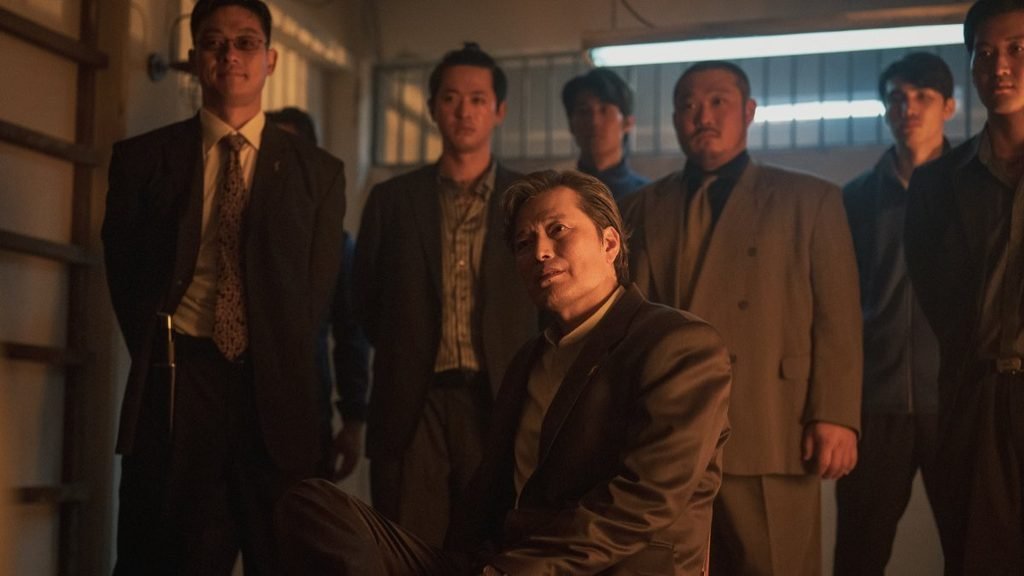
After the confrontation at the venue, Emi falls. The report that he dies on the way to hospital leaves out the most important few minutes. Hyun-tae gets into the ambulance, calls him Minamoto Shunsuke, and removes his breathing equipment. Emi calls him Ito. Both men have just identified the other for us.
Minamoto Shoichi, the pharmaceutical boss who once ran the Print Shop, is Emi’s father. Ito is Seo Hyun-tae (Jung Jae-young), the pachinko boss who knew Emi as a boy. Minamoto asks Hyun-tae to silence his own son because Emi’s crimes could expose their past. Hyun-tae, meanwhile, wants Minamoto’s help getting his drug Speed K into the legitimate pharmaceutical trade. Each man has a reason to want something from the other.
What gets me about the ambulance is that Emi recognizes a former caretaker in the one place he ought to be receiving care. He’s old enough to have made victims of his own. He’s also somebody’s son, and his father has just decided what his silence is worth. Our eight-episode recap follows what each detective knows when the ambulance leaves.
The detail in the 1987 files that changes the killer’s motive
Look at when the injuries happened. In Episode 5, Kim shows Inose the difference in the case records. The victims from 1987 had their limbs twisted after death. Emi inflicted those injuries while his victims were alive. The photographs look similar enough to link the cases. The timing tells the detectives why there’s a second case to solve.
In Episode 7, Hyun-tae describes the Print Shop, a front for an interrogation unit under South Korea’s Agency for National Security Planning. After a detainee died, its operatives disguised what had happened to him and let the press attribute his death to a serial killer. The deception worked. Under Minamoto, the unit kept using it for other deaths it wanted to hide.
Imagine being the reporter handed those pictures. Finding a second body in the same condition would make you more confident in the serial-killer story. That confidence is precisely what the unit counted on. Years later, Emi copies an arrangement meant to mislead people looking at a corpse. He makes the victim experience it. That is the part of The Blue Road killer identity twist that a list of aliases can’t explain.
Why Seo Hyun-tae killed the man Kim called his uncle
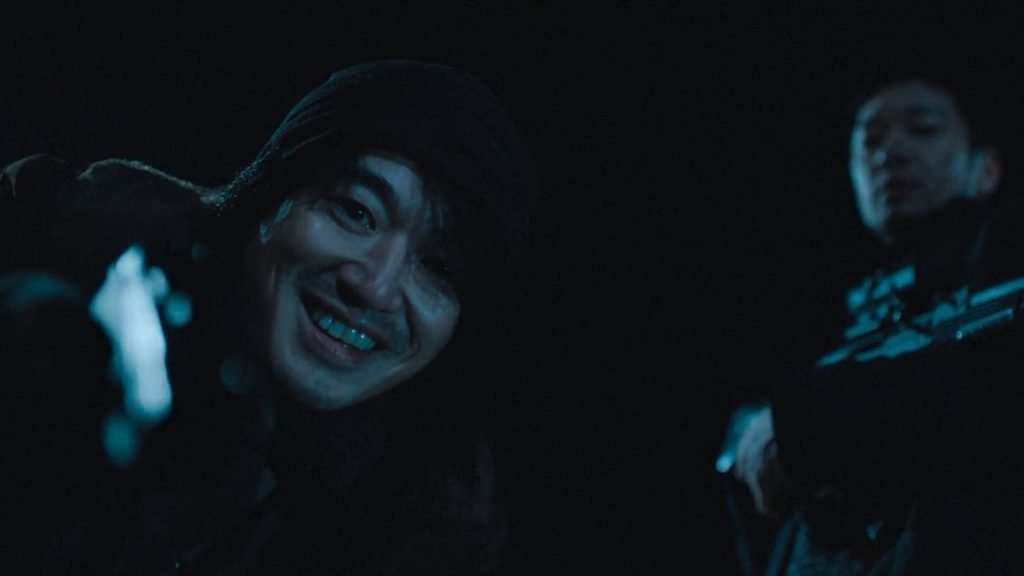
Episode 8 opens on a frightened young Hyun-tae. Du-yeong tells him how he came to work for the unit and what he stood to gain from cooperating. A resident registration card meant the chance to live under a recognized identity. Later, Du-yeong has his own card in hand while Hyun-tae is still asking when his will come. By the time they meet again, Du-yeong understands that killing him is the price being put on Hyun-tae’s papers.
What makes the encounter turn vicious is Du-yeong’s admission that he’s been happy. Happiness has given him time to think about the people they hurt, and he believes neither man can be forgiven. Hyun-tae reacts with fury to the idea that he needs forgiveness. He strangles Du-yeong. Young Emi witnesses the killing of the man whose death Kim will spend years trying to solve.
In Episode 7 Kim had already heard that his uncle worked at the Print Shop. He even tortured Hyun-tae in Hong Kong trying to get answers about him. He reaches Dandelion Village prepared to arrest his uncle’s killer. There is still one thing he hasn’t thought to ask. How did Du-yeong come to live with his family in the first place?
The photograph in the wallet is the real family twist
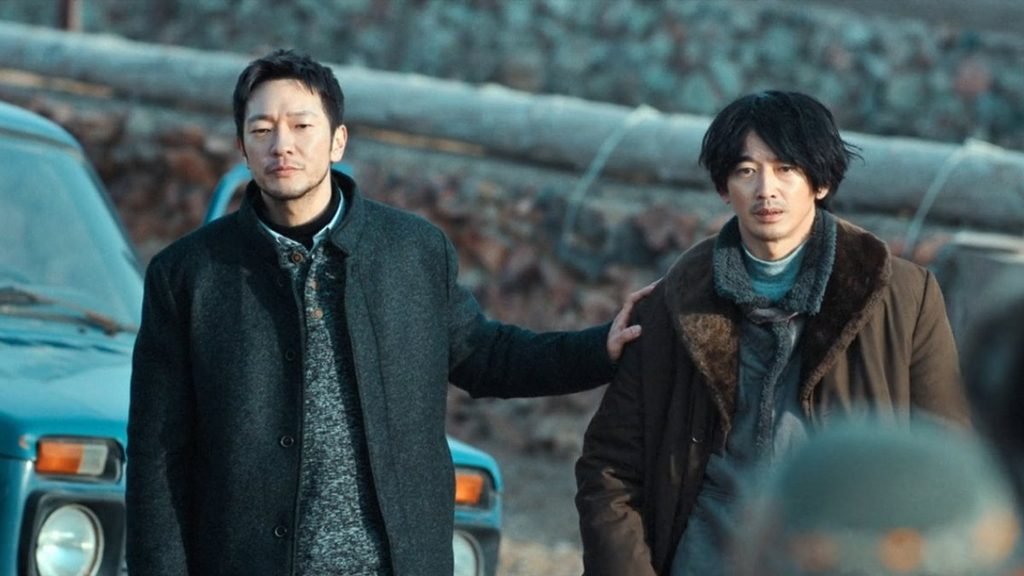
At the village, Hyun-tae lets Kim believe he’s finished talking about Du-yeong. Kim tries to proceed with the arrest. Only then does Hyun-tae bring up Kim’s missing father. Du-yeong killed him, buried him in the hills and found a photograph of Kim’s mother in his wallet. He knew whose door he was knocking on when he came into their lives.
That photograph is the detail I’d go back to. For years, Kim could remember the man who looked after his mother while wondering what had become of the man who left. All along, the first man could have answered him. Even Du-yeong’s last plea for the boy and his mother to be spared feels different once you know how he met them.
Hyun-tae makes a call. Kim’s mother is being held, and over the phone she calls for Du-yeong to help her. Hyun-tae threatens to tell her who killed her husband. Kim gives in and begs him to stop. Agent Yoon Soo-kyung intervenes, and Kim gets word that his mother is safe. We hear what she still believes about Du-yeong. What she learns after the rescue stays open.
Who fires first at the cliff, and why does Kim lower his gun?
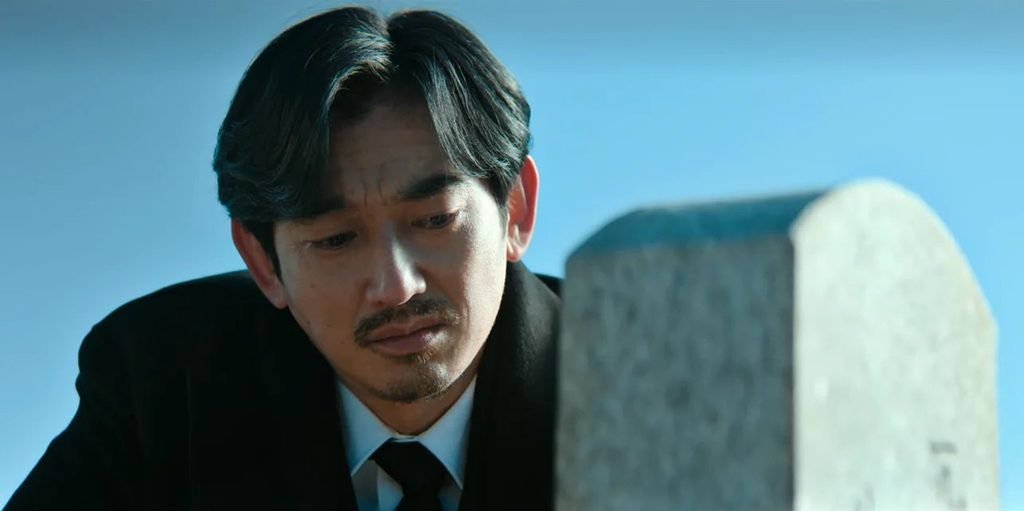
By now, Inose has turned up alive after his staged funeral and pulled Kim out of an ambush. At Dandelion Village, a child blows a dandelion into his face. Whatever is on it leaves him too dizzy to help Kim during the call. He recovers in time to find Kim facing a wounded Hyun-tae at the cliff. Hyun-tae dares Kim to kill him. Inose reminds his partner what an arrest is for. If Kim brings this man in alive, somebody other than the man holding the gun gets to judge his crimes.
Kim lowers his weapon. Hyun-tae shoots Kim in the abdomen. Inose fires back, and Hyun-tae falls to his death. Kim dies thanking Inose for helping him finish the case as a detective. That thanks carries the weight of Hong Kong. Kim knows from experience what he’s capable of doing to a captive when his uncle is involved. This time his partner gets through to him.
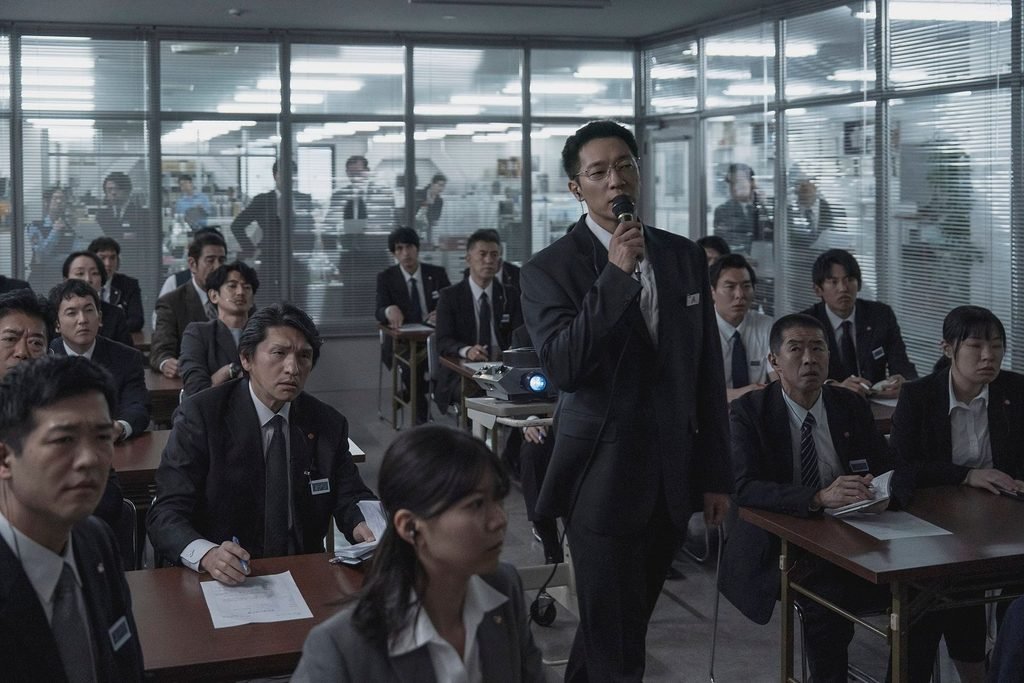
Years later, Anastasia shows students a photograph from the case. One imagines the disturbed individual who could have thought up such a thing. By now we can hear what that answer leaves out. The student is looking for Emi. Who in that classroom would think to ask for the records of a government office? Our guide to the finale and the graveside scene follows what Inose carries home from the case.
Questions about The Blue Road killer identity reveal
Are Emi Shunsuke and Minamoto Shunsuke the same person?
Yes. Minamoto Shunsuke is the pianist the detectives know as Emi. Minamoto Shoichi is his father and the former head of the Print Shop. You can hear Hyun-tae use the family name in the opening minutes of Episode 5 on Netflix.
Who does Emi mean by “the original”?
Seo Hyun-tae, the man he saw kill Du-yeong. The older case involves several perpetrators, including Du-yeong himself. Emi can identify the person he copied because he was in the room for that particular murder.
Is the writing at the crime scenes a clue from the original comic?
Yes. In the comic, the Korean detective recognizes words from a military text attributed to Emiri. That gives him a reason to ask who had access to the writing. The 2026 adaptation builds Kim’s family mystery around a different trail, which we trace in our comic and Netflix comparison.
Did Kim’s uncle genuinely care about him?
Du-yeong knew exactly what he’d taken from the family. He also used some of his last breaths to ask Hyun-tae to spare them. I believe the affection was real by then, which makes the years he let Kim wonder about his father harder to forgive. Did you hear love in that last request, guilt, or both? Tell me in the comments.