Take Charge of My Heart Ending Explained: The Final Spark and Happy Ending

Written by Huzaifa
Did Bo-bae lose her electricity, or did that last spark bring everything back? That is the question hanging over an otherwise reassuring finale. This Take Charge of My Heart ending explained guide separates the couple’s clear romantic resolution from the smaller mystery surrounding Bo-bae’s powers.
Quick Answer
Take Charge of My Heart ends happily for Na Bo-bae and Baek Ho-rang: they reunite, and she achieves her dream of becoming a drama writer. Her dangerous electrical discharges stop, allowing ordinary physical contact. The final small spark suggests a possible return of electricity, but does not establish that her original powers have fully returned.
Spoilers ahead for all 10 episodes of the 2026 Netflix drama.
The deal that the ending has to outgrow

Bo-bae and Ho-rang begin with unusually practical reasons to want each other nearby. His artificial heart needs charging. Her electrical ability has made dating difficult, while her writing deadline demands romantic experiences she has barely been able to have.
Their agreement gives them three months: she helps keep him alive until another operation is possible, and he helps fulfil her romance wish list. Netflix’s original setup makes that deadline part of the bargain, rather than an unexplained countdown introduced near the end.
The question underneath it is uncomfortable: would he still choose her if she could no longer help him?
For me, that question matters more than the battery gimmick. A contract can arrange dates, shared space and physical contact. It cannot guarantee that either person feels wanted. The finale needs to show what remains when their useful arrangement stops defining them.
From Ho-rang’s collapse to Bo-bae’s disappearance
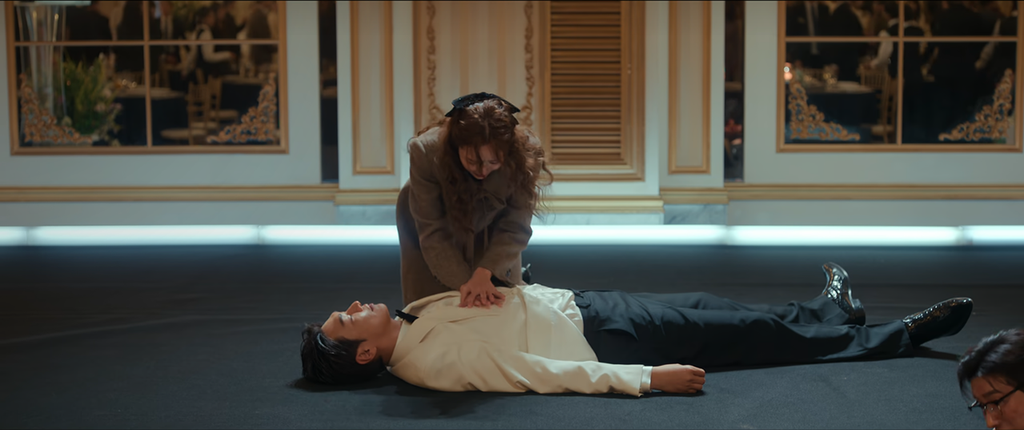
1. The rescue changes what touching him means
Ho-rang collapses during the succession announcement, and Bo-bae arrives in time to save him. However, the rescue creates a frightening reversal: another powerful electrical discharge could endanger his artificial heart.
The person whose touch helped him survive now fears that touching him could hurt him. That explains her retreat. She has not suddenly stopped loving him; she believes staying close carries a risk she cannot bear.
2. She returns home, and the usual recovery never comes
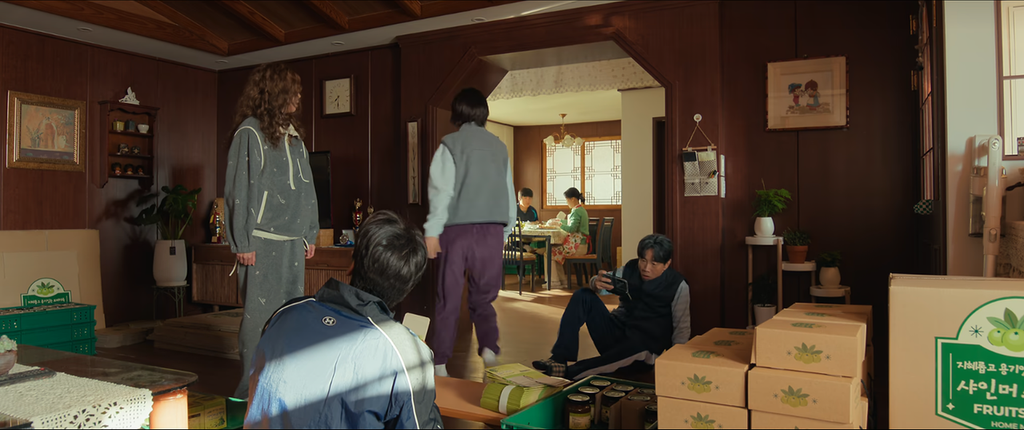
Bo-bae goes back to her family. After exhausting her electricity, she remains unable to produce the discharges that previously shaped her daily life. Earlier periods without her powers had ended; this absence stretches beyond the familiar recovery window.
The distinction is easy to miss: her powers being absent now does not prove they can never return. The finale gives her a new experience of ordinary contact before it settles the emotional question of what she wants to do next.
Why Ho-rang follows her instead of accepting the breakup
3. He makes the relationship his choice
Ho-rang follows Bo-bae to her family home and insists that he wants to stay with her. His presence answers something the original contract could not: he still wants a future together while she is frightened and unsure what her body will do.
I read this as a change in how he handles uncertainty. Negotiating an arrangement gave him something he could manage. Loving someone requires hearing fears he cannot simply solve with an offer.
4. Going back to Seoul becomes a shared decision
Bo-bae’s father reminds Ho-rang that other people depend on him and that he cannot abandon his responsibilities. Bo-bae then chooses to return to Seoul with him.
That choice matters. If he merely refused to leave until she surrendered, the reconciliation would feel one-sided. Her decision gives the relationship two willing participants again. She can accept support without letting fear make every decision for her.
The birthday and ordinary date complete the romance
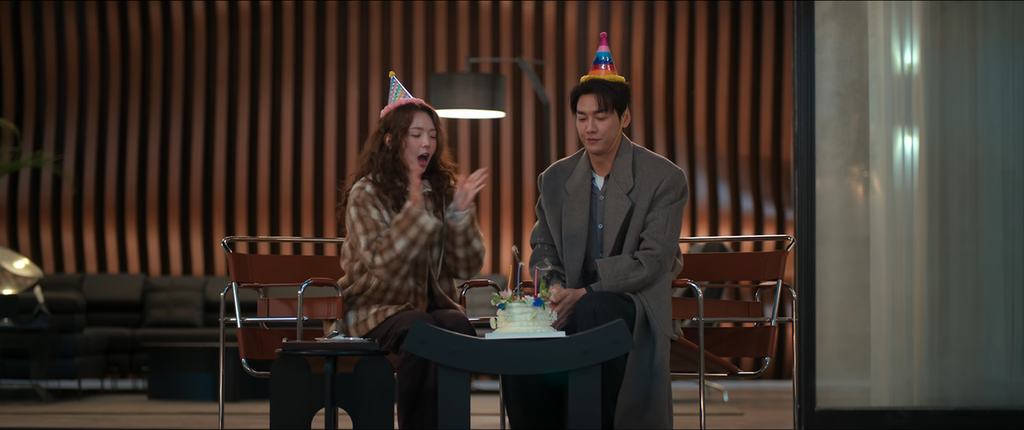
Back in Seoul, Ho-rang celebrates Bo-bae’s birthday. Finishing her original romance list does not mean she has run out of things she wants to experience with him. Their future extends beyond the tasks that first brought them together.
They also enjoy a date without Bo-bae shocking the people around her. The attraction of this sequence is its ordinariness. What might look like a routine romantic montage carries a different weight for someone accustomed to worrying about physical contact.
This is where the Take Charge of My Heart ending explained becomes more than a yes-or-no answer about the couple. The wish list once offered experiences with a deadline attached. Now there is room for plans they have not written down yet.
My interpretation is that the date supplies the answer to her earlier isolation. Being loved includes getting to participate in everyday life, without treating every moment of closeness as a problem to manage.
What happens to Do-yoon, Seol-hee and the company?
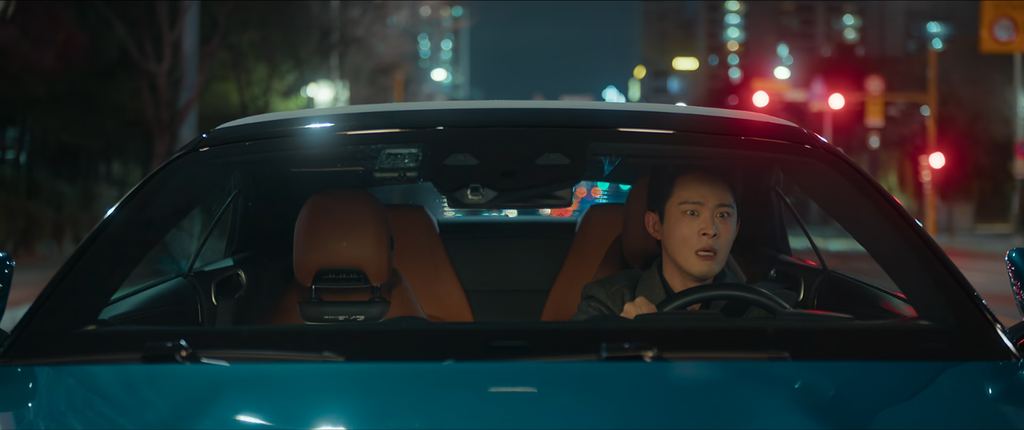
Choi Do-yoon’s attempted rise falls apart. His wedding plans with Han Seol-hee collapse, he behaves violently, and drunk driving leads to his arrest. He and his mother lose their standing in the succession struggle. Ho-rang regains his position at TS Resort.
Do-yoon’s resentment helps explain his fixation on Ho-rang, but it does not excuse his conduct. Feeling overlooked and choosing to harm others remain different things. The ending allows his grievance to be understood without treating it as a defence.
Seol-hee does not marry him. Ho-rang’s grandmother also becomes more accepting of Bo-bae, easing the family opposition around the central couple.
Taken together, these Take Charge of My Heart character outcomes remove several pressures that made affection feel conditional. Status, family approval and usefulness have all complicated the romance. The couple can finally make plans without those conflicts dictating every step.
Bo-bae’s writing career is part of the happy ending
Bo-bae makes her debut as a drama writer, with Ho-rang supporting her as the production comes together. Her professional ambition survives the romantic plot.
That is a satisfying choice because writing mattered before she met him. It would be a thin resolution if all her earlier hopes vanished once she found a boyfriend. Giving her work an outcome makes the future feel larger than the relationship alone.
There is earlier preparation for this, too. Episode 3 places their first contractual date within her romance research, while Episode 6 highlights her writing ability. Those details establish that she has a craft to develop, as well as experiences she wants to collect.
For the background to the adaptation, our Take Charge of My Heart source-story guide explains its connection to Charge Me Up. The television ending should be assessed on its own terms, rather than assuming every detail matches the original story.
Take Charge of My Heart final scene: what does the spark mean?
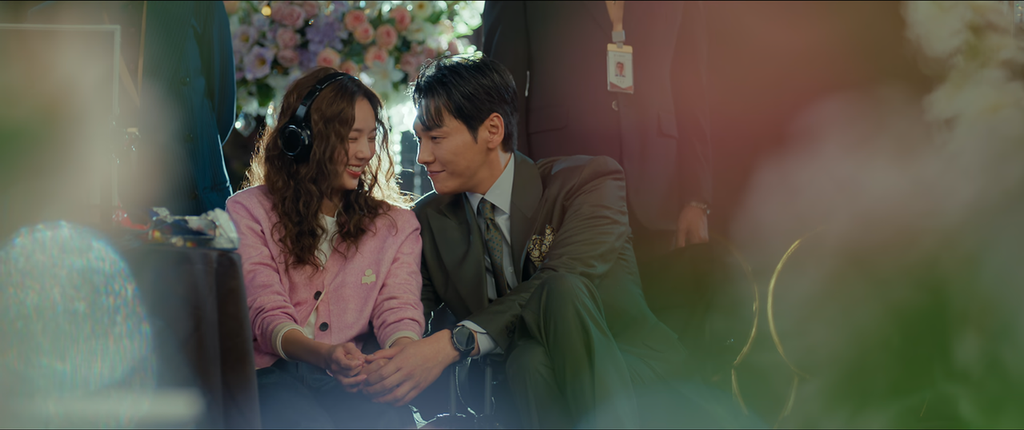
The closing romantic moments introduce a small electric spark after Bo-bae has been living without her previous dangerous discharges. It leaves a question about her ability, not about whether the couple choose each other.
There are two reasonable interpretations:
- Some electricity may remain or be returning. The spark suggests that describing her ability as permanently erased is too definite. It does not tell us its future strength or behaviour.
- The spark works as a romantic callback. Electricity brought them together, so its small return can echo their beginning while showing how differently they now approach closeness.
These readings can coexist. A literal spark can also carry emotional meaning.
The limit matters: a brief closing moment cannot establish a complete new set of rules for her powers. It also does not, by itself, announce another medical crisis. My reading is hopeful, with a small supernatural question left open.
What the finale resolves—and what it leaves uncertain
The strongest earlier setup is Bo-bae’s fear of harming someone she loves. Episode 7 already places that fear at the centre of her withdrawal. Her later disappearance therefore follows an existing anxiety, even if the separation is frustrating.
The ending changes her response to uncertainty. She does not have to know every detail of the future before choosing companionship, work and a life beyond avoidance.
For anyone wanting the Take Charge of My Heart finale explained in one distinction: the romance is resolved; the full future of her electricity is not. Those two things do not need identical answers for the conclusion to work.
All 10 episodes are available on Netflix, including the finale and its closing romantic moments.
Frequently asked questions
Does Take Charge of My Heart have a happy ending?
Yes. Bo-bae and Ho-rang finish together, and Bo-bae moves forward with her writing career. The small electrical mystery does not reverse their romantic resolution.
Does Bo-bae lose her powers permanently?
Her dangerous discharges stop, but the final spark makes “permanently” too strong. It hints at electricity without confirming the full return of her former ability.
Does Ho-rang die in the finale?
No. He survives the crisis and remains with Bo-bae. The ending gives them a shared future rather than a tragic separation.
Do Do-yoon and Seol-hee get married?
No. Their wedding plans fall apart, and Do-yoon’s behaviour leads to his arrest and the collapse of his succession ambitions.
With the Take Charge of My Heart ending explained, which reading fits that last spark for you: returning powers, a romantic callback, or both? Share your theory in the comments.