10 Best Legal Korean Drama Sites to Watch K-Dramas Online (2026 Guide)

If you only read one line: the best korean drama site in 2026 is still Rakuten Viki, Tubi is the best genuinely free legal option, and KOCOWA+ is now non-negotiable if you care about K-variety. That last one is new, and it’s the reason half the “best kdrama websites” lists floating around right now are quietly out of date.
Because something broke in December.
I’ve been paying for at least three of these platforms at any given time since I was fifteen, and 2026 is the first year I’ve had to actually redraw my own rotation. So this isn’t a scraped list. It’s the map I use, updated after the mess.
The 30-second version

| Platform | Best for | Free tier? |
|---|---|---|
| Rakuten Viki | Best overall — backlist depth + subtitle quality | Yes (ads) |
| Netflix | Biggest originals slate, zero effort | No |
| KOCOWA+ | K-variety and KBS/MBC/SBS same-week dramas | No |
| Disney+ | Star-driven prestige originals | No |
| Prime Video | Hub for other services + Coupang Play titles | Included w/ Prime |
| Tubi | Best legal free option, no signup | Yes |
| Viu | Fastest subs in Asia, MENA, Africa, ANZ | Yes (ads) |
| iQIYI | Southeast Asia + wider pan-Asian catalog | Yes (ads) |
| OnDemandKorea | Americas, live Korean TV channels | Yes (ads) |
| HBO Max | tvN/TVING titles across Asia-Pacific | No |
First, the thing that actually changed in 2026
On December 3, 2025, KOCOWA announced it had ended its content distribution deal with Viki. Viki Pass Plus no longer includes KOCOWA content. Their CEO Seungmin Kang even acknowledged in the release that the split left viewers disappointed.
Translation for you and me: if you were paying for the pricier Viki tier specifically to watch Running Man or catch KBS and MBC weekend dramas, you were paying for something that walked out the door.
The second shift got almost no coverage in fandom spaces. On January 2, 2026, HBO Max launched a TVING-branded hub across 17 Asia-Pacific territories, part of the multi-year Warner Bros. Discovery and CJ ENM deal. Disney+ Japan had already started carrying TVING-curated Korean content in November 2025. That’s why tvN titles feel scattered depending on where you live — the pipes got rerouted, not the shows.
Nobody sends you a notification when this happens. You just open the app one day and a show is gone.
1. Rakuten Viki — best overall korean drama site
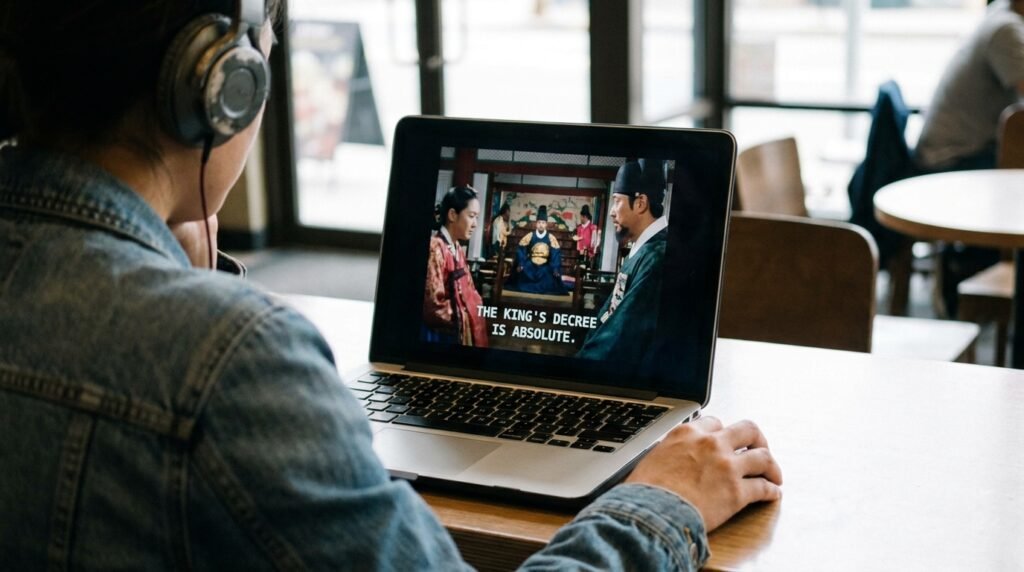
Still first. Even after the KOCOWA hit.
Here’s the mechanism most reviews skip: Viki’s subtitles come from a volunteer contributor community that segments and translates into a genuinely absurd number of languages. That’s not a cute detail. It’s why a 2011 drama nobody’s licensing anymore still has clean, edited English subs, and why Viki is the best site to watch kdrama if your taste runs older than last season.
Did the KOCOWA exit hurt? Yes — mostly the backlist and variety. But watch what’s happened since. On Viki’s own community forums, longtime subscribers have been logging titles quietly coming back through separate licensing deals: Running Man returned via a different content provider, and users have since spotted Return of Superman, I Live Alone, My Little Old Boy, plus dramas like Healer, Knight Flower and My Father Is Strange reappearing.
The most-upvoted reply in that whole “is Viki still worth it” thread was basically a shrug: some of us never had KOCOWA and we’re still here. Honestly? Fair.
Watch out for: the catalog leans heavier on Chinese and Thai content than it used to, and there’s a real free tier with ads — check Viki’s official plan page for current pricing, because it varies by country and has moved more than once.
2. Netflix — the slate nobody else can match

33 Korean titles announced for 2026 at their Seoul showcase in January. Netflix Korea’s content VP Kang Dong-han said Korean-language programming is now the world’s second most-consumed content category, behind only English.
The headliners are ridiculous. Tantara pairs Song Hye-kyo and Gong Yoo, written by Noh Hee-kyung and directed by Lee Yoon-jung — yes, the Coffee Prince director. The Scandal puts Son Ye-jin in a historical for basically the first time, opposite Ji Chang-wook. Yeon Sang-ho’s Mousetrap. Choi Min-sik in Notes from the Last Row.
Not everything landed, though. Jisoo and Seo In Guk’s Boyfriend on Demand got a rough ride — Koreaboo’s March roundup of dramas viewers dropped included it, with the common complaint being that the VR-dating concept was more interesting than the execution. Big budget doesn’t guarantee a good watch, and pretending otherwise is how these lists lose your trust.
3. KOCOWA+ — best for K-variety, and now mandatory
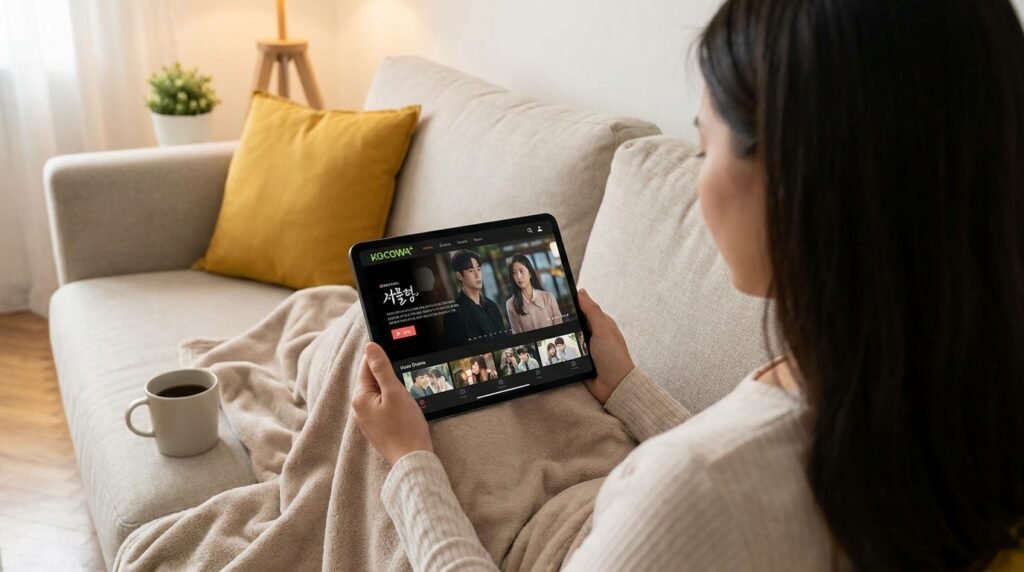
This is the one that got promoted this year, and not because I like paying for another app.
KOCOWA+ is a joint venture between wavve, SK Square Americas, and the big three broadcasters — KBS, MBC and SBS. That ownership is the entire point. Episodes land within about six hours of the Korean broadcast, subtitled in English, Spanish, Portuguese, Chinese and Vietnamese, and the variety archive is deep in a way no general streamer bothers with. Full runs of Running Man, Home Alone, The Manager.
If you’re a variety person, the KOCOWA exit from Viki didn’t give you a choice. It moved your shows.
Region note: it serves the Americas, parts of Europe, Australia and New Zealand. You can also add it through Prime Video, The Roku Channel, Xfinity X1 or OnDemandKorea instead of a standalone signup, which is genuinely the cheaper move if you already live inside one of those.
4. Disney+ — where the movie stars went
Disney+ has stopped treating Korean originals as a regional side project. Luke Kang, who runs Disney’s Asia Pacific business, pointed to 155+ APAC Originals and noted Korean storytelling is growing hardest in Latin America right now — Brazil and Mexico specifically.
The 2026 lineup is stacked: Perfect Crown with IU and Byeon Woo-seok, set in an alternate Korea that’s still a constitutional monarchy. The Remarried Empress, finally. A Shop for Killers season two with Lee Dong-wook and Kim Hye-jun. Made in Korea season two, Hyun Bin against Jung Woo-sung in 1979 Seoul.
And Battle of Fates, a survival variety show with 49 fortune tellers competing, which is either the dumbest or the greatest premise of the year. I’ve already decided it’s the greatest.
5. Amazon Prime Video — the sleeper, for two reasons

Reason one: it’s a hub. KOCOWA+ and other services plug in as channels, so you can consolidate billing instead of juggling six apps.
Reason two, and this is the part people miss — a chunk of Coupang Play’s Korean output reaches international viewers through Prime Video. Absolute Value of Romance is exactly that. So Prime quietly becomes your only legal route to titles you’d otherwise assume were Korea-only.
Their own slate is growing too: Siren’s Kiss with Park Min-young and Wi Ha-jun, Final Table with Ahn Hyo-seop, A Love Other Than Yours with Seo Kang-jun and Ahn Eun-jin. Amazon says Marry My Husband and No Gain No Love both cracked their global Top 10 on out-of-country viewing, which tells you the investment isn’t charity.
6. Tubi — the best way to watch korean drama online free

Completely free. Ad-supported. No account required. That’s it, that’s the pitch.
Tubi has a dedicated CJ ENM hub plus separate K-Drama, K-Romance and K-Idol categories, built on a licensing deal that brought over 75+ Korean films. The catalog skews older and it rotates, so don’t expect this week’s premiere. But for filling gaps in your classics list without handing over a card number, nothing else on this list competes.
Currently live in the US, Canada, UK, Australia, Mexico and parts of Latin America.
7. Viu — fastest turnaround if you’re in the right region

Viu operates across roughly 16–18 markets in Asia, the Middle East, Africa and, since late 2024, Australia and New Zealand. Canal+ has poured around $300 million into it, which is why it keeps expanding instead of quietly dying.
The mechanic worth knowing: on the free ad-supported tier, first-run episodes typically appear about 72 hours after Korean broadcast. Premium cuts that to roughly eight hours. If you’re in a Viu market and you’re tired of dodging spoilers on X for three days, that gap is the whole product.
8. iQIYI — for Southeast Asia and everything beyond Korea
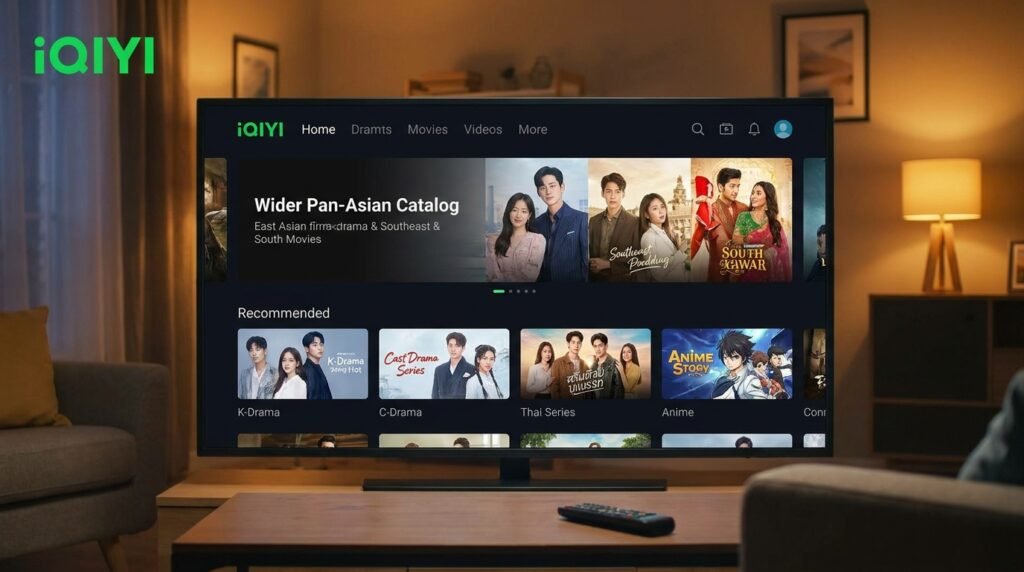
Be honest about what this is. iQIYI International’s own H1 2026 data shows its top charts dominated by self-produced Chinese dramas, with Korean titles as one thread in a wider Asian mix. Their reported viewership was up 130% year-on-year, with subtitles in 13 languages.
So: a real, legal option with solid K-content — especially strong if you’re in SEA — but not a Korea-first platform. Their data also flagged that micro dramas now make up half the top 10 trending titles in Japan and South Korea, which says something uncomfortable about where attention spans are heading.
9. OnDemandKorea — the Americas pick nobody talks about
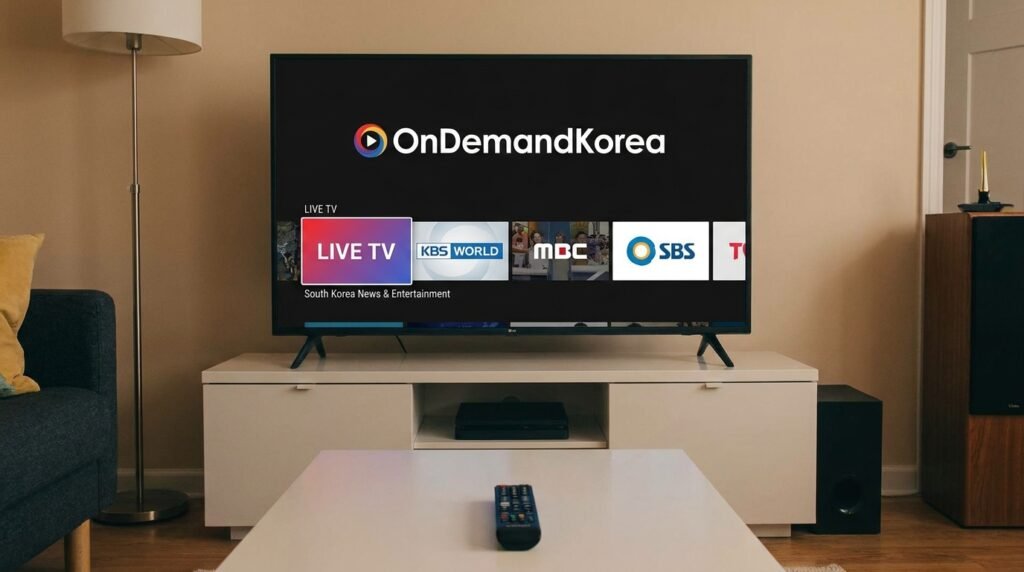
ODK is the largest legal Korean streaming service in North America and it does something none of the others do: 24/7 live Korean TV channels alongside on-demand.
Content partners run deep — KBS, MBC, SBS, EBS, plus JTBC, Channel A, TV Chosun, ENA and more. There’s a free ad-supported tier, a lighter-ads standard plan, and a premium tier. It’s the closest thing to actually having Korean television on in the background, and if you grew up in a household where that was normal, you already know why that matters.
Americas only, though.
10. HBO Max — the 2026 wildcard for Asia-Pacific
New entry, and only relevant depending on your postcode.
That TVING hub launched January 2, 2026 across 17 Asia-Pacific territories, bringing CJ ENM and TVING originals and library titles onto HBO Max. Dear X kicked the rollout off. WBD and CJ ENM are also co-producing new K-dramas for global HBO Max distribution, so this footprint expands.
If you’re in Southeast Asia, Taiwan or Hong Kong and you’ve been hunting a tvN title with no luck — start here.
Two free options that aren’t on the list but should be on your phone
Official broadcaster YouTube channels. KBS World TV, SBS World and MBC Drama upload full episodes with English subtitles, legally, for free. The classic and backlist coverage is genuinely excellent. New hits won’t be there. Everything else might be.
Pluto TV and The Roku Channel run free 24/7 Korean drama channels in supported regions. Zero curation, zero cost.
And the obvious: skip the mirror sites. Not a lecture — those uploads carry real malware risk, the subs are machine-mangled, and the domains vanish mid-series. Official korean drama sites exist and several are free. There’s no argument left.
So which one do you actually start with?
Start with Viki. Free tier first, no card. Watch three things. If the subtitle quality and the back-catalog hook you, upgrade.
Then build around one gap: Netflix if you want the tentpoles, KOCOWA+ if variety is your thing, Prime if you’re already an Amazon household.
And stop treating these like utilities. Ampere data reported in early 2026 found 54% of US respondents would likely cancel a service they weren’t using enough — the industry’s calling it fragmentation fatigue. Rotate. Subscribe for the month a drama airs, cancel, come back. Every one of these platforms is built assuming you’ll forget. Don’t.
That’s the whole strategy. One anchor, one rotating slot, free tiers for the gaps.
Your turn: which platform are you actually keeping in 2026 — and which one did the KOCOWA split finally push you to cancel? Tell me in the comments, because I’m genuinely torn on whether Viki Plus is still worth it for me.