The Remarried Empress Character Relationships: Navier, Sovieshu, Rashta and Heinrey Explained
Written by Huzaifa
Why does Sovieshu want a divorce if he still expects Navier to belong in his life? That contradiction drives the remarried empress character relationships. Everyone wants something different from marriage: continuity, protection, affection, authority. The disaster begins when Sovieshu assumes he can arrange those needs without asking the people involved.
Quick Answer: Navier and Sovieshu are childhood companions whose imperial marriage breaks down after he takes Rashta as his mistress. Rashta seeks security through his protection and the empress’s position. Heinrey offers Navier another partnership, which develops into love. Sovieshu’s mistake is assuming divorce will leave Navier available to return.
Spoiler scope: This guide explains the central relationships and the source story’s divorce-and-remarriage arc. Later motivations are identified as source-story spoilers, rather than presented as confirmed scenes from the 2026 drama.
Who is connected to whom?
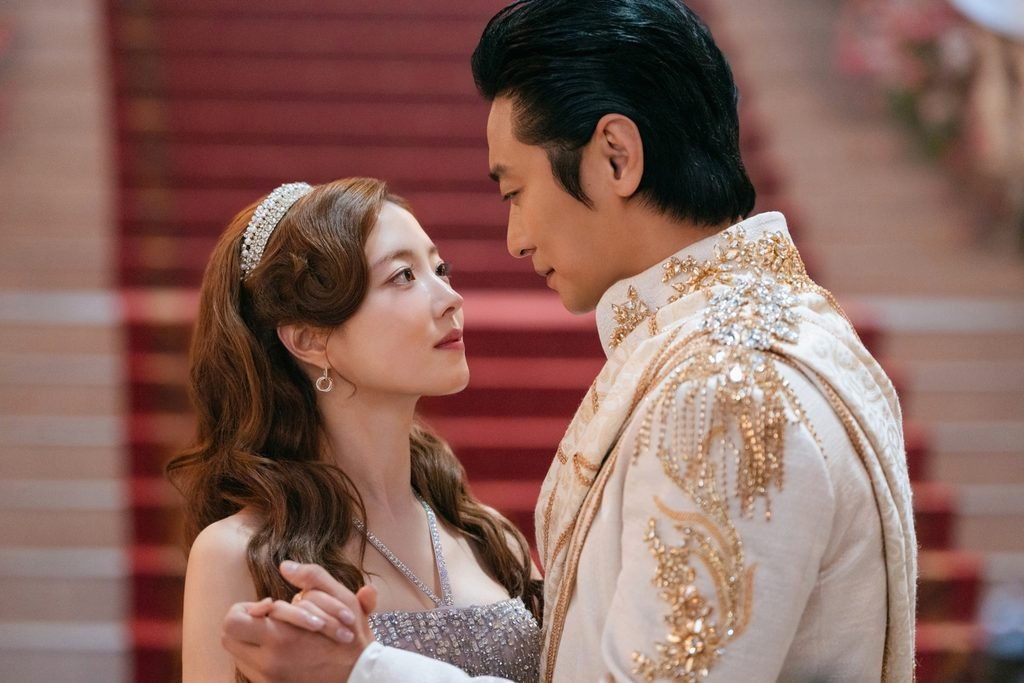
The four leads form overlapping personal and political relationships.
| Relationship | Their connection | What creates the conflict |
|---|---|---|
| Navier and Sovieshu | Childhood companions, spouses and imperial partners | He takes her loyalty for granted while changing their marriage |
| Sovieshu and Rashta | Emperor and mistress, followed by a source-story marriage | His protection gives her security but leaves him holding the power |
| Navier and Rashta | Empress and the emperor’s mistress | Rashta seeks acceptance, then sees Navier’s position as something she needs |
| Navier and Heinrey | Correspondents and allies who become spouses | Practical trust and romantic feeling develop at different speeds |
| Sovieshu and Heinrey | Rival rulers connected through Navier | Heinrey makes Navier’s departure possible and politically consequential |
| Rashta and Heinrey | Intersecting palace acquaintances | The pen-pal deception draws Rashta into his connection with Navier |
For the screen cast and setting, see DaebakDaily’s The Remarried Empress drama profile. The 2026 adaptation is available through Disney+, with access depending on region.
Navier and Sovieshu: a shared life is still a relationship
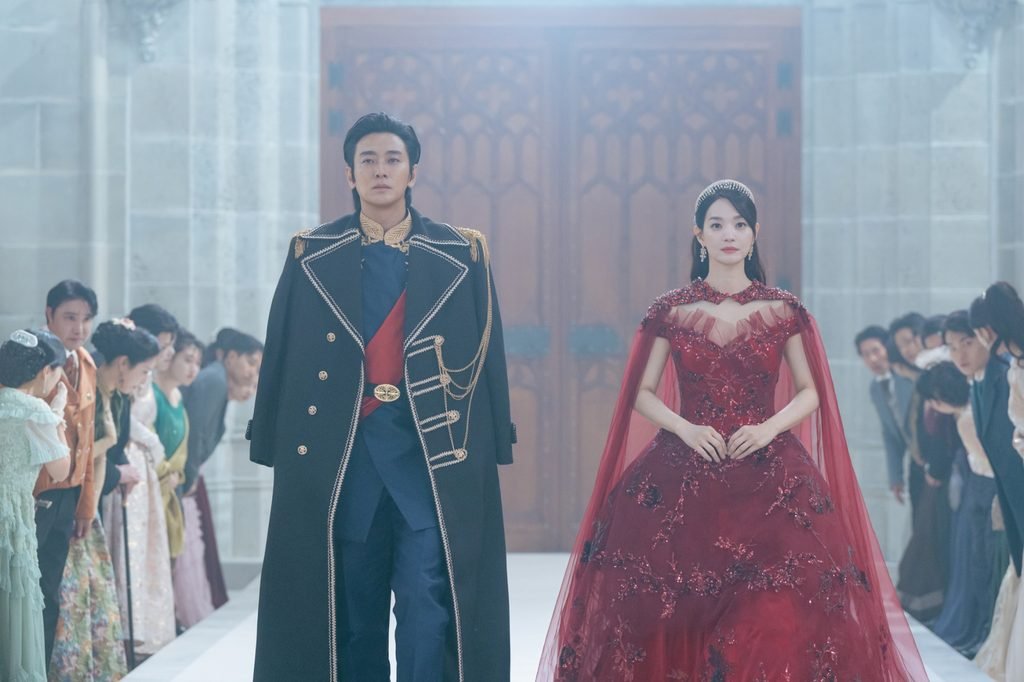
Calling their marriage “loveless” can obscure why its collapse hurts.
They grew up together, prepared for royal responsibilities and imagined the country they would govern. Their relationship includes friendship, familiarity and shared work, even where romantic expression is restrained. Losing that means losing someone who knows the shape of your entire life.
Navier’s composure makes the damage easy to underestimate. She has been trained to function under scrutiny. A public outburst would affect her authority as well as her marriage.
My reading is that Sovieshu mistakes her self-control for emotional self-sufficiency. Because she can keep working, he behaves as though she can absorb whatever he decides.
That is why “Why doesn’t Navier fight harder for him?” misses her position. She is already carrying responsibilities that survive his latest romantic decision. Her ability to remain composed does not make his choices painless.
The question is whether he still treats her as a partner with wishes of her own.
Sovieshu and Rashta: protection creates a dangerous imbalance

Sovieshu brings Rashta into the palace after encountering her while hunting. She has escaped slavery; his attention offers a dramatic change in her circumstances.
For Rashta, therefore, losing his affection threatens more than a relationship. It threatens the safety and standing attached to it.
Love, gratitude, fear and ambition can exist together. Reducing Rashta to either a helpless innocent or a calculating intruder obscures her choices.
Sovieshu, meanwhile, can enjoy being needed without confronting what dependence does to the person relying on him.
I read their imbalance this way: he experiences his protection as generosity, while she experiences its possible withdrawal as danger.
The source story makes that fear explicit when Rashta wants security for herself and her baby beyond the emperor’s favor. Her pursuit of the empress’s position grows from that fear, though it does not excuse the people she harms.
Why Rashta calls Navier “sister”
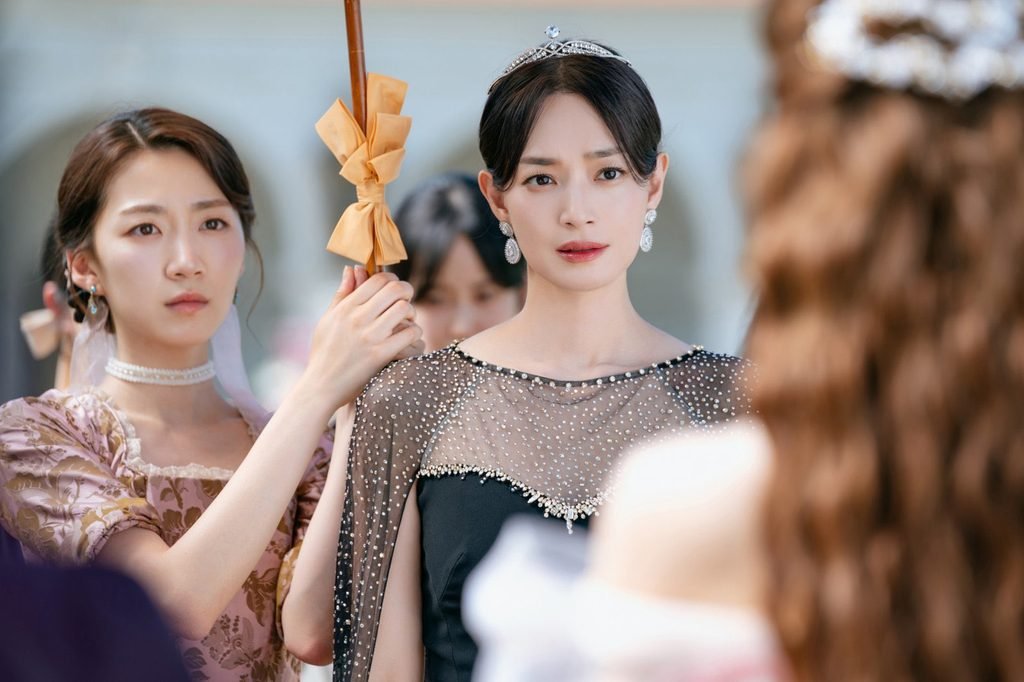
The “sister” interaction exposes how differently the two women understand their situation.
Rashta approaches Navier with a claim of closeness through their connection to the same man. Navier has not agreed to that intimacy. She is being asked to welcome someone whose arrival has already changed her marriage.
For Rashta, acceptance could help establish her place in the palace. For Navier, accepting the label would mean participating in a family arrangement chosen for her.
Neither their status nor their freedom is equal. Navier has inherited privilege and institutional authority; Rashta carries the insecurity of her past. Recognizing that inequality does not make Navier responsible for emotionally comforting her husband’s mistress.
This is where the remarried empress character relationships become more interesting than a competition for Sovieshu. The women are also struggling over recognition: who belongs, who must accommodate whom, and whose discomfort the palace considers reasonable.
Sovieshu helped create that conflict. He cannot disappear from its explanation.
Navier and Heinrey: why the bird and letters matter

Heinrey’s connection with Navier develops through Queen, the bird, and their correspondence. The fantasy revelation is that Heinrey can take bird form himself.
There are two separate identity questions here: Who writes the letters? And who is the bird? They should not be treated as the same discovery.
That distinction was worth checking against the character material and the publisher’s description of their correspondence. Knowing your correspondent’s human identity does not automatically mean knowing every secret about how the messages arrive.
Emotionally, the letters give Navier a relationship outside the demands of her marriage. She can respond to attention that is directed toward her, rather than to another problem Sovieshu expects her to manage.
The bird also supports a useful symbolic reading: movement and freedom enter a life governed by ceremony. That is interpretation, not a stated explanation of the magic.
Still, Heinrey’s hidden identity complicates the tenderness. Affection does not erase the question of what he knows that Navier does not.
Rashta’s pen-pal claim crosses into a different relationship
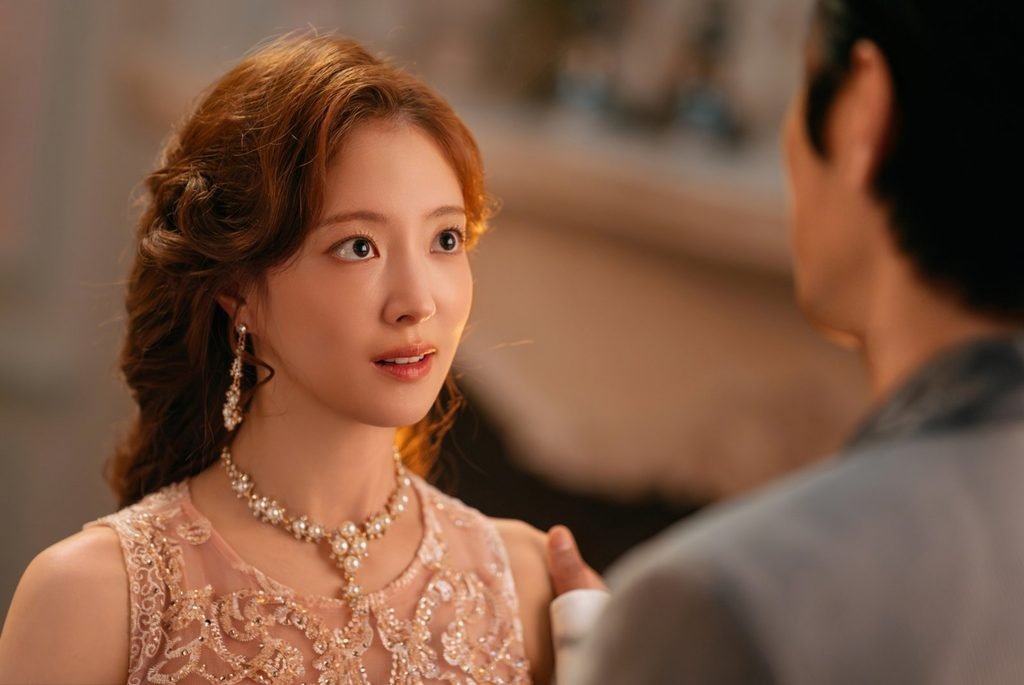
Rashta’s attempt to present herself as Heinrey’s correspondent matters because she reaches beyond her place beside Sovieshu.
The correspondence belongs to a connection Navier has developed independently. Claiming it means trying to occupy someone else’s place in an existing exchange.
The distinction is between claiming a relationship and possessing its history. A person can announce that she wrote the letters; that announcement cannot give her the memories or knowledge shared by their actual participants.
This is also why the situation should not be simplified into a second established love triangle. Rashta’s claim does not prove that Heinrey has fallen for her, or that his feelings for Navier have disappeared.
The tension comes from recognition: will Heinrey identify his correspondent, and will Navier trust their connection?
Why Sovieshu divorces Navier—and expects her back
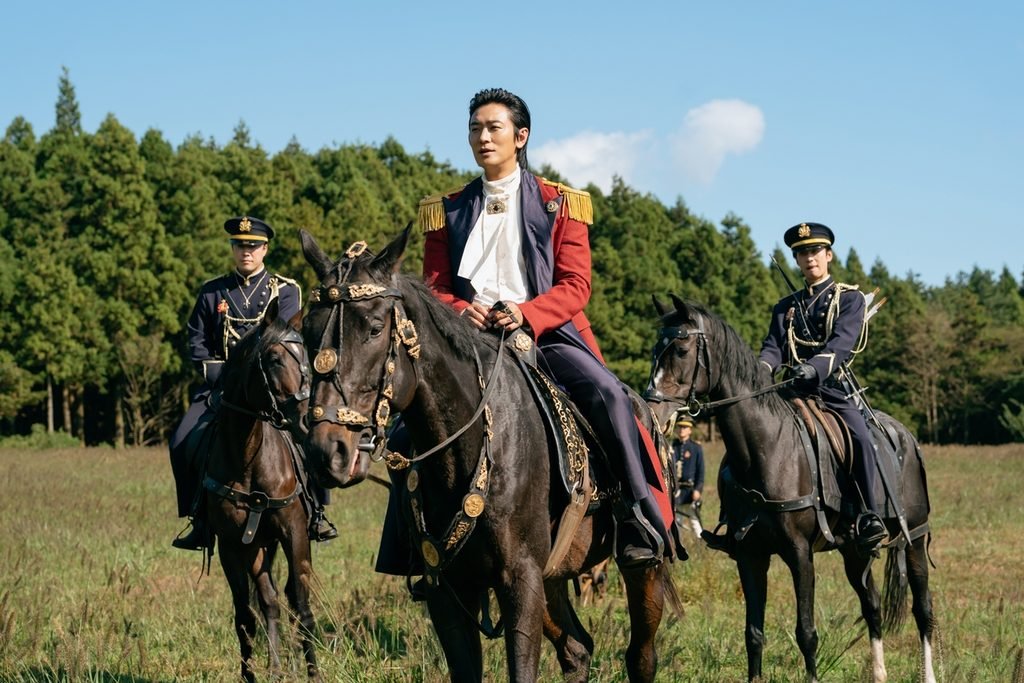
Source-story spoilers: Sovieshu’s plan connects Rashta’s pregnancy to the imperial succession. He wants the child he believes is his to have the status of a legitimate heir.
His intended sequence is to divorce Navier, make Rashta empress for a limited period, then restore Navier through remarriage. The source describes a one-year arrangement.
The timeline explains his behavior, but it does not justify it. He treats Navier’s future availability as an assumption rather than a decision she must make.
He also treats Rashta’s position as temporary while she is seeking lasting security. The same plan fails both women in different ways.
That is the sharpest contradiction in the remarried empress character relationships: Sovieshu wants Rashta to solve one problem and Navier to remain available to solve everything afterward.
His distress when Navier chooses Heinrey follows from that assumption. He expected to rearrange his household. She makes a choice that removes her from it.
The divorce hearing, beat by beat
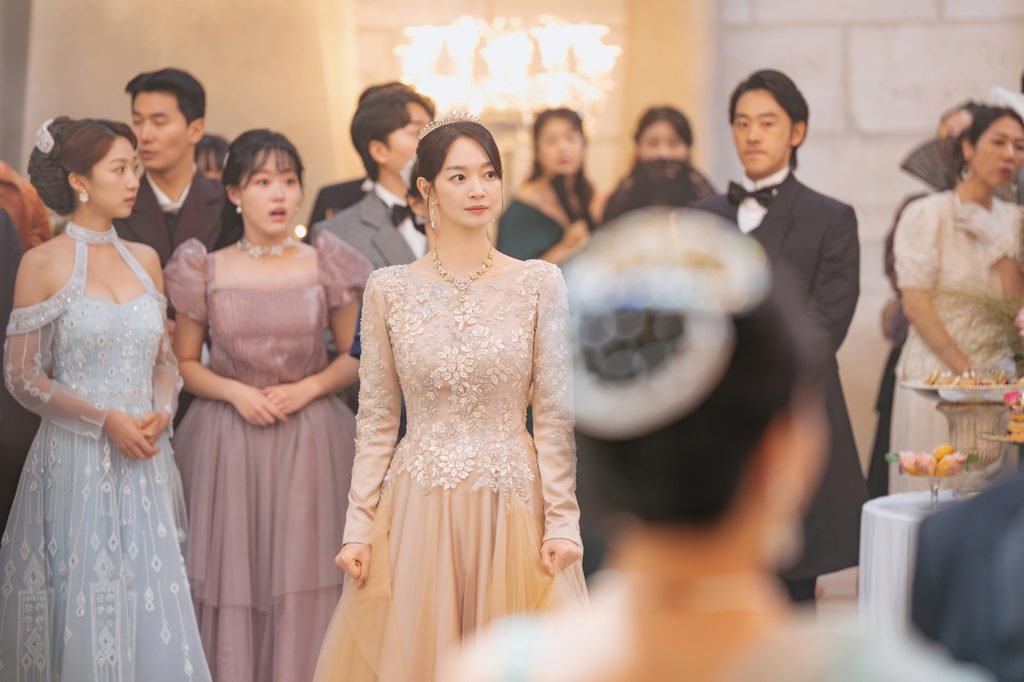
Source-story scene: The famous hearing is the payoff to earlier arrangements, not the moment Navier spontaneously chooses a new husband.
- Navier accepts the divorce. Her supporters object, but she does not pursue the prolonged dispute they want.
- The high priest checks her decision. She confirms her acceptance despite the reaction around her.
- She requests approval to remarry. The hearing changes direction: her future is no longer limited to the loss of her current position.
- Heinrey steps forward. His presence reveals that there is already a specific partner behind her request.
- Sovieshu reacts. What he treated as a manageable separation has consequences he did not plan for.
I checked the original opening specifically for the authority Navier addresses. Her request goes to the high priest. Describing it as simply asking Sovieshu for a new husband blurs the scene’s mechanics.
The sequence also separates consent to divorce from consent to being discarded without another future.
Does Navier love Heinrey, or need his throne?
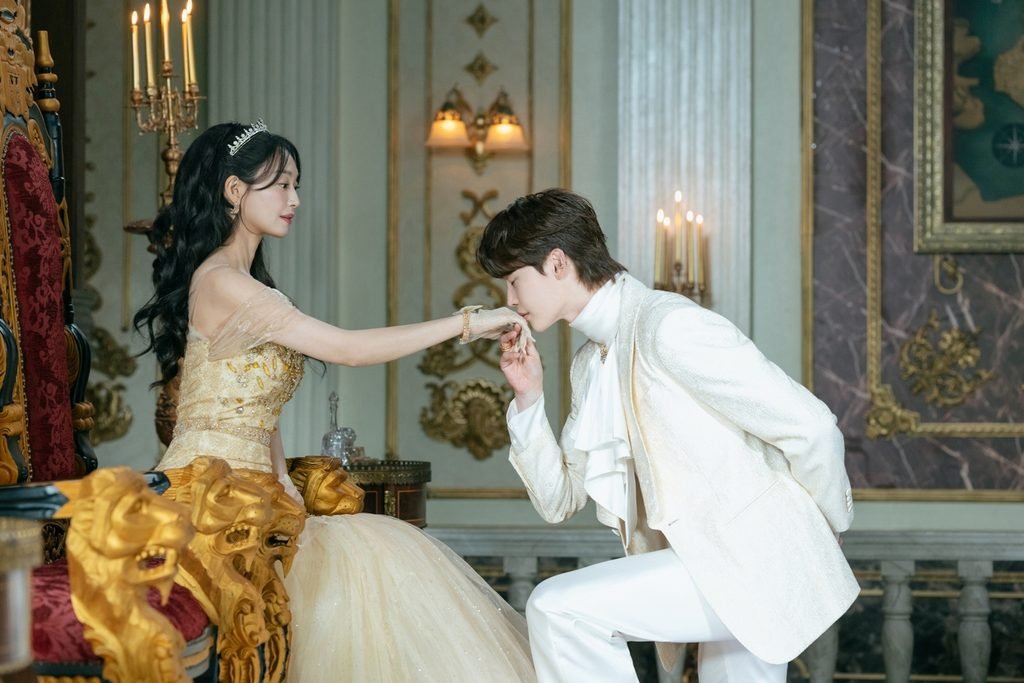
The source’s initial marriage agreement is political. Heinrey is delighted, but Navier is still processing the collapse of her first marriage.
Their feelings do not begin at equal intensity. That is part of the relationship, not evidence that the romance is meaningless.
Navier needs a viable future and a role suited to the life she has trained for. Heinrey offers both while wanting a closer personal bond. Their developing affection grows within that arrangement.
I find that progression more convincing than demanding instant devotion from someone who has just been betrayed. Agreeing to trust another person can come before being ready to love them openly.
Heinrey should not be flattened into a harmless rescuer, either. His political interests and calculating side coexist with his affection.
The meaningful question is whether their partnership gives Navier room to exercise judgment and develop trust.
What the relationship timeline actually tells us
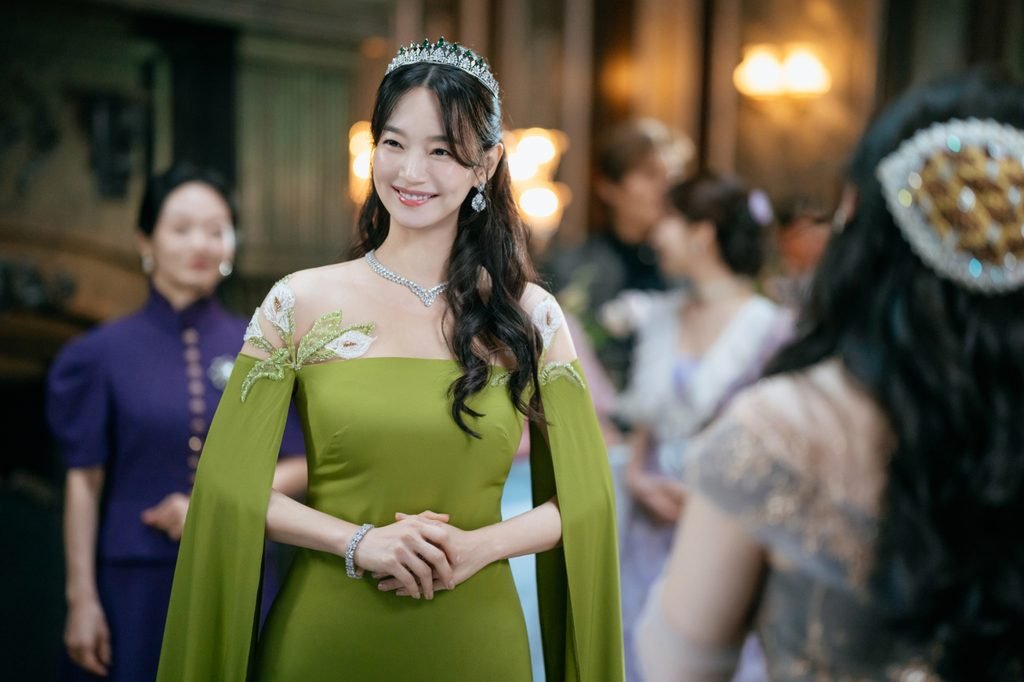
To follow the remarried empress character relationships, separate the order of events from the source’s dramatic opening.
The hearing shows the rupture first. The earlier story then supplies its causes: Rashta enters the palace, Navier’s marriage deteriorates, her connection with Heinrey develops, and the succession issue feeds Sovieshu’s divorce plan. Navier and Heinrey reach their agreement before the public remarriage request.
Three details change how that payoff reads.
Navier’s calm is preparation, not indifference. The hearing is not her first opportunity to think about life after Sovieshu.
Heinrey’s arrival confirms an agreement. He does not invent her escape for her in the room.
Sovieshu’s surprise exposes his assumption. He has considered the divorce’s usefulness to himself more carefully than Navier’s freedom afterward.
The title promises another marriage. The emotional payoff is watching Navier become an active participant in choosing it.
Frequently asked questions
Does Sovieshu still love Navier?
The source depicts continuing attachment, jealousy and regret. Those feelings do not make his treatment loving or respectful. He assumes their shared history will keep Navier available even after he removes her from their marriage.
Why does Rashta want to become empress?
She wants security for herself and her child beyond Sovieshu’s changing favor. She comes to view Navier’s position as the obstacle to that security, encouraged by Duke Ergi. Understanding her fear does not excuse her harmful decisions.
Does Navier marry Heinrey just to get revenge?
No. Their initial agreement gives her a practical future, and the relationship develops into love. The original opening explicitly distinguishes her decision from a revenge scheme, even though Sovieshu’s shocked response gives her satisfaction.
Is Queen really Heinrey?
Yes. Heinrey’s ability to transform into a bird connects Queen to the human prince. Recognizing him as a correspondent and discovering his bird identity are distinct pieces of information; their presentation depends on the version.
Which choice explains the breakdown best for you: Sovieshu taking Navier for granted, Rashta chasing security through power, or Navier deciding she will no longer wait? Share your reading in the comments.
Amazing things here. I’m very glad to look your post. Thank
you a lot and I am taking a look forward to contact you. Will you kindly drop me a mail?
Feel free to surf to my site Buy Proxy Servers