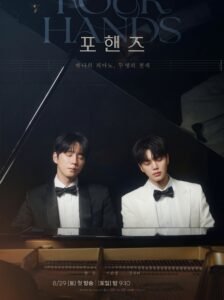
정진영
Known for
- Four Hands, Two Sonatas (2026)
Biography
The wealthy Hong family in *Queen of Tears* needs more than extravagant interiors and high-stakes arguments to be believable. Jung Jin-young gives Hong Beom-jun, Hae-in’s father, the uneasy authority of a man used to preserving family prestige without always understanding the people closest to him. The role makes a useful late-career contrast with the dangerous King Yeonsan Jung played in the film *The King and the Clown*: power in his performances is rarely uncomplicated.
Born in 1964, Jung built his reputation over decades through theater, film and television. Korean cinema audiences know him from an unusually varied run of historical dramas, crime stories and family films. *The King and the Clown* (2005) used him as the unpredictable monarch at the center of the performers’ precarious existence. A lesser portrayal could have made the king only a monster. Jung’s performance leaves space for instability, loneliness and impulsive desire, which helps the film’s political danger feel personal rather than abstract.
His film work also includes the hugely popular *Miracle in Cell No. 7*, where he portrays the prison chief, and *Once Upon a Time in a Battlefield*. These projects demand opposite dramatic textures. One depends on compassion developing in a harsh institutional setting; the other uses historical conflict and sometimes pointed humor to examine questions of power and identity. Jung’s long screen career is built partly on that ability to move between large, stylized stories and intimate moral problems without losing credibility.
Television gave him further opportunities to represent complicated paternal and institutional figures. He appeared in *Love Rain* in a story spanning generations, and *Queen of Tears* (2024) placed him inside a family where money makes private disagreements highly public. That same year he also appeared in *The Auditors*. The 2025 family drama *Mother and Mom* continued his work in stories where an older man’s authority is tested by the consequences of everyday decisions. Jung has additionally worked behind the camera as a film director and screenwriter, an important reminder that his screen perspective extends beyond acting assignments.
The most compelling feature of Jung’s career is his resistance to a tidy division between heroes and villains. His fathers, officials and historical rulers can be painfully human while making damaging choices. That tension gives even relatively brief appearances more texture than their positions in a cast list might suggest.
Jung’s filmmaking experience offers another reason his screen parts are worth revisiting. The choice of when to react is often more interesting than the reaction itself. A monarch in a historical film cannot express insecurity as freely as a father caught in a private family argument; Jung adjusts the space he allows the audience into each character. Even when he appears for only part of a television series, the underlying behavior can imply a life before the main story. That is a particularly valuable quality for an established film actor entering a densely plotted ensemble drama.