Final Table Episode 1 Review and Episode 2 Preview: Is It Worth Starting?
Written by Huzaifa
A gifted chef can recognise a bad meal. Recognising what it costs someone to keep serving it is a different skill. That tension gives Final Table its strongest opening idea: Kang Han arrives with standards, while Choi Song-yi is barely keeping her father’s restaurant alive.
If you came looking for a Final Table episodes 1-2 recap, this article covers the verified Episode 1 story and a separately labelled Episode 2 preview. It does not treat preview footage as a completed episode.
Spoiler-free verdict: a promising 7/10 opening story
Final Table has a compelling foundation: food connects professional pride with family loss, and its central restaurant gives the competition personal stakes. My provisional rating is 7/10 for that opening story. The crowded corporate setup and familiar genius-chef dynamic temper the excitement, but the characters have worthwhile reasons to fight.
The premise: saving a restaurant means saving more than a business

Final Table is a scripted Korean drama built around a fictional culinary contest, The Table: K-Chef 2026. Korean chefs with different backgrounds compete to establish themselves, bringing personal histories into a setting that publicly measures their ability.
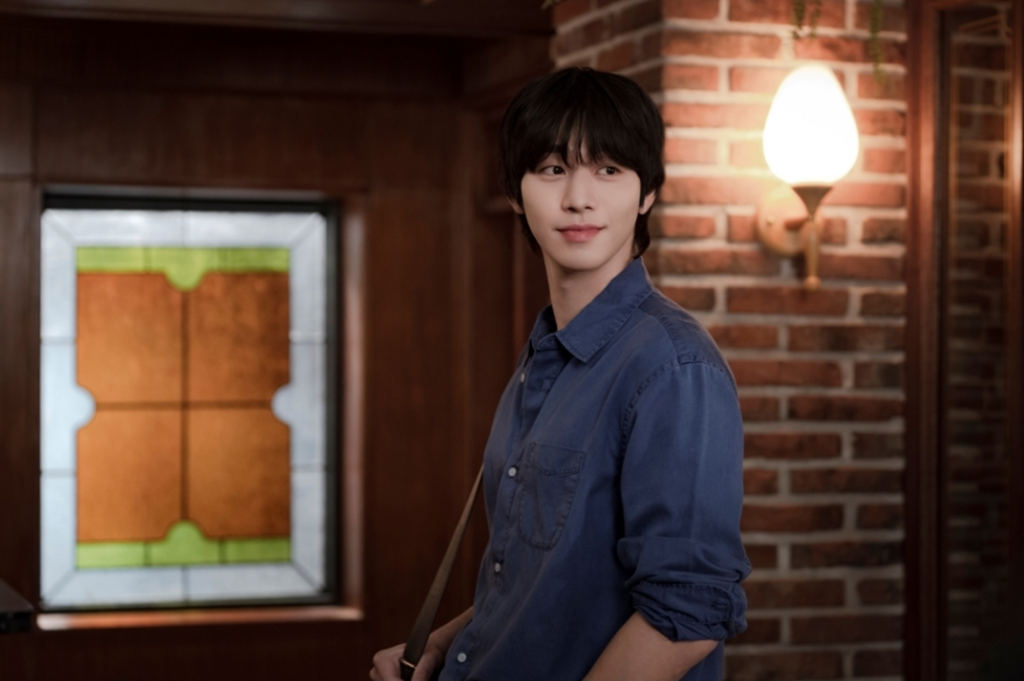
At its centre are Kang Han, the internationally known chef Chris K, and Choi Song-yi, whose family restaurant, Famiglia, faces closure. Their interests overlap before their personalities do.
The main cast includes Ahn Hyo-seop as Kang Han, Hong Hwa-yeon as Choi Song-yi, Chang Ryul as star chef Cha Woo-jin, and Jung Eu-gene as competition producer Seon Jeong-won. The series is planned for 12 episodes, with Kim Do-hoon writing and directing.
You can check availability on the official Final Table Prime Video page.
Spoilers begin below for Episode 1, including bereavement and the restaurant’s crisis.
Episode 1 recap: two people protecting different memories

Kang Han’s connection to cooking runs through his late father. Before his planned return to America, he visits Famiglia, a restaurant associated with an important meal they shared.
He expects to recognise something there. Instead, he finds food that falls badly short of his memory and confronts the kitchen.
Song-yi experiences that confrontation from the opposite side. Her father, chef Choi Seung-hyo, has died following a damaging conflict with Pyeongyeon Group. The restaurant has lost its owner-chef, and she is trying to preserve what remains.
Her struggle extends beyond an empty dining room. Staff departures and the loss of supplier credit make ordinary service harder. She also wants to challenge the damage done to her father’s reputation.
Meanwhile, Pyeongyeon Group is developing the televised competition as part of its response to the controversy. Seon Jeong-won is involved in bringing that contest together.
The opening therefore establishes a painful imbalance. A company can promote a new project while the people affected by its conduct are still trying to survive the old one.
What works: the argument has two understandable sides
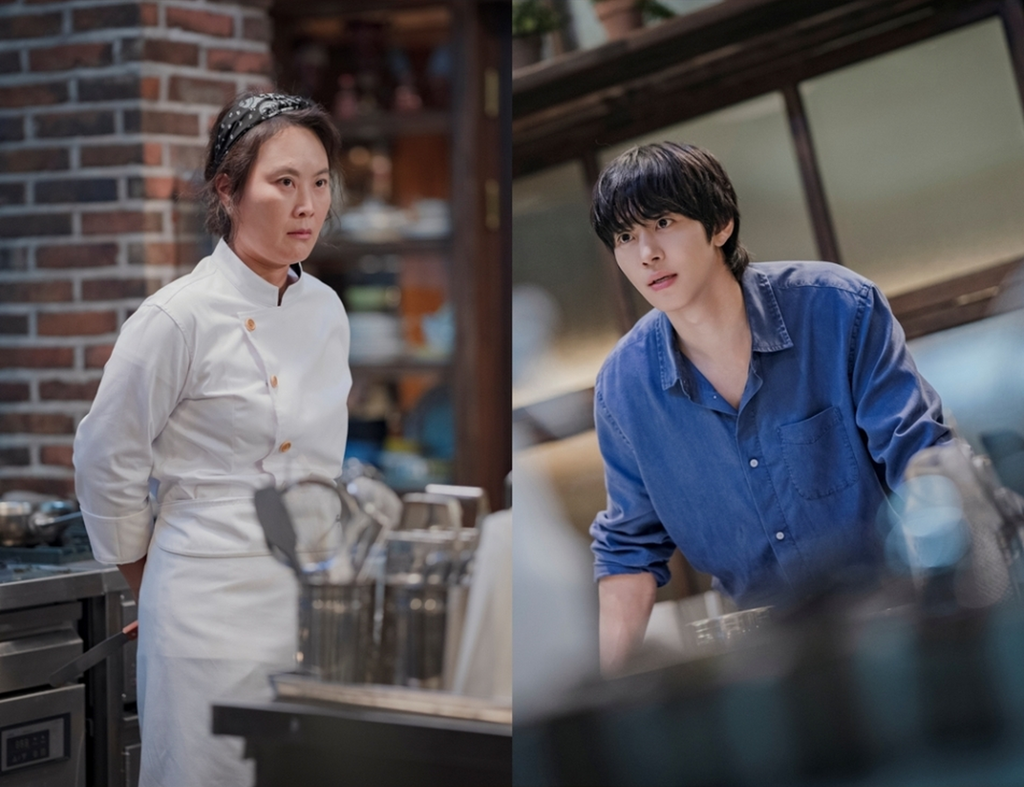
The most interesting part of Kang Han’s criticism is that being right about the food does not make him right about the person serving it.
That is where my sympathy sits with Song-yi. She is already dealing with a loss that professional judgement cannot solve. A stranger arriving to describe the restaurant’s failure may be accurate; accuracy alone does not make the encounter fair.
At the same time, Han’s attachment is personal. He isn’t simply collecting opportunities to demonstrate superior taste. Famiglia belongs to his memories, too.
This gives the disagreement somewhere to go. He needs information about her circumstances. She needs practical help. Neither problem disappears because somebody delivers a clever comeback.
I find that more promising than hostility written only to delay an inevitable romance. There is a concrete reason for these two people to clash, and a concrete reason they might eventually work together.
Kang Han needs more than the genius label

Ahn Hyo-seop’s character has the familiar ingredients of a drama lead: exceptional ability, an international reputation and a past he does not readily explain.
The detail that makes the setup more interesting is his relationship with his father’s teaching. JTBC’s character background presents cooking as something Han inherited emotionally before he made a career from it.
That distinction matters. A chef who cooks to impress a room can be entertaining. A chef whose work remains a conversation with someone he has lost has more complicated reasons to succeed.
Still, talent cannot excuse every harsh remark. The writing will need to let Han learn from other people. If every disagreement ends with everyone realising that the gifted man was correct, his emotional development will become much less interesting.
The best version of this character would gain understanding without losing his standards.
What doesn’t work as well: too much machinery around the kitchen
My main reservation is the amount of setup competing for attention. There is a troubled restaurant, family grief, corporate reputation management, a secretive chef and a televised contest still taking shape.
Each element has a purpose. Together, they put a substantial burden on the opening.
The restaurant gives the audience an immediate problem to understand. Corporate relationships require explanation before their consequences become equally tangible. That imbalance is why I would rather the next stretch spend time on decisions inside Famiglia than keep widening the boardroom conflict.
There is also a familiar rescue-story risk. Song-yi cannot remain interesting solely because she needs Han. Her judgement, choices and knowledge of the restaurant need to affect what happens.
This is an early concern about the story’s direction, not a claim that the series has already failed her. The setup leaves room for a proper partnership. It needs to use it.
Episode 1 ending explained: why the first meeting matters
The confrontation takes a chaotic turn when a kitchen fire extinguisher suddenly bursts. That incident compounds an already disastrous first meeting.
The stronger hook, though, is the disagreement underneath it. Han sees a restaurant betraying the standard he remembers. Song-yi sees another person judging what she has been struggling to protect.
Neither has the whole picture.
My reading is that the ending places them at the point where pride becomes impractical. Famiglia needs more than loyalty to its past, while Han’s relationship with that past has brought him into contact with someone else’s present crisis.
That is enough unfinished business to support another episode. It does not establish a romance, settle responsibility for the larger scandal or tell us who will win the contest.
Episode 2 preview: Song-yi tries to stop Han leaving

This section covers the official synopsis and released preview material, not a full Episode 2 recap or ending explanation.
Prime Video’s Episode 2 description says Han’s cooking impresses those around him. With his departure approaching, Song-yi asks him to stay, and information about a culinary competition attracts his interest.
The released airport preview adds the immediate stakes: Song-yi seeks Han out because she sees the contest as a chance to rescue Famiglia and needs a chef to make that possible.

That reversal is a useful test of her character. Asking for help from someone who has hurt your feelings requires a choice about what matters more.
What those materials do not establish is the complete sequence of events, the precise terms of any agreement or the episode’s final scene. An airport appeal is not, by itself, confirmation that an alliance has been secured.
Who Final Table is for
This is a sensible drama to sample if you enjoy workplace conflict with a personal history behind it. The food setting matters because the characters attach memories, status and responsibility to what they make.
It also has potential for viewers who like competitive stories but want to understand why losing would hurt someone beyond the scoreboard.
If you mainly want fast romance, the opening premise offers less certainty. A strained first meeting is not evidence of a satisfying romantic progression. And if you want an entirely gentle food drama, the bereavement and corporate conflict should shape your expectations.
For me, the attraction is the possibility of a team becoming worth rooting for before the contest asks us to root for its victory.
Final rating: 7/10, provisionally
My 7/10 applies to the opening story and its promise, not the completed series or an unverified second-episode ending.
The points come from a restaurant with personal meaning, an understandable clash between the leads and a competition linked to consequences outside its arena. The reservations are the crowded setup and how easily the talented-chef rescue formula could flatten Song-yi’s role.
I want the next episodes to make cooperation difficult in believable ways. Let ability help, let mistakes matter, and give the restaurant’s people something to contribute beyond admiring Han.
What rating would you give Final Table’s opening—and whose side were you on during the Famiglia confrontation?